Nairobi is set to advance its transformation into a cleaner, better-planned commercial capital through the construction of a modern automotive hub that will relocate businesses from Grogan under the Nairobi River Basin Regeneration Programme. The project combines environmental rehabilitation with investment in modern commercial infrastructure, creating new opportunities for enterprise, employment, and sustainable urban development
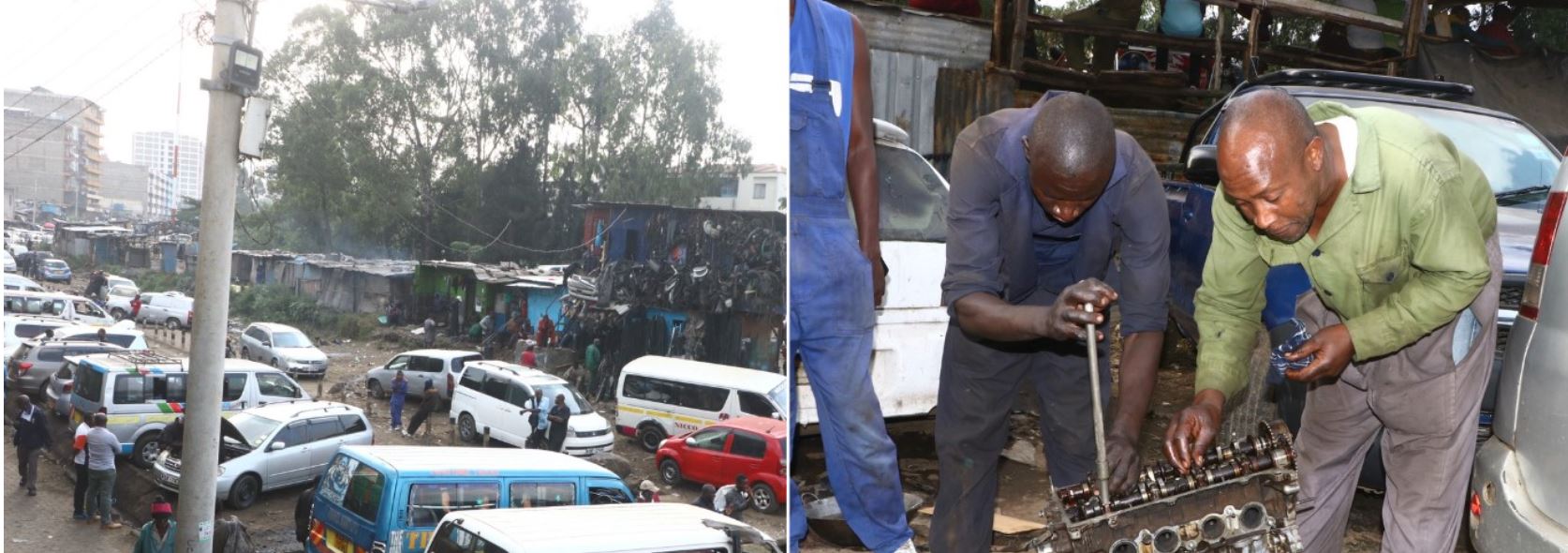
The planned relocation represents more than a change of business location. It demonstrates a shift toward organized urban development that balances environmental conservation with economic empowerment. For decades, Grogan has served as one of Nairobi’s most important automotive repair centres, supporting mechanics, spare parts dealers, vehicle service providers, food vendors, and numerous small enterprises. However, its location within the Nairobi River riparian corridor has increasingly placed it at the center of broader efforts to reclaim public land, restore degraded ecosystems, and improve environmental management across the city.
Under the proposed plan, affected businesses will move into a purpose-built automotive complex designed to accommodate up to 1,200 vehicles. The modern facility will incorporate vehicle showrooms, painting booths, car wash bays, training rooms, clinics, retail outlets, kitchens, and other essential support services that create a safer, more efficient, and professionally managed working environment. Such integrated infrastructure has the potential to significantly improve productivity by allowing businesses to operate within a well-planned ecosystem equipped with services that enhance both operational efficiency and worker welfare.
The initiative aligns closely with the broader objectives of the Nairobi River Basin Regeneration Programme, an ambitious multi-agency undertaking focused on restoring the Nairobi River while transforming surrounding areas into cleaner, healthier, and more productive urban spaces. Environmental degradation along the river corridor has for years undermined public health, increased pollution, and limited opportunities for sustainable urban development. Reclaiming the riparian zone offers an opportunity to reverse these trends while opening new possibilities for recreation, tourism, investment, and improved quality of life.
Modernizing Nairobi’s automotive sector through dedicated infrastructure also strengthens the city’s long-term economic competitiveness. Informal automotive businesses have historically played a vital role in supporting transport services and employment, yet many have operated under challenging conditions characterized by congestion, inadequate sanitation, limited safety standards, and environmental concerns. Purpose-built facilities provide an opportunity to address these longstanding constraints while preserving the entrepreneurial energy that has made the sector an important contributor to the urban economy.
The inclusion of specialized workspaces, technical facilities, and training rooms is expected to enhance skills development and encourage greater professionalism within the automotive industry. Improved access to modern equipment and organized workspaces can increase efficiency, improve service quality, and create stronger links between informal enterprises and the formal economy. These improvements are likely to enhance customer confidence while creating conditions that support business expansion and innovation.
Equally important is the project’s contribution to environmental compliance. Concentrating automotive activities within a modern facility makes it easier to manage waste disposal, regulate hazardous materials, improve drainage systems, and reduce pollution that has historically affected the Nairobi River. Better environmental management supports national sustainability goals while reinforcing Nairobi’s commitment to climate resilience and responsible urban planning.
The proposed development also highlights the growing importance of integrated infrastructure planning in rapidly expanding cities. Well-designed commercial hubs reduce congestion, improve public safety, create orderly transport networks, and optimize land use. By relocating businesses from environmentally sensitive areas into purpose-built facilities, Nairobi can simultaneously protect critical natural resources and strengthen economic activity through improved organization and accessibility.
The regeneration programme extends beyond environmental restoration to support inclusive economic development. Construction of the new automotive hub is expected to generate employment opportunities during implementation while creating long-term business prospects for mechanics, suppliers, retailers, service providers, and other enterprises that rely on the automotive value chain. Modern infrastructure also provides greater confidence for investors seeking stable commercial environments with reliable services and improved urban amenities.
Stakeholder engagement remains central to the success of the relocation process. Continued consultations with mechanics, traders, and other affected businesses demonstrate recognition that sustainable urban transformation requires collaboration between government and the business community. Open dialogue can help ensure that the transition protects livelihoods, addresses operational concerns, and creates solutions that reflect the practical needs of entrepreneurs while advancing the city’s long-term development objectives.
The announcement complements wider efforts to modernize Nairobi through upgraded markets, improved roads, enhanced public spaces, and better urban services. Together, these initiatives reflect a broader strategy aimed at creating a more attractive investment destination while improving everyday living conditions for residents and businesses. Cleaner streets, modern trading facilities, improved sanitation, and better infrastructure contribute to a city that is more resilient, more productive, and better positioned to compete with leading commercial centres across the region.
As Nairobi continues to expand, projects that integrate environmental restoration with economic modernization will play an increasingly important role in shaping the city’s future. The proposed automotive hub and the Nairobi River Basin Regeneration Programme demonstrate how strategic infrastructure investment can simultaneously support business growth, improve environmental stewardship, strengthen public health, and create more organized urban spaces. By combining modern commercial facilities with river restoration and inclusive stakeholder engagement, the initiative lays the foundation for a cleaner, better planned, and more prosperous Nairobi that offers expanded opportunities for workers, entrepreneurs, investors, and residents alike.