Nairobi is entering a new phase of urban transformation following President William Ruto’s announcement of a KSh7.9 billion Intelligent Transport System designed to tackle chronic congestion and modernize mobility across the capital. The ambitious initiative marks one of the largest smart urban mobility investments on the African continent and signals a decisive shift toward technology driven transport management in Kenya’s rapidly expanding metropolitan areas.
The project represents a major evolution in how Nairobi approaches traffic management and urban planning. For decades, congestion has imposed significant economic costs on businesses, workers and commuters through lost productive hours, rising fuel consumption and inefficient movement of goods and services. The new Intelligent Transport System seeks to address these long-standing challenges by introducing real time traffic coordination, data driven mobility management and modern digital infrastructure capable of optimizing movement across the city.
President Ruto announced that the first phase of the project, already under construction, will cost KSh7.9 billion and cover 25 signalized intersections together with a modern Traffic Management Centre that will monitor and coordinate traffic flow in real time. The government plans to expand the system in subsequent phases through additional investments that will eventually extend intelligent traffic coordination to more than 210 junctions across Nairobi.
The announcement reflects the government’s broader commitment to modernizing infrastructure through smart technologies that improve service delivery, strengthen economic productivity and enhance the quality of life in urban centres. The transition from conventional road expansion to integrated intelligent transport management demonstrates a recognition that modern cities require technologically advanced systems capable of responding dynamically to rising urban populations and increasing transport demand.
The Intelligent Transport System is expected to significantly improve traffic flow across Nairobi by synchronizing traffic signals, reducing delays at key junctions and enabling authorities to monitor road conditions in real time. More efficient movement of vehicles is projected to reduce travel times for commuters, lower transport costs for businesses and improve reliability within the city’s transport network. The project is also expected to strengthen emergency response coordination and enhance road safety through improved traffic regulation and monitoring capabilities.
Beyond easing congestion, the initiative carries major economic implications for Kenya’s capital. Nairobi serves as East Africa’s leading financial, logistics and commercial hub, making efficient mobility critical to sustaining competitiveness and attracting investment. Reduced congestion is expected to lower fuel wastage, minimize logistical delays and improve productivity for businesses operating within the metropolitan region. Faster and more predictable movement of goods and workers could strengthen Nairobi’s attractiveness to investors seeking efficient urban infrastructure and modern transport systems.
The project also positions Nairobi among Africa’s emerging smart cities by integrating digital technology into urban management. As major global cities increasingly rely on intelligent transport systems to manage mobility challenges, Kenya’s investment signals a determination to align Nairobi with international standards in urban modernization and digital connectivity. The large scale deployment of coordinated traffic management technology reflects growing confidence in Kenya’s capacity to implement advanced infrastructure solutions capable of supporting long term urban growth.
The Intelligent Transport System is also expected to create opportunities for technology transfer, innovation and skills development. The implementation of advanced traffic management infrastructure will require specialized expertise in digital systems, engineering, data analytics and urban mobility planning. This creates potential for local workforce development while encouraging collaboration between government agencies, technology providers and infrastructure specialists. The project may also stimulate innovation within Kenya’s growing technology sector by expanding demand for smart mobility solutions and digital urban services.
Environmental sustainability forms another important pillar of the initiative. Traffic congestion has contributed significantly to vehicle emissions and air pollution within Nairobi due to prolonged idling and inefficient movement along major corridors. Improved traffic coordination and reduced travel delays are expected to lower fuel consumption and decrease carbon emissions, contributing to cleaner urban mobility and supporting broader environmental sustainability goals. More efficient transport systems also complement ongoing efforts to build resilient and sustainable urban infrastructure capable of supporting future population growth.
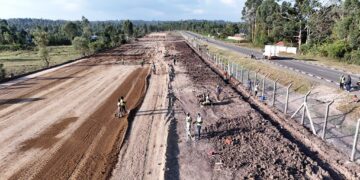
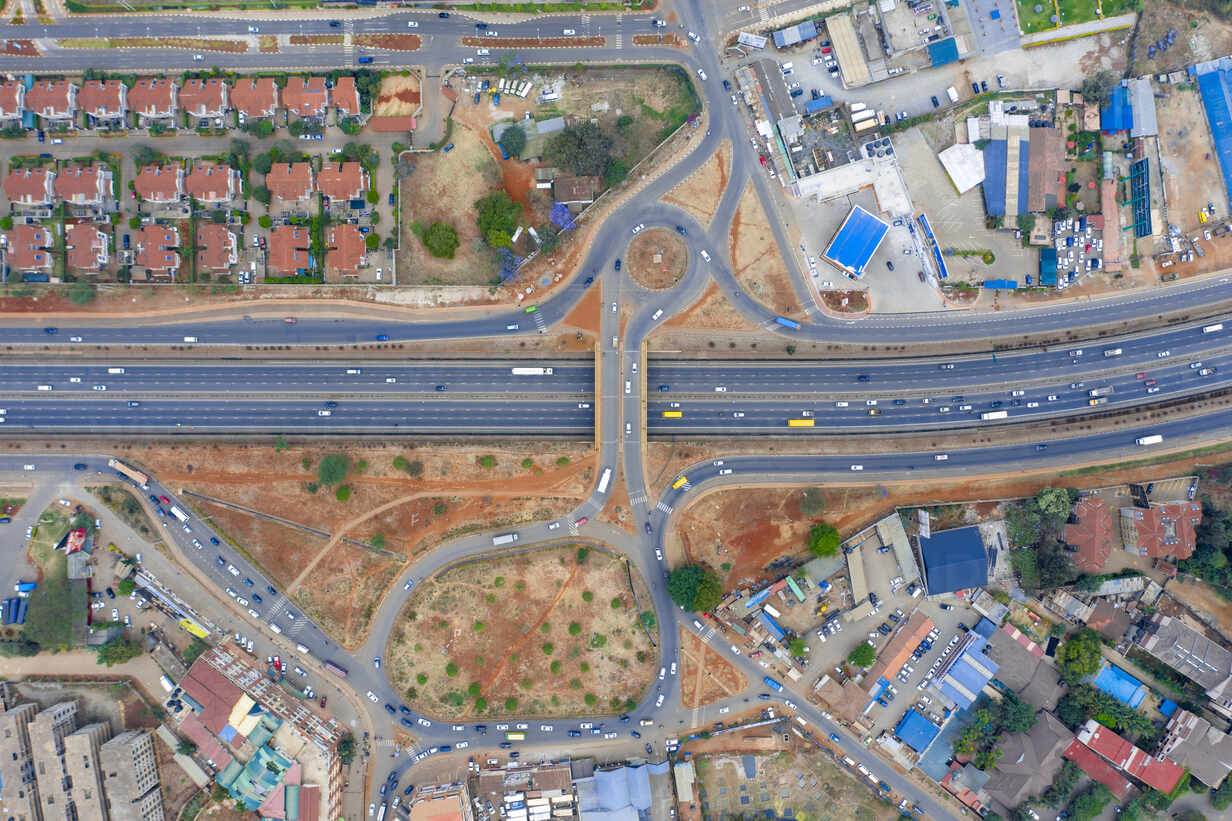
The Intelligent Transport System is being implemented alongside wider infrastructure investments aimed at transforming Nairobi’s transport ecosystem. President Ruto announced the project during the commissioning of the newly completed Ngong Road to Naivasha Road Flyover, a KSh3.8 billion development expected to remove a major bottleneck along one of the city’s busiest corridors. The government has also committed significant investments toward the dualing of Kiambu Road, upgrades to State House Road and the maintenance of hundreds of kilometres of urban roads under the Nairobi Urban Regeneration Programme.
These interconnected projects demonstrate a broader strategy focused on integrating intelligent transport systems with physical road infrastructure, commuter mobility networks and future urban development plans. The government’s approach reflects an understanding that solving urban congestion requires both expanded infrastructure capacity and advanced digital coordination systems capable of maximizing efficiency across existing networks.
Improved urban mobility is expected to generate benefits extending beyond transport alone. Faster movement within Nairobi could strengthen trade activity, support tourism, improve public safety coordination and enhance the overall competitiveness of businesses operating within the city. Efficient transport systems are increasingly viewed as essential foundations for sustainable urban growth, investment attraction and improved living standards in rapidly urbanizing economies.
The project also reinforces Kenya’s broader ambitions to accelerate digital transformation and modernize critical infrastructure as part of its long term economic development agenda. By investing heavily in smart mobility systems, the government is signaling confidence in technology driven solutions as key enablers of economic efficiency, urban resilience and national competitiveness.
As Nairobi continues to expand into a major regional metropolis, the KSh7.9 billion Intelligent Transport System represents far more than a traffic management project. It marks a transformative investment in economic productivity, smart urban planning and the modernization of public infrastructure. Through the adoption of intelligent mobility technology, Kenya is positioning Nairobi at the forefront of Africa’s smart city evolution while laying the foundation for a more efficient, connected and globally competitive capital city.