Kenya has formally entered the nuclear energy era following the Government’s designation of the Kenya Electricity Generating Company (KenGen) as the owner-operator of the country’s first nuclear power plant, a landmark national infrastructure project expected to redefine the country’s long-term energy security and industrial growth trajectory.
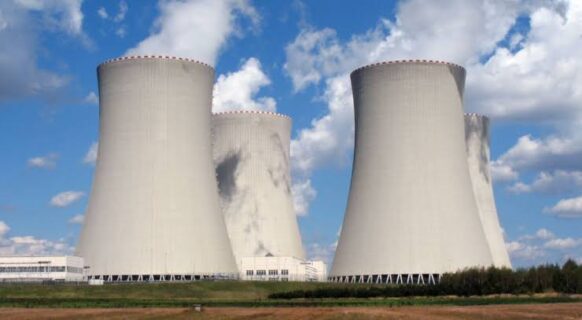
The proposed facility, to be developed in strategic partnership with the Nuclear Power and Energy Agency (NuPEA), will be located in Siaya County along the Lake Victoria basin and is projected to deliver 2,000 megawatts of electricity by 2034. Once operational, the plant is expected to contribute more than half of Kenya’s current installed electricity capacity, significantly strengthening baseload power supply for industrial expansion and national development.
The designation of KenGen as the implementing authority marks a decisive shift from preparatory feasibility work to structured institutional delivery, following the signing of a Memorandum of Understanding between KenGen and NuPEA in December 2025. The agreement established a Joint Engagement Framework that formally transitions the programme into its execution readiness phase and sets the foundation for what is widely regarded as the most ambitious infrastructure undertaking in Kenya’s history, with an estimated cost of KSh 500 billion.
Energy and Petroleum Cabinet Secretary Opiyo Wandayi confirmed the development during the announcement of the framework agreement, noting that the Government is committed to ensuring a structured, safe and globally compliant rollout of the nuclear programme in line with international standards and Kenya’s long-term energy master plan.
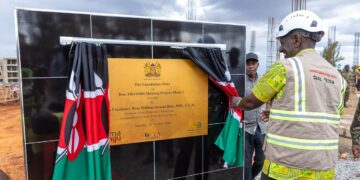
The project received its strongest political endorsement in March 2026 when President William Ruto addressed the International Conference on Nuclear Energy (ICoNE 2026) in Nairobi, confirming that construction of the plant will begin in March 2027 and commissioning is targeted for 2034. The President positioned nuclear energy as a central pillar of Kenya’s ambition to add 10,000 megawatts to the national grid and accelerate the country’s transition toward a high-income, industrialized economy. “Nuclear energy will be a true game changer for Kenya. It will sustainably and safely power our industries and propel us firmly on the path to a first-world economy,” President Ruto stated, underscoring the strategic importance of the programme in national development planning.
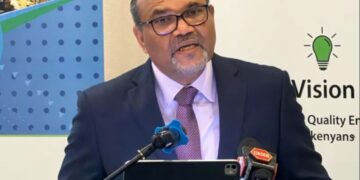
KenGen Managing Director and Chief Executive Officer Eng. Peter Njenga described the nuclear initiative as the next phase in Kenya’s clean energy evolution, building on decades of investment in geothermal, hydro and wind power that have positioned the utility as a regional leader in renewable energy generation. He noted that nuclear power represents a critical addition to Kenya’s energy mix, particularly in providing stable baseload capacity required for industrial-scale economic activity.
KenGen currently supplies more than 60 per cent of Kenya’s electricity demand, with over 90 per cent of its 1,786 megawatts of installed capacity derived from renewable sources, reinforcing the country’s global reputation as a clean energy leader. The company has also undertaken international benchmarking exercises, including a technical mission to Ontario, Canada, where it studied operations at Bruce Power, one of the world’s largest and most advanced nuclear facilities, as part of its institutional preparedness programme.
According to NuPEA Chief Executive Officer Justus Wabuyabo, the nuclear project is expected to generate over 10,000 direct and indirect jobs, while also supporting the establishment of a nuclear research reactor that will advance applications in medicine, agriculture, and engineering innovation. He added that Kenya is currently progressing through Phase Two of the International Atomic Energy Agency’s Milestones Approach, the globally recognized framework guiding countries developing nuclear power capability, and is steadily advancing toward Phase Three readiness.
To support early-stage implementation, the Government has allocated KSh 80 million in the 2026/27 financial year for detailed site characterization studies in Siaya County, a critical step in ensuring technical, environmental and safety compliance before construction begins. The project has also attracted broad-based institutional support, with National Assembly Speaker Moses Wetang’ula pledging parliamentary backing for enabling legislation, treaty ratification and budgetary approvals required to support the programme’s implementation. Siaya County Governor James Orengo has similarly endorsed the initiative, describing it as a transformative investment expected to unlock regional economic activity, infrastructure development and employment opportunities.
With groundwork preparations advancing and construction scheduled to commence in March 2027, Kenya is steadily positioning itself as East Africa’s first nuclear power nation, joining a select group of African countries, including Egypt and South Africa, that are expanding their energy portfolios through nuclear technology to meet rising electricity demand and support industrialization. The programme represents a defining moment in Kenya’s energy and development trajectory, signalling the country’s long-term commitment to diversified, reliable and high-capacity power generation as a foundation for sustained economic transformation.
Deputy President Kithure Kindiki has reaffirmed his unwavering commitment to supporting President William Ruto in delivering transformative development projects across the country, as he embarked on an extensive...
Read moreDetails