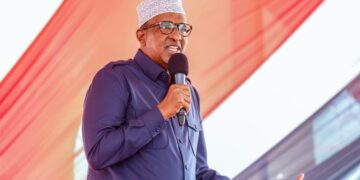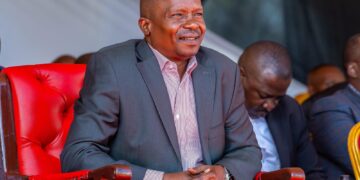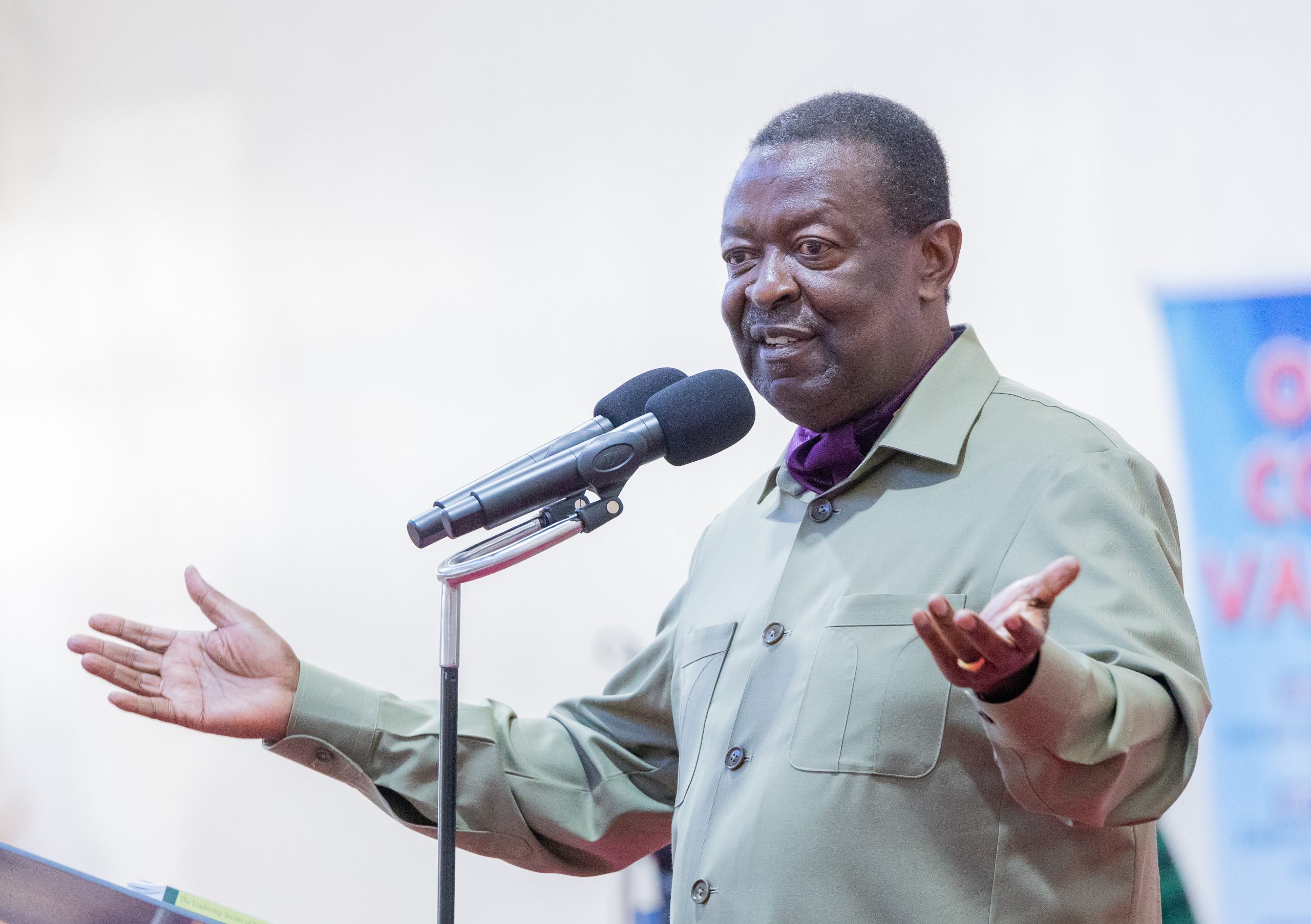
Prime Cabinet Secretary and Cabinet Secretary for Foreign and Diaspora Affairs Musalia Mudavadi has underscored that peace remains Kenya’s greatest economic asset, urging citizens to safeguard national unity and reject divisive politics as the country prepares for the next General Election. Speaking during a fellowship service at Redeemed Gospel Church along Likoni Road in Nairobi on Sunday, Mudavadi emphasized that sustainable economic growth, investor confidence, and national development can only thrive in an environment of peace and stability. He noted that peace and unity remain at the epicentre of President William Ruto’s administration and are central to the government’s Bottom-Up Economic Transformation Agenda (BETA).
Mudavadi cautioned political leaders, particularly those in the opposition, against advancing narratives aimed at securing political gains at the expense of national cohesion. He warned that leaders promoting tribal-based politics and ethnic divisions risk undermining the country’s hard-earned stability. He urged Kenyans to remain vigilant against politicians who seek to divide communities along tribal lines, stressing that such rhetoric threatens peace, democracy, and economic progress.
The Prime Cabinet Secretary challenged Kenyans to reflect on the true economic value of peace beyond physical infrastructure. He observed that while governments can invest billions in roads, airports, and seaports, such investments become worthless if insecurity and violence prevail. According to Mudavadi, peace enables businesses to operate, children to attend school, patients to access healthcare, and investors to confidently commit resources to the country’s economy.
He noted that conflict has devastating consequences on livelihoods, institutions, and economic activities. “Your children can go to school because of peace. Your businesses will open because we are keeping peace. Our sick will be able to go to hospital because of peace,” Mudavadi said, emphasizing that stability is the foundation upon which every aspect of national life depends.
Drawing lessons from ongoing global conflicts, Mudavadi observed that wars across different regions have severely disrupted international trade, investment, and supply chains. He cited the closure and disruption of key maritime trade routes and strategic shipping lanes, including the Strait of Hormuz, as evidence that conflict anywhere in the world carries significant economic consequences. He noted that nearly one-fifth of global trade passes through the strait, making peace a critical component of global economic stability.
The Prime CS further observed that ongoing geopolitical tensions have placed immense pressure on international governance institutions while exposing the vulnerability of global commerce. He pointed out that airports once bustling with activity have become deserted and major shipping routes rendered impassable due to conflict, reinforcing the urgent need for dialogue, diplomacy, and peaceful coexistence among nations.
Turning to Kenya’s domestic political landscape, Mudavadi appealed to all eligible citizens to register as voters and participate peacefully in the democratic process. He stressed that credible, peaceful, and transparent elections are essential for preserving national stability and ensuring continued economic growth. He also urged political leaders to exercise restraint and avoid inflammatory statements that could incite divisions or violence ahead of the polls.
Mudavadi concluded by calling on all Kenyans to work together in protecting the country’s peace, describing it as the bedrock upon which prosperity, national development, and shared progress are built. He reaffirmed that President William Ruto’s administration remains committed to promoting peace, strengthening democratic institutions, and fostering national unity, noting that Kenya’s future prosperity depends not only on economic reforms and infrastructure investments but also on preserving the peaceful environment that enables every Kenyan to thrive.