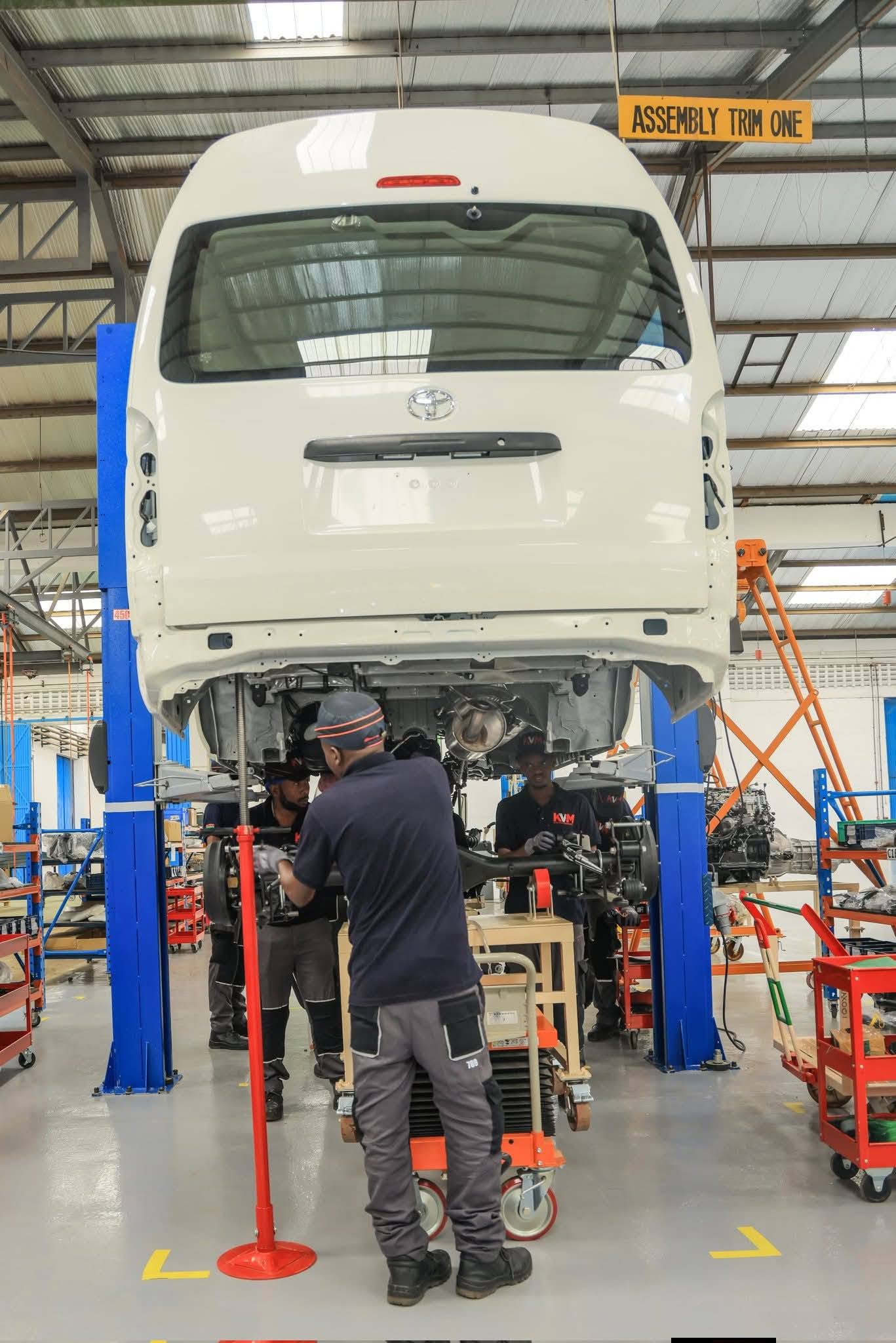
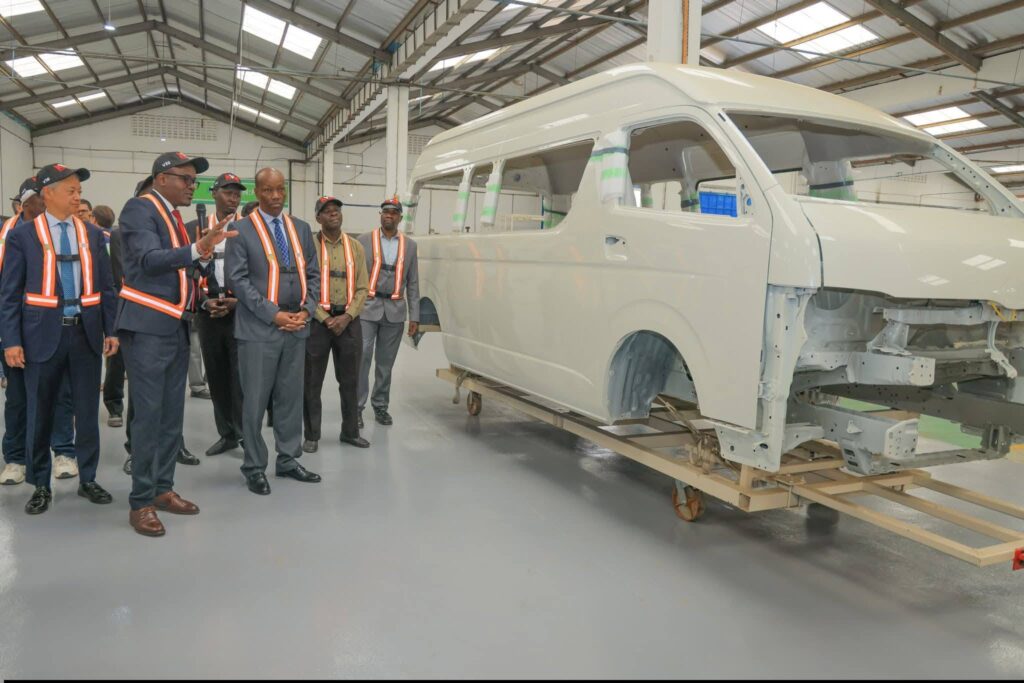
Kenya has taken a significant step forward in its industrial transformation journey following the launch of the local assembly of the Toyota Hiace matatu at Kenya Vehicle Manufacturers (KVM) in Thika. Cabinet Secretary for Investments, Trade and Industry Lee Kinyanjui presided over the commissioning, describing the initiative as a concrete demonstration of the government’s commitment to building a stronger manufacturing economy under the Bottom-Up Economic Transformation Agenda.
The Toyota Hiace needs little introduction to most Kenyans. Since the 1990s, when it replaced an older generation of passenger vans, the vehicle has become one of the most recognisable on the country’s roads. It serves matatu operators, schools, churches, courier companies, tour firms, and corporate fleets. For decades, every one of those vehicles arrived in Kenya as a fully built import. That is now changing.
The launch, underpinned by a KSh 2.3 billion investment by CFAO Mobility Kenya into the modernization and expansion of the KVM facility, marks the beginning of domestic production of a vehicle the Kenyan market has long depended upon. CS Kinyanjui was clear that the significance of the moment runs deeper than the production line itself. He said the project is fundamentally about creating jobs, strengthening local industries, building technical skills, and growing Kenya’s manufacturing capacity.
More than 200 direct jobs have already been created at the facility, with further expansion expected to generate additional opportunities, particularly for young Kenyans. When supply chain, logistics, and aftermarket employment is included, the project is projected to sustain over 800 livelihoods across the automotive value chain. For engineers, technicians, fabricators, and SME suppliers in surrounding communities, the assembly programme represents new and sustained economic opportunity.
CFAO Mobility Kenya Managing Director Arvinder Reel noted that Toyota has been part of Kenya’s mobility story for over five decades. The launch of the assembly line, he said, takes that commitment a step further by expanding local manufacturing capacity, creating skilled employment, transferring advanced production knowledge, and supporting the growth of local supplier networks. Kenyan engineers and assembly specialists have already undergone training in South Africa and Cambodia, gaining exposure to global standards in vehicle assembly and quality management. Those skills remain in Kenya long after the training concludes.
For small and medium enterprises, the implications are significant. Local vehicle assembly generates consistent demand for components, fabricated parts, packaging, transport, and maintenance services. As local content participation grows over time, more Kenyan businesses gain entry points into a supply chain that was previously closed to them. KVM and its partners have committed to working closely with domestic component manufacturers to develop supply chains capable of meeting globally competitive standards.
The project also advances Kenya’s import substitution agenda. Assembling the Hiace locally reduces the outflow of foreign exchange on fully built units, retains more economic value within the country, and builds the kind of industrial self-reliance the government has consistently prioritized under BETA. The broader vehicle assembly sector is already responding to this policy direction, with local production reaching 13,692 units in 2025, an increase of 18.5 percent on the previous year.
Kenya’s ambitions extend beyond the domestic market. With the African Continental Free Trade Area creating new export opportunities across the continent, a locally assembled Hiace carries commercial advantages that a fully imported unit does not. The government is deliberately positioning Kenya as the preferred automotive manufacturing hub in East Africa, and investments of this scale strengthen that case for regional and international investors alike.
The facility is expected to assemble around 600 Toyota Hiace units in its first year, with capacity set to rise progressively in line with demand. Fleet operators, transport SACCOs, and institutional buyers will have access to vehicles built to Toyota’s global standards and calibrated for Kenyan operating conditions, supported by a more responsive local supply and aftermarket chain.
The launch of the Toyota Hiace assembly line at Kenya Vehicle Manufacturers is more than a production milestone. It is a signal of what Kenya’s industrial economy is becoming: one that manufactures what it consumes, trains the workforce that drives it, and builds the supply chains that sustain it. Under BETA, that is precisely the direction the government has charted, and this project moves the country measurably further along that path.