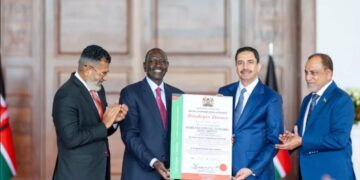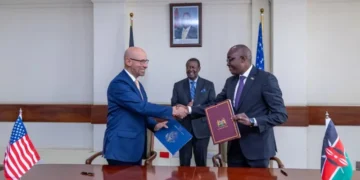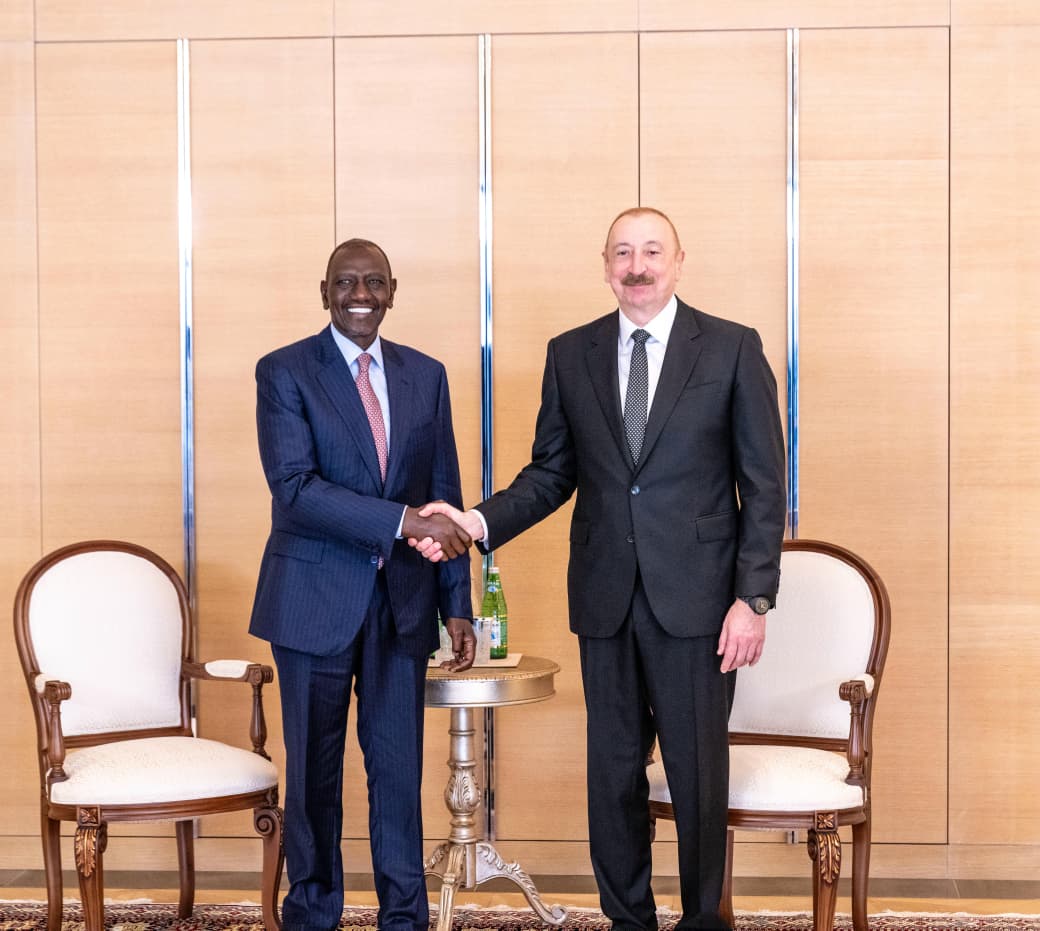
President William Ruto held high level bilateral talks with Azerbaijan President Ilham Aliyev in Baku, marking a major step in Kenya’s expanding economic diplomacy strategy as the government intensifies efforts to build stronger partnerships with emerging global economies capable of accelerating trade, investment, infrastructure development, and long-term economic transformation. The meeting, held on the sidelines of the 13th Session of the World Urban Forum, underscored Kenya’s growing international influence and reinforced Nairobi’s determination to leverage multilateral platforms to secure practical economic opportunities aligned with the Bottom Up Economic Transformation Agenda.
The discussions between the two leaders reflected a broader strategic shift in Kenya’s foreign policy approach that increasingly prioritizes investment driven diplomacy, diversification of global partnerships, and stronger engagement with rapidly expanding economies beyond the country’s traditional allies. At a time when global competition for investment, energy partnerships, and development financing continues to intensify, Kenya is positioning itself as a stable, innovation driven gateway to East and Central Africa while simultaneously opening new diplomatic and commercial channels capable of strengthening national economic resilience.
President Ruto’s participation at the World Urban Forum further elevated Kenya’s international standing in the fields of affordable housing, sustainable urbanization, and infrastructure modernization. The high-profile global forum brought together heads of state, urban planners, investors, development institutions, and policymakers from across the world to discuss the future of cities and sustainable urban growth. Kenya’s prominent participation at the summit was widely viewed as recognition of the country’s ambitious housing reforms and its increasing role in shaping international conversations around inclusive urban transformation and sustainable development.
The bilateral engagement with Azerbaijan significantly expanded the scope of Kenya’s participation at the forum beyond urban development discussions into broader economic and geopolitical cooperation. During the talks, the two leaders explored practical areas of collaboration covering energy, oil and gas development, renewable energy investments, logistics, infrastructure financing, urban planning, housing partnerships, and expanded bilateral trade. The discussions reflected growing confidence from both sides that Kenya and Azerbaijan possess complementary economic strengths capable of generating substantial long-term mutual benefit.
Energy cooperation emerged as one of the central pillars of the discussions, particularly as Kenya continues implementing ambitious plans aimed at expanding electricity generation capacity, strengthening energy security, and supporting industrial growth. Azerbaijan’s global expertise in oil and gas development presents significant opportunities for strategic collaboration as Kenya advances plans to modernize its energy infrastructure while also increasing investments in renewable energy generation. The engagement demonstrated the government’s commitment to securing international technical expertise and investment partnerships that can accelerate the country’s industrialization agenda and lower long-term energy costs for businesses and households.
The talks also focused on Azerbaijan’s interest in Kenya’s proposed oil refinery project, a major regional initiative expected to enhance fuel security across East Africa while reducing reliance on imported refined petroleum products. The project carries significant strategic value for Kenya’s broader ambition to position itself as a regional energy and logistics hub serving neighboring economies. Cooperation with Azerbaijan in this sector could unlock critical investment capital, technical support, and long-term industrial partnerships capable of strengthening regional economic integration and supporting future manufacturing growth.
Beyond energy, the two leaders explored opportunities for expanding bilateral trade and opening new export channels for Kenyan agricultural products including tea, coffee, horticultural produce, and other value-added commodities. The government has continued pursuing aggressive market diversification strategies aimed at increasing foreign exchange earnings, protecting farmers from volatility in traditional export destinations, and strengthening the competitiveness of Kenyan products in emerging international markets. Azerbaijan’s growing commercial influence and strategic geographic location between Europe and Asia present important opportunities for Kenya to access broader trade networks and strengthen commercial connectivity.
The discussions also highlighted the strong potential for collaboration in affordable housing and urban renewal, areas that remain central to Kenya’s long-term development strategy. The government’s Affordable Housing Programme has increasingly attracted global attention as one of Africa’s most ambitious social and economic transformation initiatives aimed at addressing housing shortages while simultaneously stimulating manufacturing, construction, and job creation. Azerbaijan’s expanding role in infrastructure financing and development partnerships presents new opportunities for investment cooperation that could support Kenya’s efforts to accelerate housing delivery and modern urban infrastructure expansion.
President Ruto used the Baku engagements to further reinforce Kenya’s image as a leading destination for international investment and innovation on the African continent. Supported by improved infrastructure, expanding regional connectivity, a growing digital economy, and sustained economic reforms, Kenya continues to attract increased attention from global investors seeking stable entry points into African markets. The government has consistently projected the country as a strategic commercial hub capable of linking international investors to the wider East African region, which remains one of the fastest growing economic blocs globally.
The World Urban Forum itself provided an important diplomatic and economic platform through which Kenya successfully advanced bilateral engagements alongside wider multilateral discussions. The summit demonstrated how global forums are increasingly becoming strategic spaces where nations not only exchange policy ideas but also negotiate investment partnerships, strengthen diplomatic relations, and secure development cooperation agreements capable of generating direct economic outcomes. Kenya’s active participation reflected a sophisticated diplomatic approach focused on converting international engagements into measurable national development gains.
The meeting between Presidents Ruto and Aliyev also reinforced the growing importance of South South cooperation in addressing shared development challenges facing emerging economies. Both countries expressed commitment to strengthening collaboration in areas capable of delivering practical benefits to citizens including infrastructure expansion, energy security, trade growth, technology transfer, urban planning, and industrial development. Such partnerships are increasingly becoming essential as developing nations seek more balanced and mutually beneficial international cooperation frameworks that support long term economic independence and sustainable growth.
Analysts expect the Kenya Azerbaijan engagement to generate wider diplomatic and commercial momentum in the months ahead, particularly as both governments move to operationalize areas of cooperation discussed during the Baku meeting. Potential outcomes include expanded investment flows into infrastructure and energy projects, increased export opportunities for Kenyan products, stronger collaboration in urban planning and housing finance, enhanced technical exchanges, and deeper diplomatic coordination on international development priorities.
The high-level talks in Baku therefore marked far more than a routine bilateral meeting on the margins of a global summit. They represented another significant milestone in Kenya’s broader foreign policy and economic transformation agenda, which seeks to diversify global alliances, strengthen strategic international partnerships, and secure sustainable development opportunities capable of supporting long term national prosperity. Through engagements such as the Azerbaijan talks, Kenya continues to reinforce its position as an outward looking, investment ready, and globally connected economy determined to shape its future through strategic diplomacy, economic cooperation, and ambitious development partnerships.
President William Ruto personally inspected the ongoing rehabilitation of Itembe Airstrip in Bomet County, a powerful demonstration of the Government's unwavering commitment to reviving neglected infrastructure and unlocking...
Read moreDetails