President William Ruto’s development agenda is steadily taking shape, with tangible projects across housing, trade, and urban renewal underscoring the government’s push toward a “Journey to First World Kenya.” At the core of this agenda is a deliberate focus on addressing everyday challenges faced by ordinary Kenyans—housing deficits, informal trade vulnerabilities, unemployment, and urban congestion—through structured, scalable, and people-centred interventions.
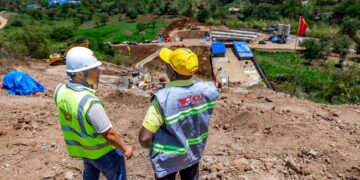
A flagship pillar of this agenda is the Affordable Housing Programme, designed to close Kenya’s housing gap while simultaneously creating jobs and lowering the cost of urban living. Major projects such as the Mukuro Affordable Housing Project in Nairobi, which will deliver over 13,000 housing units across Mukuru Kwa Njenga and Kwa Reuben, are already transforming informal settlements into dignified, planned neighbourhoods. These developments integrate essential infrastructure including schools, clinics, roads, and sewer systems, ensuring holistic urban regeneration.
Beyond Nairobi, affordable housing projects are reshaping towns and counties nationwide. In Machakos Town, a 600-unit project near the CBD has already completed Phase One, boosting urban renewal and local employment. Similarly, the Gichugu Affordable Housing Project in Kirinyaga County, with a capacity of over 300 units, targets civil servants and low- to middle-income households, easing housing pressure in fast-growing towns. In Bahati, Nakuru County, a 600–700 unit project supports the region’s expanding peri-urban population, reflecting a geographically balanced development strategy.
Nationally, the impact of the housing programme is significant, with over 200,000 housing units under construction across the country and an estimated 300,000 direct and indirect jobs created. These projects are stimulating MSME supply chains, expanding construction employment, and anchoring economic activity in both urban and peri-urban areas, reinforcing housing as a powerful economic driver.
Complementing housing is the rollout of Modern and ESP (Economic Stimulus Programme) Markets, aimed at transforming informal trade into organised, hygienic, and income-secure enterprises. These modern markets provide structured trading spaces, enhanced sanitation, cold storage facilities, proper drainage, and improved fire safety—addressing long-standing risks faced by traders operating in informal settings.
Key market projects include the Gikomba Modern Market in Nairobi, which accommodates over 1,500 traders, and the Kagio Modern Market in Kirinyaga, serving more than 400 traders with covered stalls and cold storage. Other notable developments include Githunguri Market (600+ traders focusing on dairy and horticulture), Chogoria Market (300+ traders serving as an agricultural aggregation hub), Malaba Market (500+ traders supporting cross-border trade with Uganda), Karatina Marigiti Market, one of East Africa’s largest fresh-produce wholesale hubs, and Rumuruti Market, recently launched to support livestock, grain, and retail trade.
Overall, the modern market programme has delivered over 200 markets nationwide, each supporting between 300 and 1,500 traders, reducing post-harvest losses by 20–40 percent, and improving trader incomes through higher footfall and better storage. Together with the affordable housing drive, these initiatives signal growing momentum in President Ruto’s development agenda—one anchored in structured growth, economic dignity, and inclusive prosperity as Kenya steadily advances toward a modern, first-world standard of living.