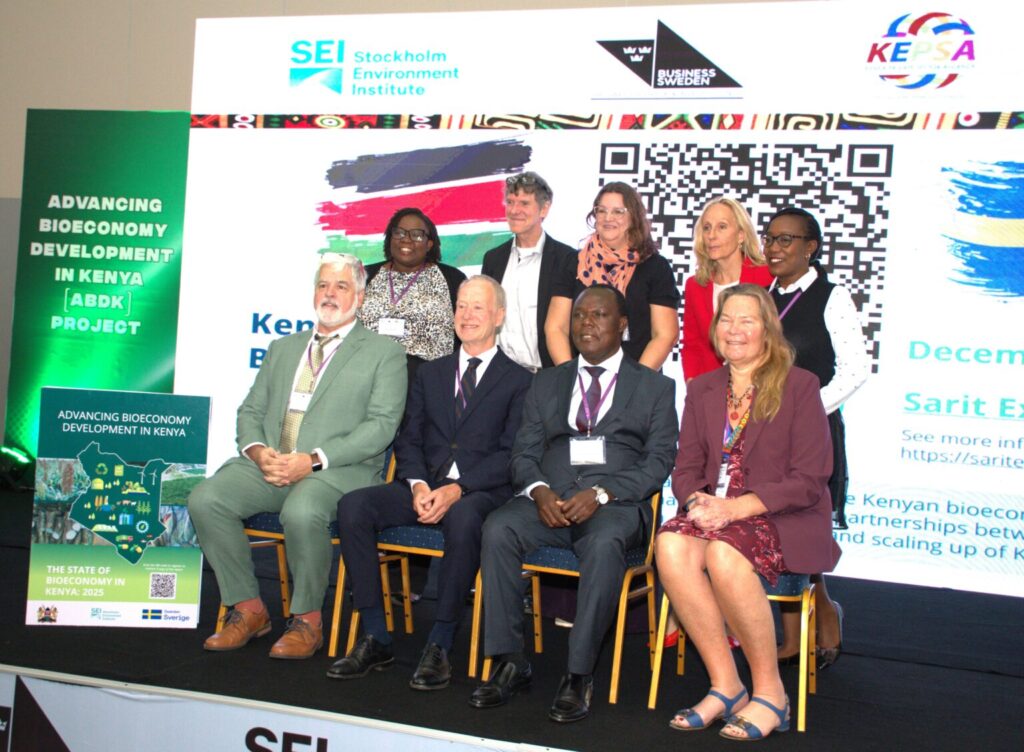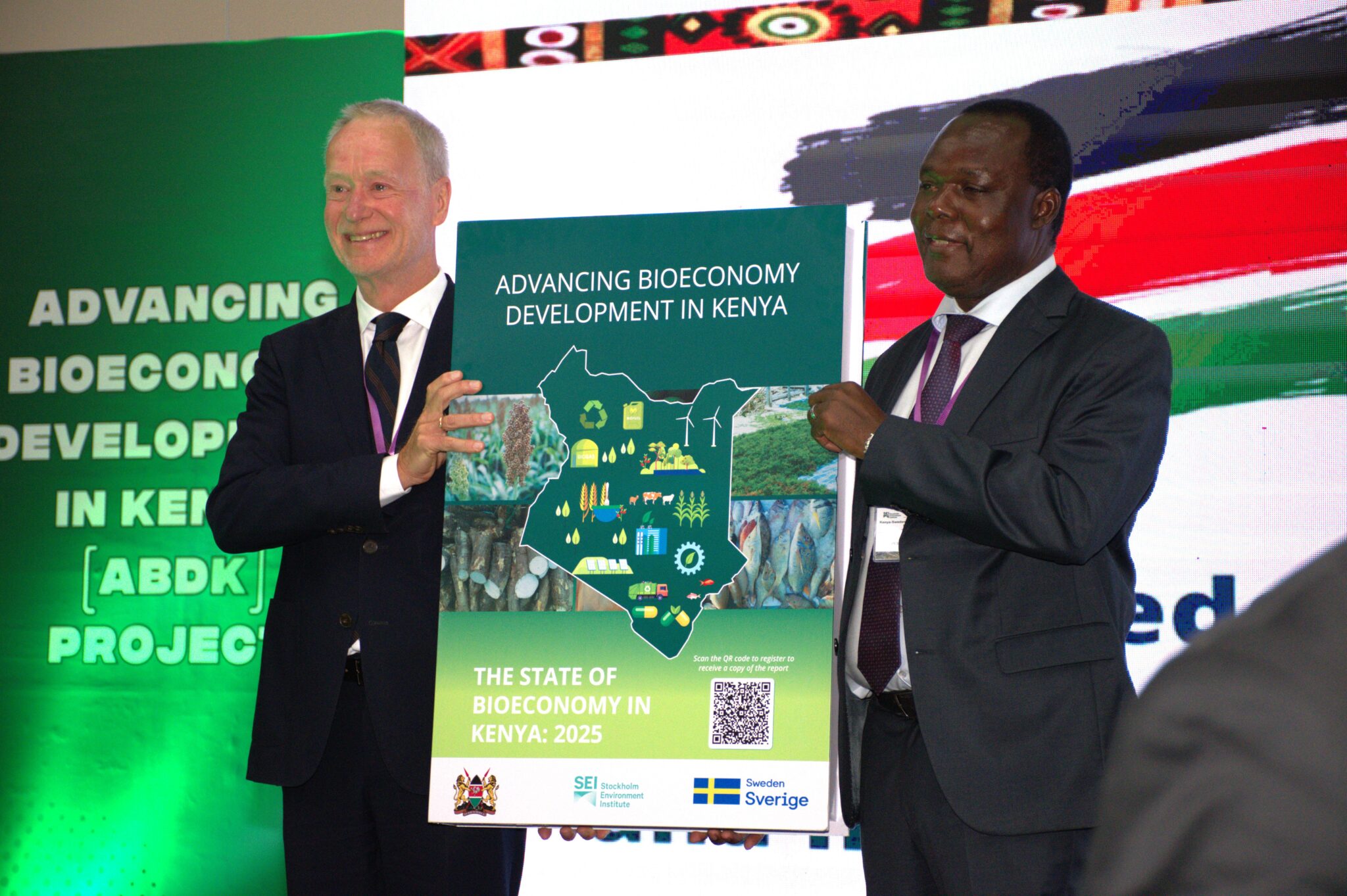
Kenya and Sweden have renewed their commitment to deepening collaboration in the bioeconomy sector, signaling a strategic push to align green growth with industrial expansion and innovation-led development. The renewed partnership was anchored at a two-day Kenya–Sweden Bioeconomy Business and Innovation Fair held in Nairobi, bringing together policymakers, private sector leaders, researchers, and investors from both countries.
The engagement underscored how the bioeconomy is fast becoming a core pillar of Kenya’s economic transformation agenda and Sweden’s global sustainability strategy. Discussions at the fair highlighted the growing convergence between the two countries on advancing climate-smart industries, accelerating technology transfer, and unlocking commercial value from biological resources across agriculture, renewable energy, forestry, and biotechnology.
Organized by the Stockholm Environment Institute, the Swedish government, Business Sweden, and the Kenya Private Sector Alliance, the fair formed part of the Advancing Bioeconomy Development in Kenya project supported by Sida. It served as a platform to translate policy ambition into bankable opportunities, with recent studies and cluster roadmaps pointing to strong investment potential in value addition, bio-based agricultural inputs, industrial bio-products, and sustainable bioenergy.
Swedish Ambassador to Kenya Håkan Åkesson said the partnership rests on complementary strengths. Kenya brings abundant biological resources, a dynamic entrepreneurial base, and a rapidly expanding research ecosystem, while Sweden contributes decades of experience in commercializing bio-based technologies and building globally competitive green industries. He noted that structured bioeconomy cluster roadmaps would help crowd in private capital, guide investment decisions, and connect research, industry, and government into scalable value chains.
Kenya’s Principal Secretary for Industry, Dr Juma Mukhwana, framed the collaboration as a practical driver of national development priorities, including job creation, food security, and inclusive industrial growth. He said Kenya has no shortage of innovation but has historically struggled with scaling and coordination. Lessons from Sweden’s approach to commercialisation and technology diffusion, he noted, are critical as Kenya accelerates agro-industrialisation and local manufacturing.
Mukhwana outlined ongoing government interventions to strengthen the manufacturing base, including county aggregation and industrial parks, local assembly of machinery, and pay-as-you-go access to shared industrial equipment. These measures, combined with expanded market access under the East African Community, COMESA, the African Continental Free Trade Area, and bilateral trade frameworks with Europe, the United States, and the Gulf, position Kenya as a competitive hub for bio-based enterprises targeting regional and global markets.
Policy experts and business leaders at the fair argued that the Kenya–Sweden partnership sends a strong confidence signal to the private sector. By anchoring collaboration in clear policy frameworks and credible institutions, the partnership reduces investment risk, encourages long-term capital deployment, and strengthens pathways for joint ventures, research collaboration, and cross-border commercialization of innovations.
Researchers from SEI pointed to findings from recent State of the Bioeconomy in Eastern Africa reports, which show that bio-based sectors offer one of the most viable routes for combining climate resilience with employment creation. In Kenya alone, bioeconomy value chains are increasingly seen as a solution to youth unemployment, provided they are backed by enabling regulations, targeted financing, and innovation support systems.
SEI Africa Centre Director Niall O’Connor described the fair as a turning point from dialogue to execution. He said cluster-based collaboration has already helped enterprises identify customers, attract partners, and build communities of practice. He stressed that no country or company scales alone and that sustained impact depends on coordinated action between government, academia, industry, and civil society.
The renewed Kenya–Sweden commitment positions the bioeconomy not as a niche environmental agenda, but as a strategic industrial pathway. By linking sustainability with competitiveness, innovation, and market access, the partnership aims to deliver tangible benefits for citizens in both countries, from decent jobs and cleaner technologies to stronger, future-ready economies.