In a decisive move signaling Kenya’s growing global engagement in food security and sustainable agriculture, Israel has pledged substantial support to Kenyan farmers through technological collaboration, capacity-building initiatives, and agricultural innovation. The partnership comes at a critical juncture as Kenya seeks to modernize its agricultural sector, reduce rural inequalities, and empower farmers under the Kenya Kwanza government.
Speaking during a visit to a facility established by the Nakuru County Government in partnership with Engineers Without Borders Israel (EWB-I), Israeli Ambassador Gideon Behar reaffirmed his country’s commitment to supporting Kenya’s agenda for innovative agricultural technologies. “Africa has no option but to adopt climate-smart farming, including investing in irrigation, sustainable soil management, and agro-logistics, to ensure productivity from farm to market,” the envoy said.
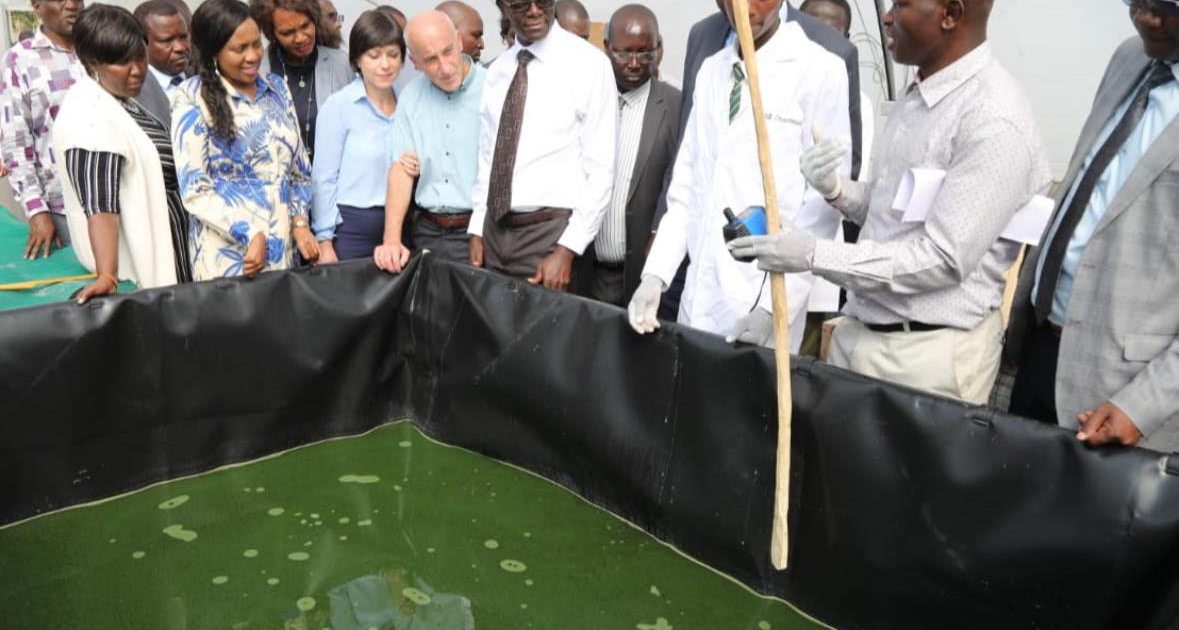
The facility, based at the Agricultural Training Center (ATC), is training farmers in the production of high-protein animal feeds from locally available alternatives such as Black Soldier Fly Larvae (BSF), Duckweed, and Azolla. These initiatives aim to drastically reduce the cost of livestock feed, which accounts for up to 70 percent of production costs, while boosting household incomes for smallholder farmers. Youth and women groups are also being trained to cultivate Spirulina, a nutrient-dense supplement already integrated into Early Childhood Development Education (ECDE) school feeding programs.
County Executive Committee Member for Agriculture, Leonard Bor, emphasized that these innovations not only improve farm productivity but also enhance local economies through employment creation and market linkages. “Protein is the most expensive component of animal feed. By embracing locally adapted alternatives, farmers can significantly cut production costs while contributing to sustainable agriculture and environmental preservation,” he said.
The collaboration leverages smart and precision farming technologies, including Artificial Intelligence, the Internet of Things (IoT), and climate-smart solutions to optimize yields, reduce waste, and mitigate climate impacts. Experts note that BSF larvae, Duckweed, and Azolla offer environmentally sustainable feed solutions while producing organic fertilizers and reducing reliance on synthetic inputs, which have contributed to soil degradation and constrained rural economic growth over time.
Michal Dolev Hashimhony from EWB-I highlighted that these initiatives empower women and youth by providing low-capital, high-impact farming opportunities. “BSF and aquatic plant farming are scalable, accessible, and environmentally friendly, creating resilient food systems while expanding export potential,” she said.
This strategic Israeli-Kenyan collaboration is aligned with Kenya Kwanza’s broader policy priorities to modernize agriculture, strengthen local governance, and reinforce citizens’ confidence in state-led development initiatives. By bridging productivity gaps, adopting climate-smart solutions, and enhancing technological capacities, the partnership is positioned to transform Kenya’s agricultural sector, bolster food security, and unlock new economic opportunities for rural communities.
As Kenya faces ongoing challenges of outdated farming practices, climate vulnerabilities, and uneven rural development, this initiative represents a transformative step in the government’s commitment to delivering tangible benefits to farmers and positioning the country as a leading agribusiness hub in Africa.

Kenyan Government has unveiled a KSh13 billion investment to expand Kenya's national fiber-optic network and bring fixed broadband within reach of more than 8 million households that already...
Read moreDetails