Kenya’s economy demonstrated strong signs of stability in the second quarter of 2025, expanding by 5.0 percent compared to 4.6 percent during the same period in 2024. According to the Central Bank of Kenya (CBK) weekly bulletin released on October 3, 2025, this growth was driven by a solid rebound in the industrial sector, steady agricultural output, and resilience in key service industries. The CBK also forecasts inflation to remain stable at around 5.25 percent, reinforcing confidence that Kenya’s economy is on track to close the current financial cycle on a strong footing.
The industrial sector recorded the most significant turnaround, growing by 4.0 percent from a mere 0.2 percent in Q2 2024. Manufacturing activity grew by 1.0 percent, while electricity and water supply expanded by 5.7 percent. Construction mirrored this performance with a 5.7 percent increase, and mining and quarrying soared by an impressive 15.3 percent. These improvements point to renewed investor confidence in infrastructure, energy, and natural resource development, areas the government has prioritized under President William Ruto’s Bottom-Up Economic Transformation Agenda.
The services sector continued to display resilience, registering growth of 5.7 percent, only slightly lower than 6.1 percent in the previous year. The CBK noted that strong performances in transport and storage (5.4 percent), finance and insurance (6.6 percent), and information and communication (6.0 percent) were instrumental in sustaining the sector’s dynamism. Wholesale and retail trade rose by 4.0 percent, while accommodation and food services posted an impressive 7.8 percent growth, buoyed by tourism recovery and increased domestic demand.
Agriculture, which remains the backbone of Kenya’s economy, provided a stable foundation with growth at 4.4 percent, compared to 4.5 percent in the same period last year. Steady crop and livestock production helped cushion the economy against weather-related risks, ensuring food supply stability. The CBK reported that non-agricultural activities expanded by 5.1 percent, while taxes on products contributed 3.3 percent to overall growth — reflecting a balanced performance across key economic pillars.
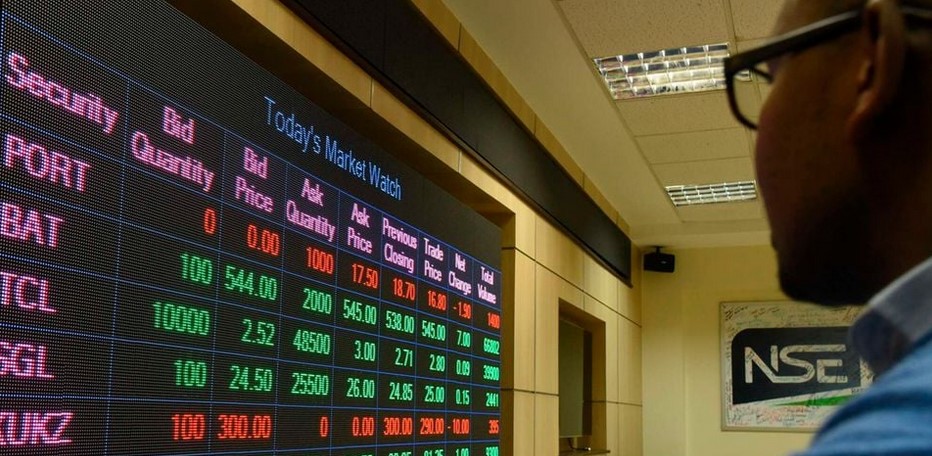
Financial markets also remained steady, with Kenya’s usable foreign exchange reserves standing at USD 10.7 billion, equivalent to 4.7 months of import cover. This surpasses the CBK’s statutory threshold of four months, underscoring Kenya’s ability to support external trade and stabilize the shilling. The Nairobi Securities Exchange (NSE) showed positive momentum, with the NSE 20 Index gaining 1.0 percent, the NASI up 0.65 percent, and the NSE 25 advancing 0.92 percent — all pointing to renewed investor confidence in Kenya’s capital markets.
The CBK’s effective monetary policy operations further contributed to economic stability. Commercial banks’ excess reserves stood at Ksh 5.4 billion relative to the 3.25 percent cash reserve ratio, ensuring adequate liquidity in the money market. “The money market remained liquid during the week ending October 2, with open market operations active,” the CBK stated, signaling its commitment to maintaining financial sector stability as growth continues to strengthen.
With inflation projected to stabilize at 5.25 percent, the CBK’s outlook suggests that Kenya’s economy is entering a period of balanced growth and macroeconomic stability. The combination of industrial revival, steady agricultural output, resilient services, and sound monetary management positions Kenya to close its 2025 economic cycle on solid ground — reflecting President Ruto’s administration’s success in steering the country toward sustainable, inclusive, and resilient growth.