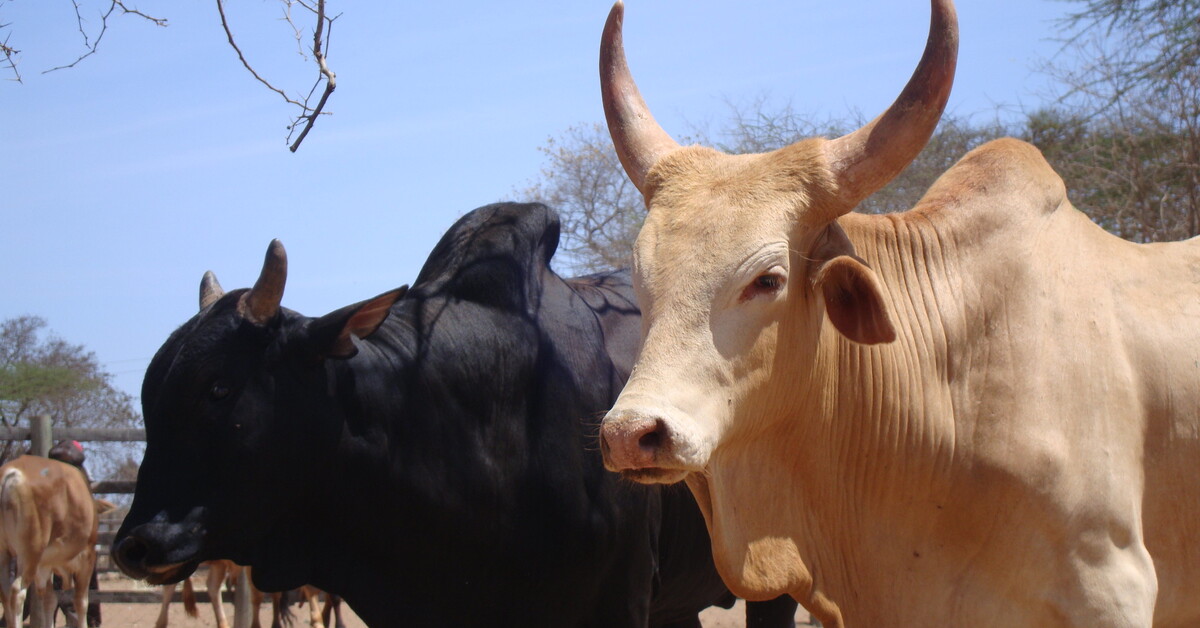
Kenya has secured a Sh443 million investment in a pioneering livestock breeding programme designed to cut methane emissions and strengthen the resilience of indigenous cattle. The three-year project, led by the International Livestock Research Institute (ILRI) with backing from the Bezos Earth Fund and the Global Methane Hub, aims to develop climate-smart cattle that are both productive and environmentally sustainable.
The initiative, known as Accelerating Reduced Emissions in Indigenous Breeds in Africa, combines advanced genetics with traditional livestock knowledge. It will focus on breeding cattle that naturally emit less methane while producing more milk and meat, ensuring that farmers benefit economically while contributing to the fight against climate change.
Livestock in Africa currently account for 18 percent of global methane emissions, with cattle making up 70 percent of that output in Sub-Saharan Africa. Without targeted interventions, emissions could triple by 2050, posing a challenge to both the climate and agricultural productivity. By improving indigenous breeds, the programme offers a dual solution: cutting emissions and strengthening food security for millions of farmers.
For Kenya, where livestock is central to rural livelihoods and the agricultural sector contributes about 21 percent of GDP, the benefits could be transformative. The project is expected to lower methane emissions per kilogram of milk by 20 to 25 percent over the next five years, while boosting overall productivity. This means more income for farmers, stronger dairy and beef value chains, and improved food security at household and national levels.
Scientists will measure methane emissions from 3,000 cows across five African countries, including Kenya, using advanced laser detectors and mobile apps. They will also integrate findings with data from 9,000 additional cows, while profiling microbial communities in over 1,000 tropical cattle to understand the link between microbes, productivity, and methane emissions. The resulting genomic data will be made publicly available, allowing for low-cost breeding solutions.
Kenya will play a central role in coordinating the Africa-wide initiative, with ILRI hubs in Nairobi and Addis Ababa serving as command centres. The programme will also strengthen national breeding centres, train technicians, and provide farmers with accessible bull and cow rankings. Partners include the Agricultural Research Council of South Africa, CIRAD in France, CIRDES in Burkina Faso, and the University of Abomey-Calavi in Benin, alongside breeding organizations such as URUS and GENUS.
The project’s impact is designed to be long-lasting. Over the next two decades, ILRI expects livestock methane emissions to decline by 12 percent through gradual annual reductions. Improved cattle breeds that withstand heat, require fewer resources, and produce more efficiently will be introduced to national breeding programmes. Importantly, the initiative will prioritize access for women and youth, helping to strengthen inclusivity in the livestock sector.
Kenya’s farmers stand to gain not just from lower costs and higher productivity, but also from greater resilience against climate shocks such as droughts and rising temperatures. By focusing on indigenous breeds, the project respects Kenya’s pastoral traditions while using modern science to address 21st-century challenges.
This investment also enhances Kenya’s role as a regional leader in climate-smart agriculture. It supports the country’s commitments under its Nationally Determined Contributions (NDCs) and positions the livestock sector as a key driver of both economic growth and environmental sustainability.
As Raphael Mrode, Principal Investigator at ILRI, noted, combining advanced genetics with farmer knowledge ensures that the programme is both scientifically sound and locally relevant. For Kenya, this is more than an agricultural upgrade; it is a chance to show that livestock farming can contribute to global climate goals while improving rural livelihoods.
The Sh443 million investment, therefore, marks a decisive step in reimagining livestock farming for Kenya’s future. It promises to secure livelihoods for millions, strengthen the national economy, and prove that African agriculture can innovate its way toward sustainability.
President William Ruto has announced further reductions in subsidized fertilizer and maize seed prices, with a 50kg bag of fertilizer set to cost Sh2,000, down from Sh2,500, and...
Read moreDetails