Kenya has secured renewed commitments from Japan that could significantly boost trade, investment, and cooperation across multiple sectors. During the 9th Tokyo International Conference on African Development (TICAD 9), President William Ruto held talks with Prime Minister Shigeru Ishiba, calling for the removal of tariff and non-tariff barriers that restrict access for Kenyan exports such as avocados, tea, and flowers. The meeting also featured pledges on financial cooperation, clean energy, and emerging technologies, placing Kenya firmly at the center of Japan’s Africa engagement strategy.
Ruto stressed that while trade between the two nations grew by 33 percent in 2024, it remains heavily tilted in Japan’s favor. He urged Tokyo to review its restrictive market access policies to ensure greater balance and fairness. Prime Minister Ishiba responded by pledging to review the barriers and seek ways to expand opportunities for Kenyan exports. For Kenya, this represents a chance to unlock higher-value markets and strengthen agricultural earnings.
Another highlight of the visit was the signing of a statement of intent on the Samurai Bond, a financial instrument that will allow Kenya to raise capital in Japan’s financial markets. For Nairobi, this move is more than a financing tool. It signals diversification of funding sources, a reduction in dependence on traditional loans, and a new level of trust in Kenya’s economic management. It also reinforces Tokyo’s confidence in Kenya as a stable investment destination.
In industrial development, Ruto advanced discussions with Toyota Corporation on opportunities in the electric vehicle sector. Kenya has set its sights on becoming a leader in green mobility, and Japan’s technological edge could make this vision achievable. Both sides agreed on the importance of outlining shared priorities in green energy and emerging technologies, paving the way for transformative partnerships in sustainable industrialization.
Japan’s footprint in Kenya’s infrastructure and energy sectors is already significant. The Port of Mombasa, upgraded with Japanese support, has strengthened Kenya’s role as East Africa’s logistics hub. The Olkaria Geothermal Plant, another Japanese-backed project, is central to Kenya’s clean energy strategy. Investments in capacity-building and education have also left lasting impacts by equipping Kenya’s workforce with vital skills.
The scale of Japanese private sector involvement is growing rapidly. In 2024, Japan invested $205 million (Sh26 billion) in Kenya, making it the country’s third-largest source of foreign direct investment. Over 120 Japanese firms now operate in Kenya across industries such as renewable energy, manufacturing, infrastructure, and technology. These firms are creating jobs, transferring technology, and embedding Kenya deeper into global supply chains. Ruto encouraged further expansion, pointing to Kenya’s young, skilled, and dynamic workforce as a major advantage for foreign investors.
Perhaps the most transformative prospect is Japan’s plan to launch negotiations for its first-ever Free Trade Agreement with African nations, starting with the East African Community. This development, expected to be announced formally during TICAD 9, could reshape trade relations between Africa and Japan. For Kenya, it promises reduced tariffs, streamlined customs, and a stronger foothold in Asia’s third-largest economy. With its strategic logistics infrastructure, Kenya is well positioned to anchor Japan’s engagement with Africa under such an agreement.
The partnership is not limited to economics. Both leaders reaffirmed their common stance on reforming global institutions, particularly the United Nations Security Council, to better reflect current geopolitical realities. On healthcare, Japan expressed readiness to collaborate with Kenya on universal health coverage, including innovative approaches such as using satellite technology to reach underserved communities.
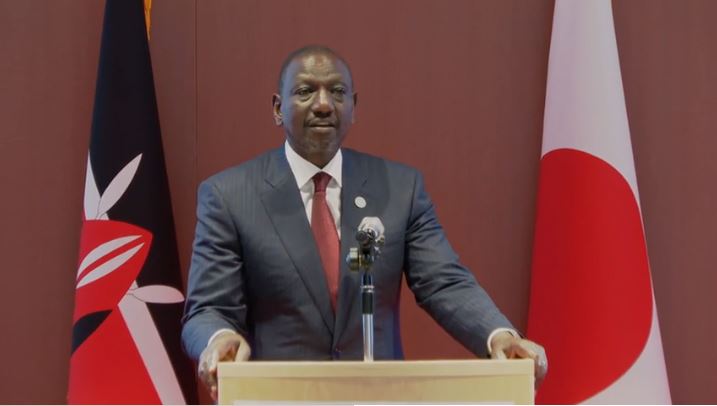
Kenya’s central role at TICAD 9 highlighted its rising stature as a gateway for Japanese investment and diplomacy in Africa. In his address to the Yokohama City Assembly, Ruto described Yokohama as a model of innovation and resilience, underscoring Kenya’s own aspirations. He invited Japanese investors to attend the 4th Kenya International Investment Conference in Nairobi in March 2026, presenting Kenya as a natural destination for long-term, sustainable investment.
The momentum from Yokohama signals a turning point. Kenya and Japan are shifting from a traditional donor-recipient relationship to a balanced, forward-looking partnership driven by trade, innovation, and shared values. For Kenya, the dividends are visible: more financing options, new export markets, stronger industrial partnerships, and rising diplomatic influence. For Japan, the partnership secures a reliable African ally, a logistics hub, and an entry point to a rapidly growing regional market.
Kenya’s path with Japan is clear. It is a partnership built on opportunity, trust, and vision, with the potential to set a new benchmark for Africa–Asia cooperation.
President William Ruto has challenged African nations to take charge of financing their own development by mobilising domestic resources, strengthening continental financial institutions and reducing dependence on external...
Read moreDetails