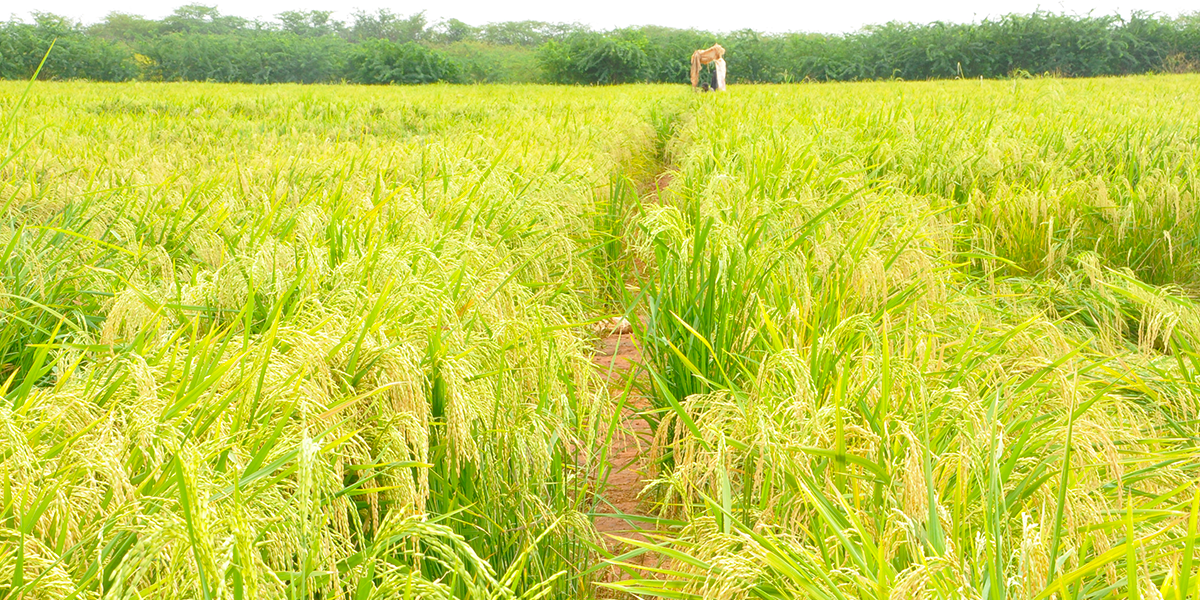
The government has announced fresh plans to expand irrigation in Tana River County, positioning the region as a key driver of food security and agricultural transformation. Principal Secretary for Irrigation CPA Ephantus Kimotho said the county will be prioritized for major irrigation development, citing its vast potential to bridge Kenya’s rice deficit and power rural economic growth. Speaking in Hola during a public participation forum, the PS noted that with the electrification of the Hola Irrigation Scheme and the anticipated construction of the High Grand Falls Dam, Tana River is poised to become one of the country’s leading rice production zones.
The Hola Irrigation Scheme, established during the colonial era, has been central to rice production in the region, particularly the Kwamboka rice variety. However, high operational costs tied to diesel-powered pumps have long constrained farmers. These pumps consumed about Sh10 million monthly, limiting profitability and expansion. The recent electrification of the scheme has changed this outlook, reducing pumping costs by nearly 70 percent. Farmers are now expected to benefit from lower input costs, improved efficiency, and the ability to reinvest savings into expanding production.
According to PS Kimotho, the electrification effort is part of a broader government strategy to revolutionize irrigation through investment, innovation, and community partnerships. Among immediate priorities are the expansion of 3,000 acres of irrigated land, rehabilitation of 4,500 acres of existing infrastructure, desilting of canals, and upgrading of intakes and water reservoirs. These measures are designed to improve water distribution, strengthen reliability, and raise productivity across the scheme.
The planned High Grand Falls Dam stands out as the centerpiece of this transformation. Expected to support irrigation over 400,000 acres, the dam will ensure year-round water availability and mitigate the risks of drought and erratic rainfall. This project not only enhances food security but also lays the groundwork for sustainable crop diversification and climate resilience in one of Kenya’s most resource-rich yet underutilized counties.
The government’s irrigation agenda also extends to strengthening agricultural value chains. Investments in storage and milling plants will reduce post-harvest losses while adding value to local produce. By bolstering cooperatives and linking farmers to both domestic and export markets, the initiative will raise incomes and improve competitiveness. For farmers, this means access to water, storage, and markets, leaving production as their primary focus and guaranteeing them up to three times more profit, according to the PS.
Community empowerment is at the heart of the initiative. The government has committed to involving youth by allocating 1,000 acres to young farmers, alongside improving rural access roads and prioritizing local employment opportunities. Farmer leaders have also requested machinery for sunflower oil processing, aggregation, and storage facilities to diversify income streams. The National Irrigation Authority leadership has pledged to follow up on these requests to ensure maximum farmer benefit.
The economic impact of a thriving irrigation scheme in Tana River will be significant. Increased rice production will reduce the national import bill and strengthen the trade balance, while higher output will fuel growth in processing, transport, and retail sectors. This ripple effect promises to create jobs, attract private investment, and improve livelihoods across the county and beyond.
Ultimately, Kenya’s prioritization of irrigation in Tana River represents a forward-looking strategy that combines infrastructure development, cost reduction, and community inclusion. Electrification of Hola, expansion of irrigated acreage, and the ambitious High Grand Falls Dam project together signal a turning point in how the country approaches food security. With these efforts, Tana River is set to emerge not just as a rice production powerhouse but also as a model for agricultural transformation that drives economic resilience and secures Kenya’s future food needs.
Kenya and Bangladesh are stepping up efforts to expand trade, investment and technical cooperation, with Nairobi seeking to establish a resident diplomatic mission in Dhaka and open new...
Read moreDetails