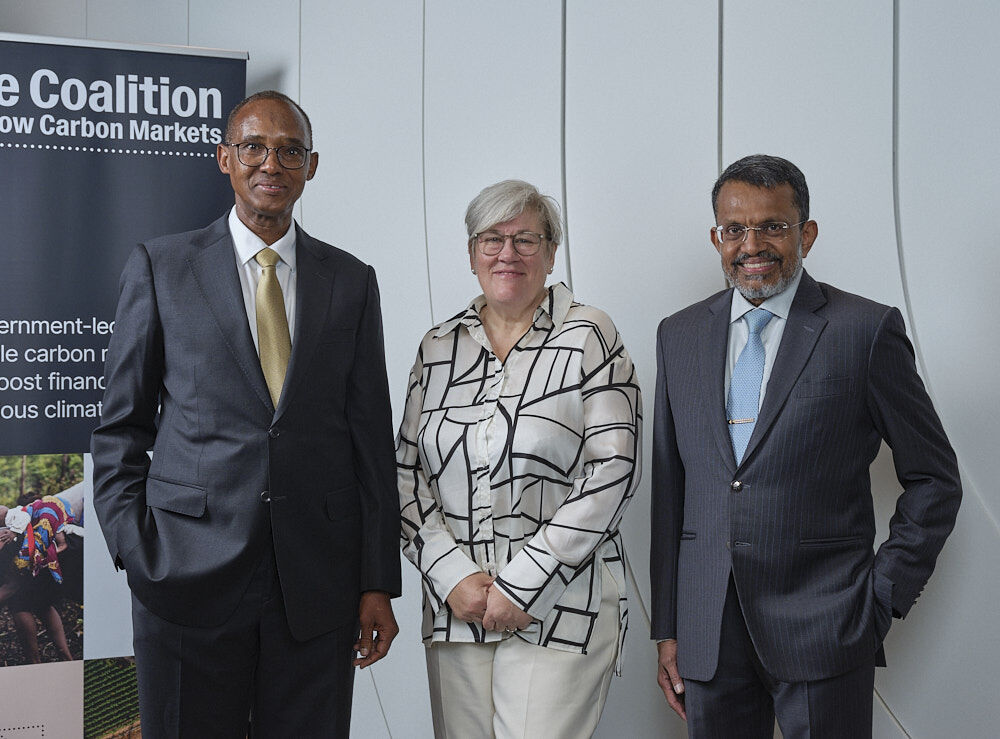
In a landmark move announced at London Climate Action Week, the governments of Kenya, Singapore and the United Kingdom launched the Coalition to Grow Carbon Markets, the world’s first government-led initiative to strengthen voluntary carbon markets that could expand to an estimated $250 billion by 2050. This coalition aims to restore trust, raise standards and attract greater corporate investment in carbon credits, offering major opportunities for Kenya’s economy, climate goals and communities.
The coalition seeks to address a long-standing trust deficit in voluntary carbon markets, which have faced criticism for inconsistent quality and accusations of greenwashing. By introducing unified high-integrity standards, it aims to create a reliable system that unlocks finance for projects that reduce emissions and protect ecosystems. For Kenya, this initiative is especially significant. It positions the country to attract new buyers and secure higher prices for its carbon credits, while driving sustainable development across sectors like agriculture, renewable energy and nature conservation.
Kenya’s special climate envoy and coalition co-chair Ali Mohamed highlighted that although Kenya has already sold 14.3 million tonnes of carbon credits valued at about $209 million to 887 buyers, there remains a surplus of around 70 million tonnes of credits that could be brought to market. Establishing globally recognized standards and improving transparency is expected to raise the value of these credits beyond the current average price of $9.77 per tonne. Mr Mohamed noted that communities engaged in projects like reforestation and biochar production could also see greater revenue and direct benefits.
By addressing the credibility gap, the coalition also hopes to make the voluntary carbon market a serious tool for businesses aiming to achieve net-zero targets. Singapore’s climate ambassador Ravi Menon acknowledged the crisis of confidence but argued the solution lies in reforming how the market operates rather than abandoning it. The coalition’s upcoming guidelines, to be launched at COP30 this November, will clarify for businesses how to invest responsibly in carbon credits while prioritizing real emissions reductions.
For Kenya, the benefits go well beyond new revenue. A stronger voluntary carbon market can channel vital investment into local climate projects that create jobs, protect biodiversity and build resilience against climate change. Blue carbon initiatives, such as mangrove restoration, can command premium prices of up to $29 per tonne globally, showcasing how Kenyan projects could tap into higher-value markets. Beyond immediate economic gains, these projects help safeguard coastlines, improve soil health and strengthen community livelihoods.
The potential growth of the voluntary carbon market to $250 billion by 2050 is a major opportunity for Kenya to position itself as a leader among developing economies supplying credible carbon credits. This could help fill part of the estimated $1.3 trillion global climate finance gap and support Kenya’s national climate goals. At the same time, the coalition’s shared principles emphasize that carbon credits must complement, not replace, real emissions cuts, ensuring environmental integrity remains central.
In a landmark move announced at London Climate Action Week, the governments of Kenya, Singapore and the United Kingdom launched the Coalition to Grow Carbon Markets, the world’s first government-led initiative to strengthen voluntary carbon markets that could expand to an estimated $250 billion by 2050. This coalition aims to restore trust, raise standards and attract greater corporate investment in carbon credits, offering major opportunities for Kenya’s economy, climate goals and communities.
The coalition seeks to address a long-standing trust deficit in voluntary carbon markets, which have faced criticism for inconsistent quality and accusations of greenwashing. By introducing unified high-integrity standards, it aims to create a reliable system that unlocks finance for projects that reduce emissions and protect ecosystems. For Kenya, this initiative is especially significant. It positions the country to attract new buyers and secure higher prices for its carbon credits, while driving sustainable development across sectors like agriculture, renewable energy and nature conservation.
Kenya’s special climate envoy and coalition co-chair Ali Mohamed highlighted that although Kenya has already sold 14.3 million tonnes of carbon credits valued at about $209 million to 887 buyers, there remains a surplus of around 70 million tonnes of credits that could be brought to market. Establishing globally recognized standards and improving transparency is expected to raise the value of these credits beyond the current average price of $9.77 per tonne. Mr Mohamed noted that communities engaged in projects like reforestation and biochar production could also see greater revenue and direct benefits.
By addressing the credibility gap, the coalition also hopes to make the voluntary carbon market a serious tool for businesses aiming to achieve net-zero targets. Singapore’s climate ambassador Ravi Menon acknowledged the crisis of confidence but argued the solution lies in reforming how the market operates rather than abandoning it. The coalition’s upcoming guidelines, to be launched at COP30 this November, will clarify for businesses how to invest responsibly in carbon credits while prioritizing real emissions reductions.
For Kenya, the benefits go well beyond new revenue. A stronger voluntary carbon market can channel vital investment into local climate projects that create jobs, protect biodiversity and build resilience against climate change. Blue carbon initiatives, such as mangrove restoration, can command premium prices of up to $29 per tonne globally, showcasing how Kenyan projects could tap into higher-value markets. Beyond immediate economic gains, these projects help safeguard coastlines, improve soil health and strengthen community livelihoods.
The potential growth of the voluntary carbon market to $250 billion by 2050 is a major opportunity for Kenya to position itself as a leader among developing economies supplying credible carbon credits. This could help fill part of the estimated $1.3 trillion global climate finance gap and support Kenya’s national climate goals. At the same time, the coalition’s shared principles emphasize that carbon credits must complement, not replace, real emissions cuts, ensuring environmental integrity remains central.
The move comes at a critical time. In recent years, voluntary carbon markets suffered from falling prices and declining trust after investigations revealed that many credits failed to deliver genuine emissions reductions. Between 2022 and 2024, the market’s value dropped from roughly $2 billion to about $535 million, and average credit prices slipped from $7.37 to $6.34 per tonne. This new coalition responds directly to calls from businesses and climate advocates for greater clarity and consistency to help rebuild confidence.
Looking ahead, Kenya stands to benefit both economically and socially. Higher prices and stronger demand for Kenyan credits will create incentives for more local climate projects, unlocking finance for rural areas and ensuring that communities receive a fair share of carbon revenues. Projects that restore forests, conserve wildlife and improve land use not only capture carbon but also enhance water resources and protect biodiversity, delivering wider environmental benefits.
At its core, the Coalition to Grow Carbon Markets reflects the power of international cooperation to make climate action more credible and inclusive. For Kenya, this is a chance to transform untapped natural potential into a sustainable growth engine. By helping shape a voluntary carbon market built on trust and integrity, Kenya can boost its economy, support local communities and make a measurable contribution to global climate goals.
The move comes at a critical time. In recent years, voluntary carbon markets suffered from falling prices and declining trust after investigations revealed that many credits failed to deliver genuine emissions reductions. Between 2022 and 2024, the market’s value dropped from roughly $2 billion to about $535 million, and average credit prices slipped from $7.37 to $6.34 per tonne. This new coalition responds directly to calls from businesses and climate advocates for greater clarity and consistency to help rebuild confidence.
Looking ahead, Kenya stands to benefit both economically and socially. Higher prices and stronger demand for Kenyan credits will create incentives for more local climate projects, unlocking finance for rural areas and ensuring that communities receive a fair share of carbon revenues. Projects that restore forests, conserve wildlife and improve land use not only capture carbon but also enhance water resources and protect biodiversity, delivering wider environmental benefits.
At its core, the Coalition to Grow Carbon Markets reflects the power of international cooperation to make climate action more credible and inclusive. For Kenya, this is a chance to transform untapped natural potential into a sustainable growth engine. By helping shape a voluntary carbon market built on trust and integrity, Kenya can boost its economy, support local communities and make a measurable contribution to global climate goals.