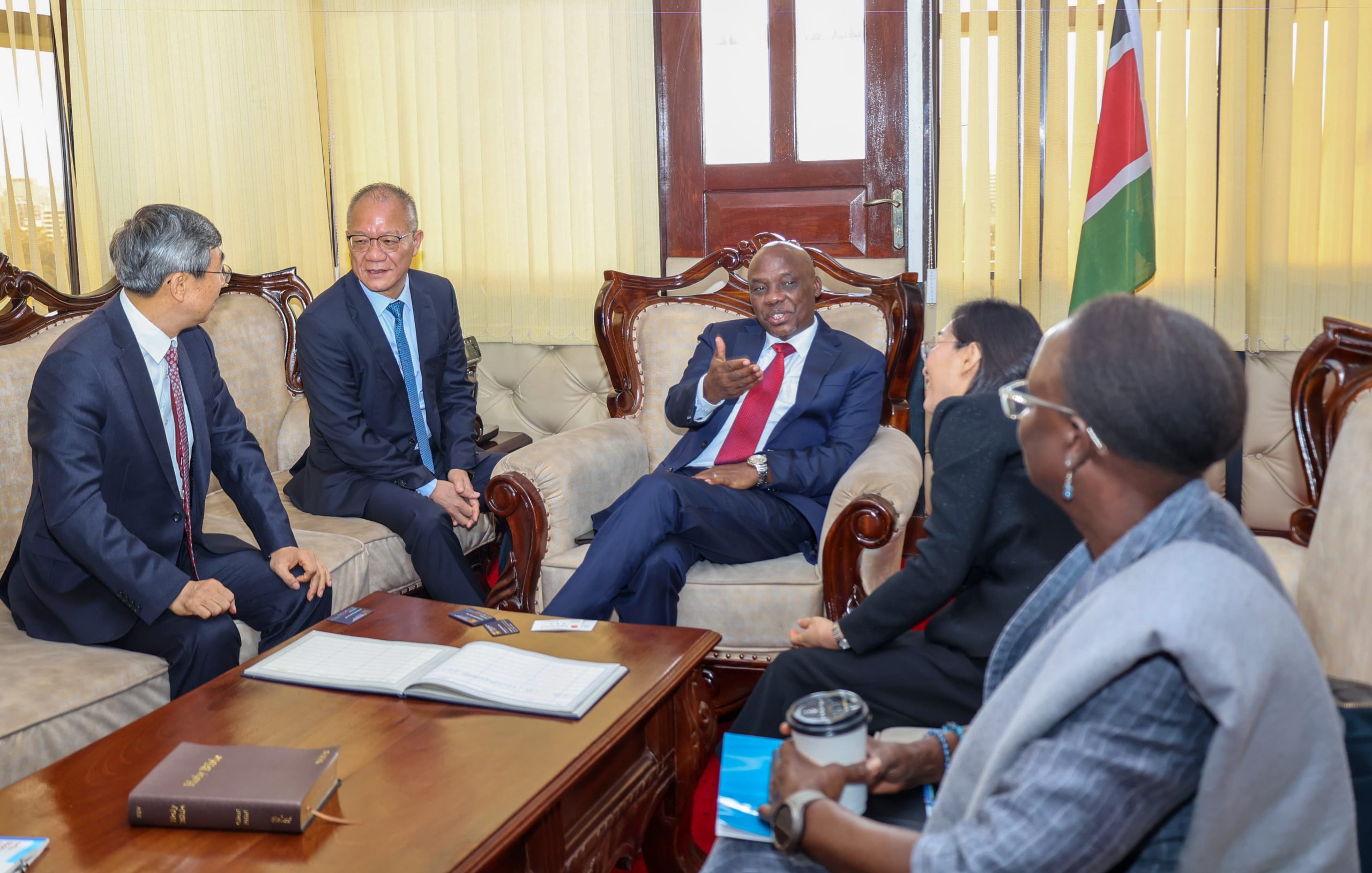
Chinese investors have announced a multi-billion-shilling investment strategy designed to transform Kenya’s agriculture sector, targeting sustainable farming practices, advanced processing, and large-scale job creation. The delegation, led by investor Meng Mi and introduced by Trans Nzoia Senator Allan Chesang, held detailed discussions with Agriculture Principal Secretary Dr. Kipronoh Ronoh at Kilimo House in Nairobi.
At the center of the plan is the rollout of bio-fertiliser technology to replace chemical-based fertilisers, a move expected to revive soil health and support Kenya’s shift to climate-smart farming. Agriculture PS Ronoh welcomed the proposal, confirming the Ministry’s readiness to allocate land and support the investment’s fast-tracking. “Bio-green fertiliser is great, as we are moving away from chemical fertiliser. We are ready to offer land for this to take place,” he said.
The delegation showcased potato processing technology capable of turning potatoes into rice or noodles with a shelf life of up to ten years. This innovation is set to open new export markets, reduce post-harvest losses, and contribute to national food security.
Recognising Kenya’s vulnerability to climate change, the investors also proposed introducing a drought-resistant rice variety that needs minimal water. This could significantly boost rice production in dry regions, offering farmers a reliable source of income even under unpredictable weather conditions.
Another major highlight is the proposed large-scale cultivation of Juncao Grass on 100,000 hectares in the Rift Valley. Known for its high protein content and suitability for livestock feed and textiles, the project is expected to create over 500,000 jobs across farming, processing, and related industries. “This will solve the feed problem for stock farming and support food security,” Meng noted.
To tackle water scarcity, the team unveiled water-from-air technology aimed at supplying clean drinking water and supporting drip irrigation. This dual solution could unlock agriculture potential in arid and semi-arid areas previously limited by chronic water shortages.
Aligned with Kenya’s plastic ban, the investors also plan to plant 130,000 hectares of dragon bamboo, a fast-growing species well suited to local conditions. Bamboo products including eco-friendly food containers, biodegradable charcoal, and construction materials are seeing rising demand in global markets, particularly in Europe’s anti-plastic sectors.
Senator Chesang emphasised the national economic impact, noting that the projects will modernise agriculture, stimulate agro-industrial growth, create thousands of jobs, and boost Kenya’s export earnings, all of which are critical to growing the GDP.
Beyond private sector plans, the visit coincided with a separate high-level meeting between Dr. Ronoh and Mr. Jiang Wensheng, Vice Minister of Agriculture and Rural Affairs of China, under the FAO-China South-South Cooperation Programme. The programme aims to deepen technical partnerships and knowledge sharing, with the delegation scheduled to tour Kenya Agricultural and Livestock Research Organization (KALRO) centres to explore flagship projects including low-carbon tea processing and fall armyworm control.
As Kenya and China continue to strengthen agricultural cooperation, these multi-billion shilling investments promise to position Kenya as a regional leader in sustainable farming, advanced processing, and green technologies. By supporting farmers and tapping into new export markets, the partnership is expected to deliver long-term economic and social benefits.
Kenya and Bangladesh are stepping up efforts to expand trade, investment and technical cooperation, with Nairobi seeking to establish a resident diplomatic mission in Dhaka and open new...
Read moreDetails