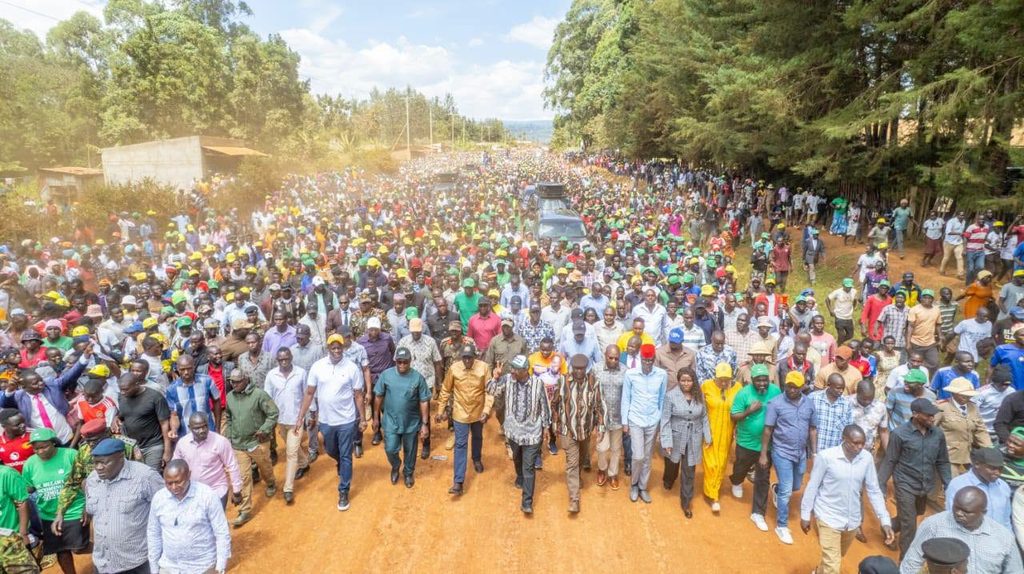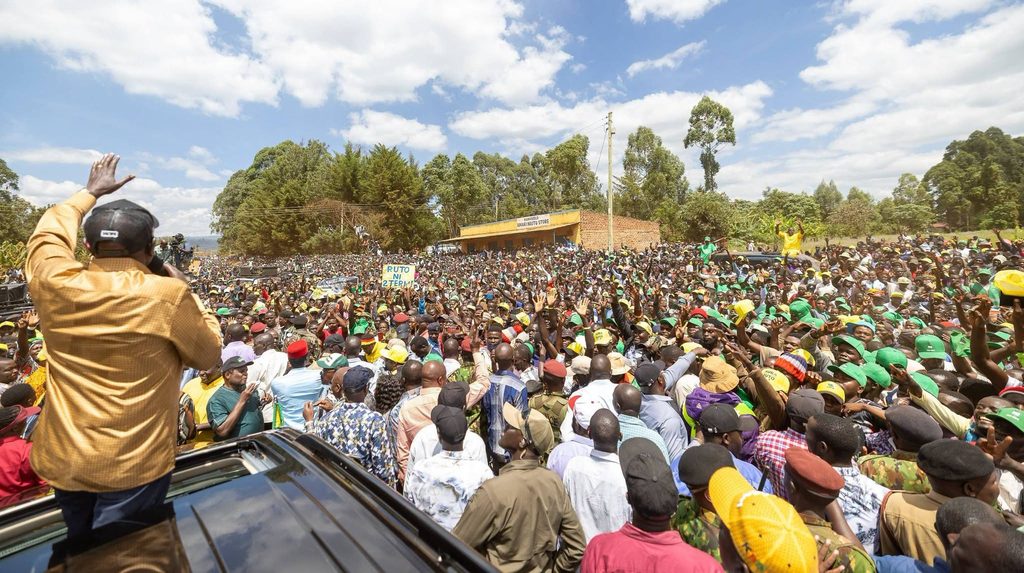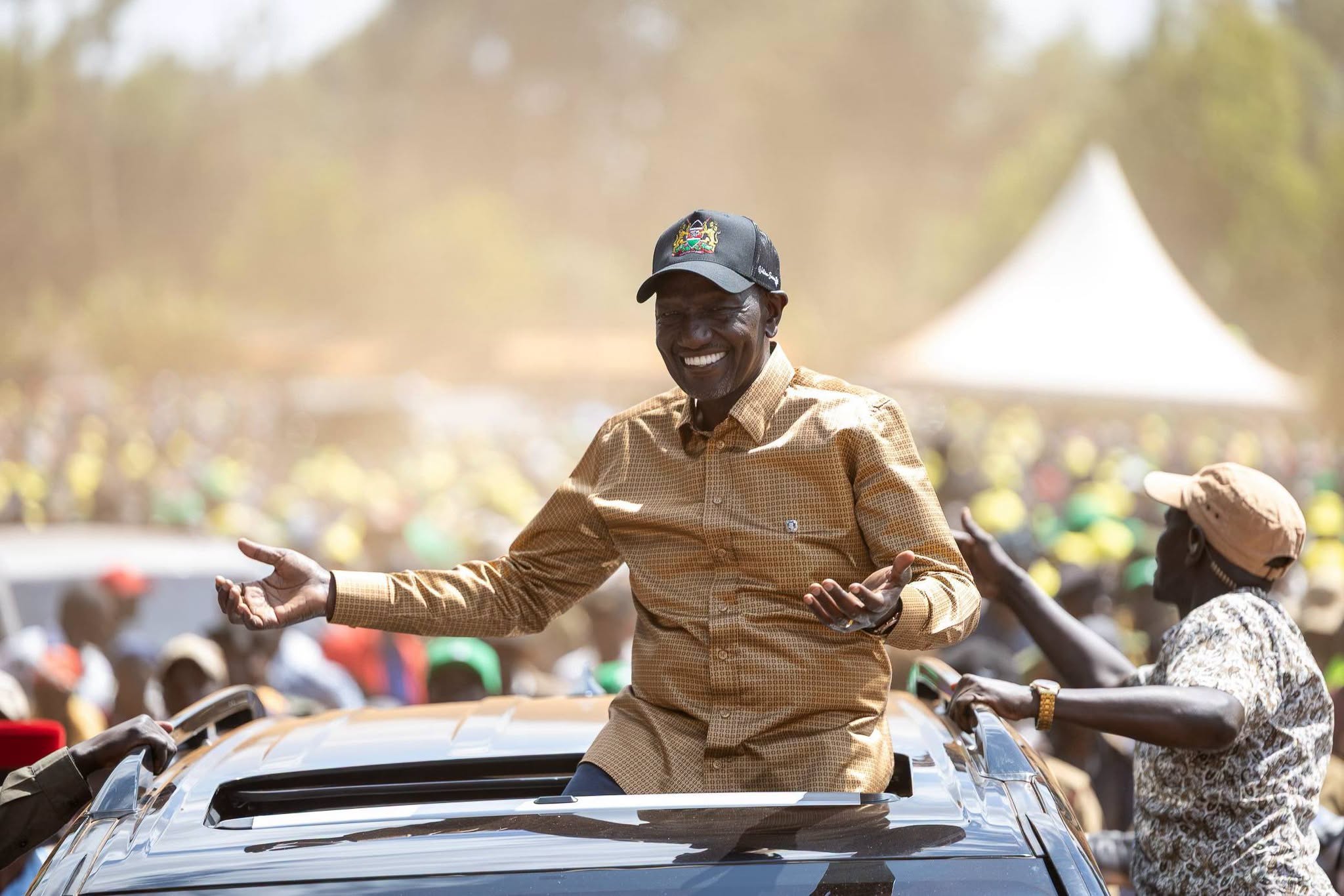
President William Ruto has boldly declared Western Kenya a ‘Tutam’ political zone, expressing confidence in his growing support across the region as he intensifies political mobilisation ahead of the 2027 General Election. Speaking during his five-day development tour of Western Kenya on Monday, November 23, 2026, the President dismissed opposition claims that he lacked political backing in the region, challenging his critics to concentrate on finding votes elsewhere. “I heard opposition people saying I have no votes here in Bungoma. They should go and look for votes elsewhere. Western is Tutam!” Ruto declared, signalling his determination to consolidate support in a region traditionally considered a battleground for national political contests.
Ruto’s remarks come amid increased political activity by opposition leaders seeking to strengthen their influence in Western Kenya, including Nairobi Senator Edwin Sifuna and his Linda Mwananchi Movement. However, the President used his tour to shift the political debate towards development delivery, challenging opposition figures to account for their achievements while in government instead of concentrating on criticism. He maintained that his administration’s record on infrastructure, agriculture, housing and economic transformation provided a stronger basis for seeking public support than political rhetoric. His message was that the 2027 contest should be determined by tangible development achievements and the government’s ability to improve the livelihoods of ordinary Kenyans.
A major highlight of the Bungoma visit was Ruto’s defence of the leasing of Nzoia Sugar Company to a private investor, following the disbursement of KSh195 million in bonuses to approximately 13,000 sugarcane farmers supplying the factory. The President argued that private-sector participation had helped rescue the struggling miller by introducing improved management, investment and operational efficiency. He cautioned politicians against interfering with the company’s operations, insisting that its future should be guided by professionalism, competence and commercial viability. “You cannot take a company that we have rescued from the ditch and hand it over to failed politicians,” he said. National Assembly Speaker Moses Wetang’ula supported the involvement of strategic investors in public enterprises, arguing that such partnerships could restore efficiency and profitability.
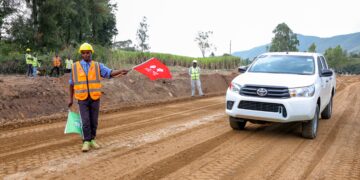
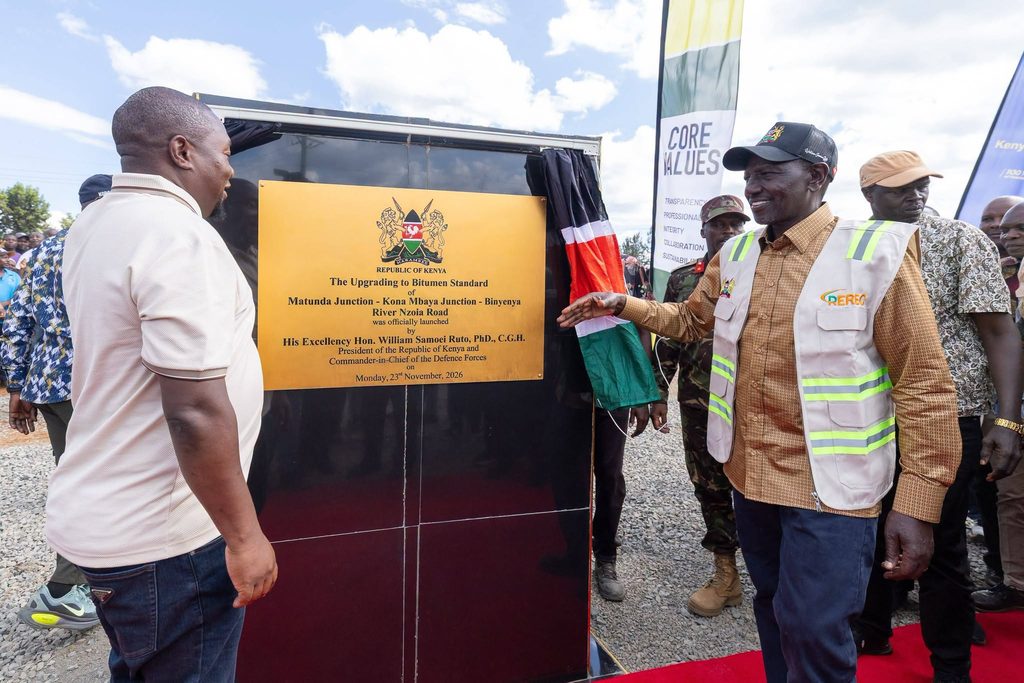
Beyond the political exchanges, the President used the tour to showcase his administration’s development agenda through infrastructure and education projects across Bungoma, Kakamega and Vihiga counties. In Kimilili Constituency, he launched the construction of the Kimilili-Kapsokwony road and commissioned a tuition block at Kamasielo Comprehensive School. In Likuyani, Kakamega County, he laid the foundation stone for the KSh475 million Matunda Affordable Housing Project, which is expected to deliver 205 housing units. He also launched the Matunda Junction-River Nzoia road project, part of a broader KSh21 billion programme targeting the upgrading of 300 kilometres of roads across Kakamega County.
In Vihiga County, Ruto commissioned the Mago-Mululu-Ilutsu road and launched the upgrading of the 28-kilometre Busweta-Shinyalu road in Sabatia Constituency. These projects form part of the government’s wider strategy to expand road connectivity, improve access to public services, stimulate local economic activity and create employment opportunities. The President’s emphasis on development delivery is particularly significant in Western Kenya, where infrastructure investment, agricultural recovery and employment creation remain central concerns for households and businesses. By linking his political message to visible projects, Ruto is seeking to demonstrate that his administration’s development agenda extends beyond traditional political strongholds.
The President also announced plans to return to the region to oversee bonus payments to farmers supplying Mumias Sugar Company, followed by growers linked to Chemelil, Muhoroni, Miwani and Sony sugar factories. The planned payments, alongside reforms in the sugar industry, are expected to strengthen farmers’ incomes and reinforce the government’s presence in the region’s agricultural economy. Politically, Ruto’s declaration of Western Kenya as a ‘Tutam’ zone reflects an increasingly confident campaign to consolidate support ahead of 2027, counter opposition mobilisation and position development delivery as the central measure of political leadership. His challenge to the opposition is clear: compete on achievements, economic transformation and tangible benefits to citizens rather than political declarations alone.