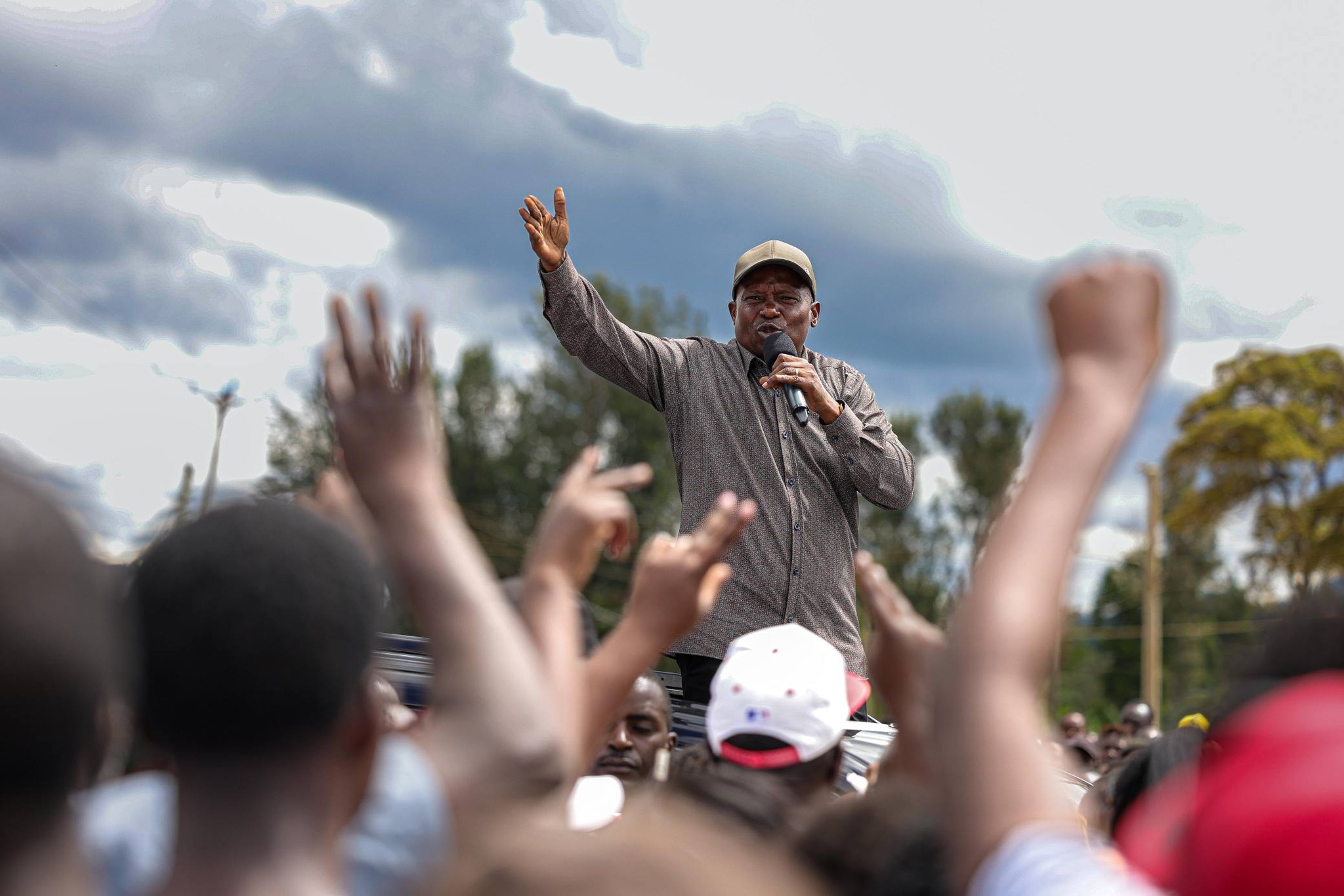
A fresh political clash has emerged between Deputy President, Prof. Kithure Kindiki and impeached former Deputy President Rigathi Gachagua over the recent banditry incidents in Meru North, bringing renewed focus to the government’s security response in the region. The exchange underscores a widening divide between the current administration’s approach to governance and what it terms as opposition-driven rhetoric lacking practical solutions.
Deputy President Kindiki issued a firm response to Gachagua’s remarks, dismissing his reported 10-day ultimatum to address insecurity as “empty and childish.” He cautioned against statements allegedly urging residents to arm themselves, warning that such sentiments risk escalating violence and undermining coordinated security efforts. Kindiki maintained that restoring order requires structured state intervention rather than reactive populist calls.
Emphasizing his commitment to service delivery, Kindiki positioned himself as a hands-on leader focused on tangible outcomes rather than political theatrics. As the principal assistant to President William Ruto, he reiterated his dedication to ensuring the government fulfills its mandate, particularly in securing vulnerable regions. His remarks highlighted a leadership philosophy anchored on action, coordination, and accountability.
Kindiki further noted that banditry in Meru North, located in Meru County, is a longstanding issue that predates the current administration. He pointed out that the crisis has persisted for over a decade, often worsening due to systemic challenges and gaps in previous interventions. This context, he argued, underscores the need for sustained and strategic security operations rather than short-term political pronouncements.
Drawing from his tenure as Interior Cabinet Secretary, Kindiki defended the government’s track record by citing direct involvement in security operations between 2023 and 2024. He revealed that he spent extended periods in the region, including operating from bush camps, to coordinate efforts that dismantled criminal networks. These operations, he noted, significantly reduced incidents of banditry before the recent resurgence.
In contrast, Kindiki accused Gachagua of failing to support such interventions while in office, arguing that leadership should be measured by concrete contributions rather than rhetoric. He challenged the former Deputy President to identify any development projects he championed, suggesting that his tenure lacked measurable impact on both security and socio-economic progress.
Despite acknowledging a recent spike in attacks resulting in loss of lives and livestock, Kindiki reassured Kenyans that the government remains firmly in control. He emphasized that security agencies are actively pursuing perpetrators and are committed to dismantling criminal networks, drawing parallels to previous successful crackdowns. His message sought to restore public confidence in the state’s capacity to manage the crisis.
The ongoing exchange reflects a broader political dynamic, where the current leadership projects itself as focused on delivery and results, while criticizing opponents for persistent bickering without tangible outcomes. As the government intensifies its security operations in Meru North, the spotlight remains on whether sustained action will translate into lasting stability, reinforcing Kindiki’s stance that service—not rhetoric—defines effective leadership.