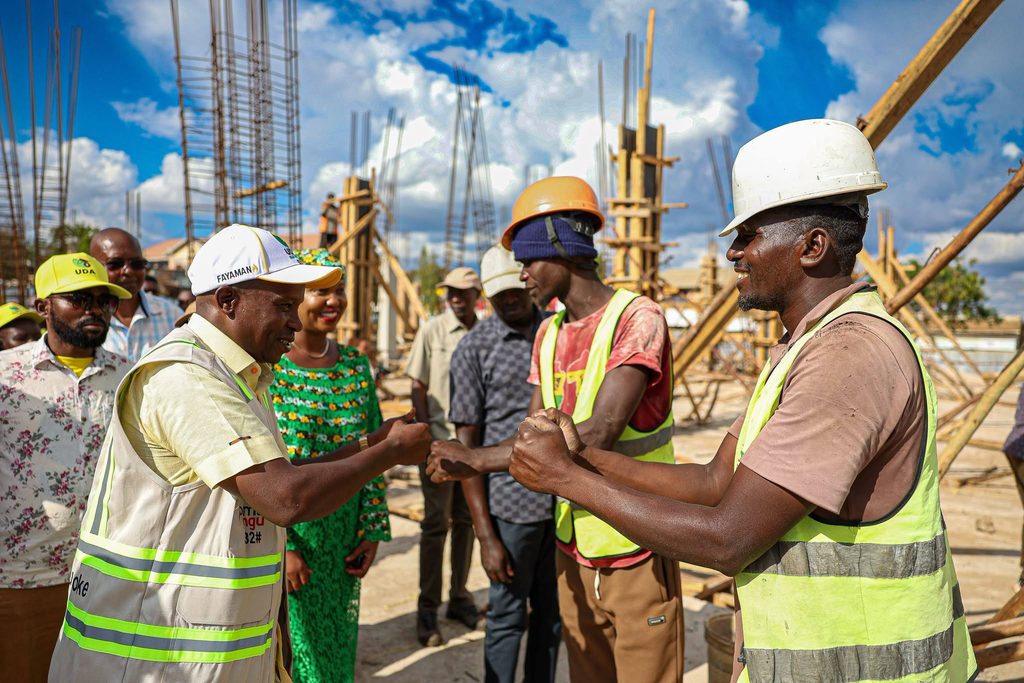
Deputy President Kithure Kindiki has declared that Kenya will never return to the era of marginalisation and discrimination, affirming the Kenya Kwanza administration’s commitment to ensuring equitable development across all communities and regions. Speaking on Monday during a development tour of Taveta Constituency in Taita Taveta County, Kindiki said President William Ruto’s government is determined to ensure every Kenyan benefits from national resources regardless of their political, ethnic or geographical background. He maintained that inclusive development is a non-negotiable national priority and a central pillar of the President’s re-election agenda under the Usawa ni Sawa vision.
The Deputy President accused opposition leaders of engaging in tribal politics, incitement and political intrigue instead of offering Kenyans credible alternative development policies. He challenged those seeking political leadership to move beyond divisive rhetoric and explain what they would do differently to improve the lives of ordinary citizens. Kindiki argued that Kenyans deserve a political debate centred on economic opportunities, infrastructure, service delivery and national progress rather than ethnic mobilisation and attempts to divide communities for political advantage.
Prof. Kindiki emphasised that no Kenyan community or region is superior to another, insisting that every citizen has an equal right to development and government services. He said the administration is determined to correct historical inequalities by extending infrastructure and economic opportunities to areas that have previously received inadequate government investment. “We are one nation, and no Kenyan is more important than another. No citizen has more rights than a citizen from another part of the country. That is why we say Usawa ni Sawa. We are all Kenyans, and we have one government which must serve every citizen without any form of discrimination,” he said. He added that development must not be determined by voting patterns or political loyalties.
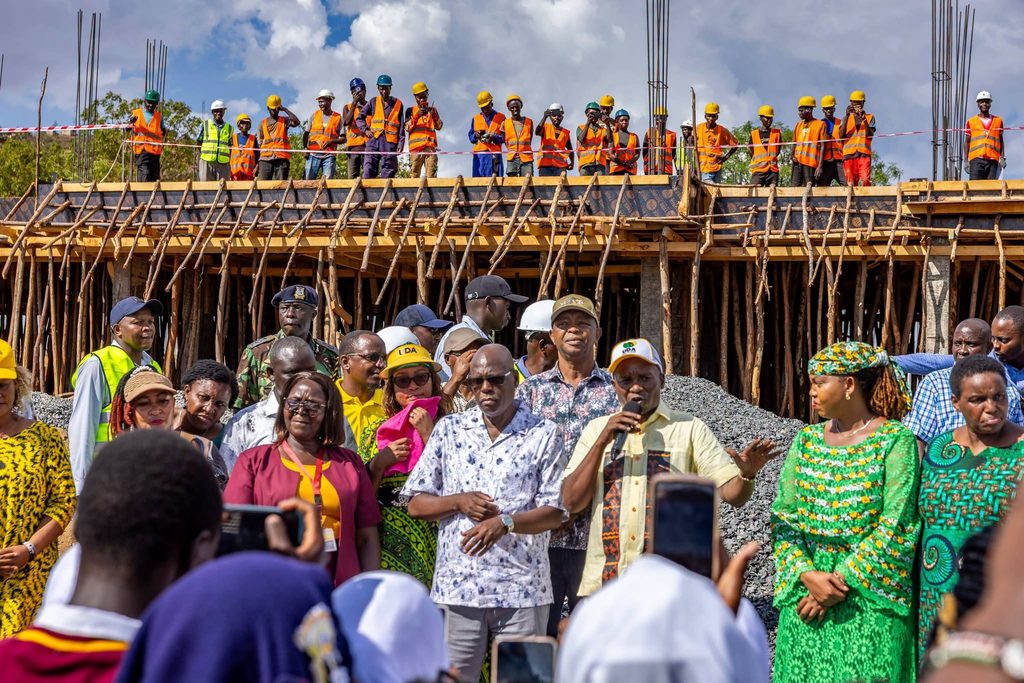
During the Taveta visit, the Deputy President inspected several ongoing projects worth billions of shillings, highlighting the government’s efforts to translate its development agenda into tangible outcomes. Among the projects was the 580-bed Taveta Kenya Medical Training College hostel, being constructed at a cost of KSh220 million, alongside works at Kimala Senior School, which has received KSh93 million through the National Government Constituencies Development Fund. Addressing thousands of residents in Taveta town, Kindiki provided updates on ongoing government programmes and assured the community that additional investments would follow.
On infrastructure, Kindiki highlighted the construction of the 67-kilometre Taveta–Rombo–Njukini–Ilasit Road, a strategic transport link connecting Taita Taveta and Kajiado counties. The KSh9.4 billion project is nearing completion and is expected to improve regional connectivity, facilitate trade and ease the movement of people and goods. Other projects include the Cess–Nghonji–Rekeke–Lake Jipe Road, the Mto Mwagodi–Msau–Mwangae–Mbale–Wundanyi–Mgange Road and the Maungu–Kasigau–Rukanga Road. Collectively, the government has committed KSh16.5 billion towards 243 kilometres of new roads across Taita Taveta, with projects at different stages of implementation.
Beyond roads, the government is expanding investments in commercial infrastructure, housing and education to stimulate economic activity and create opportunities for residents. Taita Taveta is benefiting from modern markets in Mwatunge, Maungu, Voi and Wundanyi, with additional facilities planned for Taveta and Njukini. The county is also benefiting from housing-related investments valued at KSh7.8 billion, including affordable housing developments and student hostels. These initiatives are expected to strengthen local commerce, support small businesses, improve access to accommodation and generate employment opportunities for the region’s residents.
Kindiki said the government would continue increasing development allocations to historically underserved areas as part of a deliberate effort to address longstanding regional inequalities. He insisted that the administration’s commitment to equitable development was demonstrated through projects already underway, rather than political promises. He cited the need to ensure that development taking place in Nairobi is replicated in Mombasa, that investments in Kiambu reach Taita Taveta, and that progress in Garissa is matched by development in Kajiado, Kisii and Kitui. The Deputy President assured residents that the government would honour its commitments while allocating additional resources to accelerate development in the county.
He challenged opposition politicians to present their development records and explain their alternative policies before criticising the current administration, arguing that Kenyans should judge leaders by their achievements and ability to deliver. Kindiki maintained that the Ruto administration is determined to build a united country where no community is left behind and where national development is distributed more fairly. The Usawa ni Sawa vision, he said, represents a commitment to ending historical discrimination and ensuring that every region has a meaningful stake in Kenya’s economic transformation. He reiterated that the country cannot afford to return to divisive politics and unequal development, declaring that equitable growth, national unity and service delivery will remain central to President Ruto’s leadership agenda.