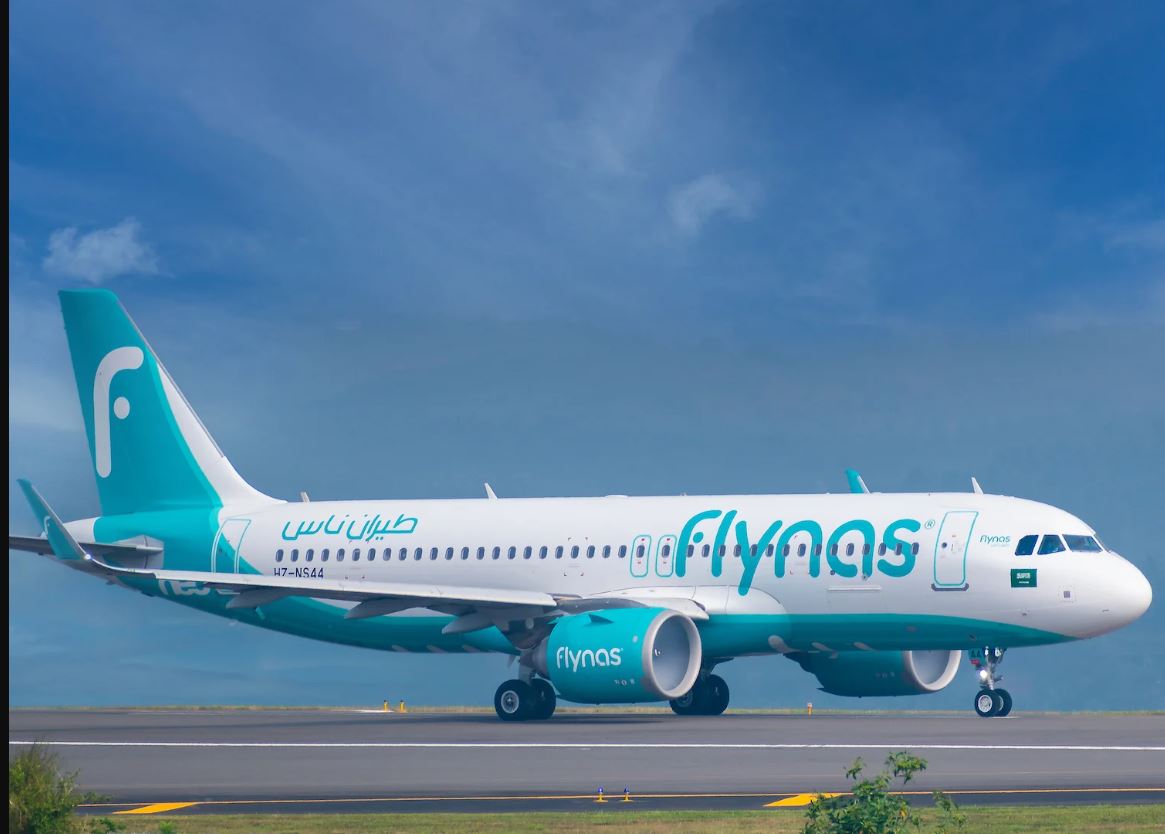
Saudi Arabia’s budget airline flynas will begin direct flights between Riyadh and Nairobi on October 2, 2025. The airline will operate three weekly flights, marking its entry into Kenya’s aviation market and offering new opportunities for travel, tourism, and trade between the two countries.
For Kenya, the launch brings several important benefits. Travelers will now have direct and affordable access to Riyadh, making business trips, leisure visits, and religious pilgrimages easier. At the same time, the new service is expected to bring more Saudi visitors and investors into Kenya, giving a boost to the country’s tourism industry and wider economy.
Flynas is already well known in the Middle East as the leading low-cost carrier, with over 2,000 weekly flights across 139 routes and a fleet of 64 aircraft. Its entry into Nairobi adds Kenya to its growing African network, which already includes Addis Ababa, Entebbe, and Djibouti. For Kenya, this development strengthens Nairobi’s position as the leading aviation hub in East and Central Africa.
The impact on tourism is expected to be significant. Saudi Arabia has been encouraging its citizens to explore new destinations under its Vision 2030 program. Kenya’s wildlife, beaches, and cultural heritage make it a natural fit for Saudi tourists, who tend to be family-oriented travelers with strong spending power. More direct flights will also help promote Kenya as a preferred destination for holidaymakers from the Gulf region.
Kenya’s Muslim community also benefits directly from this connection. The new route makes it easier and more affordable for pilgrims to travel to Makkah and Madinah for Hajj and Umrah. This is a practical advantage that will ease travel costs and logistics for thousands of families each year.
The economic impact is not limited to tourism. Direct flights will make it faster for Kenyan exports such as tea, coffee, flowers, and fresh produce to reach Saudi markets. At the same time, Kenyan businesses and consumers will enjoy improved access to Saudi goods, pharmaceuticals, and industrial supplies. Easier travel will also open doors for joint ventures and investment partnerships across sectors like energy, real estate, and services.
For Kenya’s aviation industry, the arrival of flynas increases competition on Middle East routes, which are currently dominated by Emirates, Qatar Airways, and Saudia. More competition typically means lower ticket prices and better services, making international travel more accessible for ordinary Kenyans. It also supports Nairobi’s long-term goal of becoming the preferred hub for both passengers and cargo in East Africa.
Saudi Arabia’s decision to expand flights to Kenya also reflects its broader aviation and economic strategy. The Kingdom’s National Civil Aviation Strategy aims to connect Saudi Arabia with 250 international destinations and handle 330 million passengers annually by 2030. Partnering with Kenya, the region’s largest economy, is an important step in achieving this goal.
Flynas has earned recognition as one of the top low-cost airlines worldwide. In 2025, it was named Best Low-Cost Airline in the Middle East for the eighth year in a row by Skytrax and has also been recognized by the World Travel Awards as the Middle East’s Leading Low-Cost Airline for eleven consecutive years. This reputation gives Kenyan travelers confidence that the service will be reliable and affordable.
Looking ahead, the Riyadh–Nairobi flights could be the foundation for deeper cooperation in aviation. As demand grows, more frequencies may be added, and partnerships between Kenya Airways and flynas could offer even more connectivity. This would further integrate Nairobi into global travel networks and ensure that Kenya remains a central link between Africa and the Middle East.
The arrival of flynas is therefore more than a new flight service. It signals stronger ties between Kenya and Saudi Arabia, with benefits that will be felt across tourism, trade, investment, and cultural exchange. For Kenya, it is another step forward in its journey to become a leading economic and transport hub in Africa.

President William Ruto has challenged African nations to take charge of financing their own development by mobilising domestic resources, strengthening continental financial institutions and reducing dependence on external...
Read moreDetails