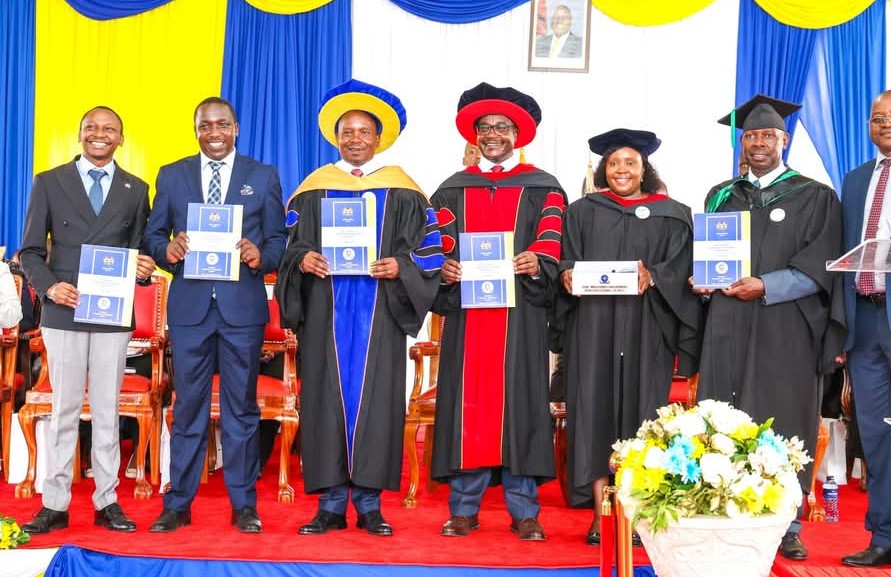
The Government has intensified efforts to reform Kenya’s Technical and Vocational Education and Training (TVET) sector, with more than 5,000 graduates from recent polytechnic ceremonies set to benefit directly from the changes. The latest policy interventions and investments are aimed at equipping the country’s workforce with relevant skills to meet evolving labor market demands and bolster the country’s economic competitiveness.
In a transformative shift poised to redefine Kenya’s development trajectory, the Government’s reforms in the TVET sector are unlocking new opportunities for the youth while strengthening the foundation of a modern, inclusive economy. These reforms align technical training with global standards and aim to build a resilient workforce that drives national growth.
Deputy President Prof. Kithure Kindiki, speaking during the graduation ceremony of Michuki National Polytechnic, emphasized that the TVET sector is central to preparing a skilled, adaptable, and innovative labor force. His remarks reflected a national vision that moves beyond preparing job seekers and instead focuses on nurturing creators, innovators, and problem-solvers capable of transforming industries.
One of the most significant policy shifts is the adoption of a modular Competency-Based Education and Training (CBET) model. This approach segments training into short, examinable competency units that can be completed in three to six months, offering micro, partial, or full qualifications. These micro-credentials provide a flexible and demand-driven system that is responsive to the dynamic nature of modern work environments. They offer both young learners and working professionals a pathway to rapidly acquire new skills or formally upgrade existing ones.
To further broaden access and inclusivity, the government recently launched the National Recognition of Prior Learning (RPL) Framework. This groundbreaking initiative certifies technical skills gained through informal or non-traditional learning environments such as workplaces, communities, or self-teaching. For millions of Kenyans whose knowledge has previously gone unrecognized, this policy provides a vital bridge to formal certification and new career opportunities.
As part of the wider strategy to enhance the quality of TVET education, the government is upgrading physical infrastructure and equipping institutions with modern technology. A partnership with global firm Avic International will see seventy TVET institutions fitted with advanced tools and resources, ensuring that learners train using equipment that mirrors actual industry settings.
The reforms also emphasize practical learning through the newly approved dual training policy. This framework formalizes the integration of classroom instruction with on-the-job industry experience. Prime Cabinet Secretary Musalia Mudavadi described the policy as a game changer, bridging the gap between education and employment. By graduating with both theoretical knowledge and practical experience, TVET students will be better prepared for local and international labor markets.
The government’s focus on industry alignment is also evident in the full implementation of the CBET curriculum rolled out in September 2023. The curriculum prioritizes practical skills and real-world outcomes, ensuring that trainees graduate with the competencies required in priority sectors such as construction, manufacturing, ICT, renewable energy, and agribusiness.
At the institutional level, enrollment continues to grow. Michuki National Polytechnic plans to expand its capacity to over 15,000 students with the establishment of a new satellite campus. Such developments underscore the rising demand for TVET education and the growing recognition of its value. In the most recent ceremonies, 2,257 learners graduated from Michuki National Polytechnic with diplomas and certificates, while another 300 completed short artisan courses. Kaiboi National Polytechnic, in its first graduation ceremony since being upgraded, saw 1,614 students awarded qualifications across various levels.
The TVET transformation is equally focused on empowering instructors. The recruitment of 2,000 new trainers and the continued professional development in modern technologies and methodologies underscore the government’s commitment to quality education delivery.
As reiterated by Principal Secretary for TVET, Dr. Esther Muoria, technical and vocational training is now a cornerstone of national development. It is no longer seen as a secondary option, but rather a key driver of innovation, economic resilience, and youth empowerment. With deliberate investments and strong policy direction, the Government is positioning TVET as a vital engine of growth.
These reforms reflect more than an administrative overhaul. They signal a long-term commitment to inclusive economic transformation and to ensuring that every Kenyan has a fair chance to thrive through skill and innovation. Through modernized infrastructure, industry collaboration, and flexible learning pathways, Kenya’s TVET sector is becoming a model for workforce empowerment in the region.

Kenya and Bangladesh are stepping up efforts to expand trade, investment and technical cooperation, with Nairobi seeking to establish a resident diplomatic mission in Dhaka and open new...
Read moreDetails