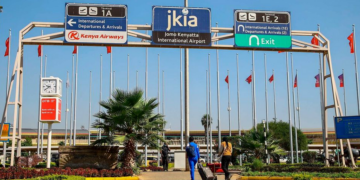
The Government has unveiled a comprehensive new plan to expand Jomo Kenyatta International Airport (JKIA), reaffirming its commitment to modernizing one of Kenya’s most critical infrastructure assets. The announcement comes months after the cancellation of a controversial multi-billion shilling proposal involving India’s Adani Group, a move that sparked intense public debate. With a fresh tender now officially advertised, the government has signaled a reset—anchored on transparency, competitiveness, and long-term national interest.
Roads and Transport Cabinet Secretary Davis Chirchir emphasized that the new expansion blueprint is rooted in a completed master plan and feasibility study finalized last month. The project will involve the construction of a new passenger terminal, upgrading of existing facilities, and significant airside and landside improvements. According to the CS, the process is being conducted strictly under the Public Procurement and Asset Disposal Act (PPDA), with open bidding, evaluation, and award procedures designed to uphold legal and regulatory standards.
The urgency of the expansion is underscored by mounting congestion at JKIA. The airport currently handles approximately nine million passengers annually, exceeding its original design capacity of 7.5 million. Over the years, incremental expansions have struggled to keep pace with growth, leading to operational bottlenecks across terminals, aircraft parking bays, and access roads. Authorities warn that without a comprehensive upgrade, efficiency, safety, and Kenya’s competitive position as a regional aviation hub could be compromised.
Projections indicate that passenger numbers will surge from nine million to over 22 million annually in the coming decades, while cargo volumes are expected to more than double—from 407,000 tonnes in 2025 to over 860,000 tonnes by 2045. This anticipated growth reflects Kenya’s expanding role in regional trade, tourism, and logistics. The planned new terminal alone will accommodate an additional 10 million passengers annually, with room for future expansion as demand grows.
Beyond passenger facilities, the project includes upgrading the existing runway, constructing a partial parallel taxiway, and adding rapid exit taxiways to improve aircraft movement and reduce turnaround times. These enhancements are expected to streamline airside operations, minimize delays, and strengthen safety standards. In parallel, optimization upgrades to the current facility are set to be completed within 15 months, increasing its handling capacity to 12 million passengers even before the new terminal is operational.
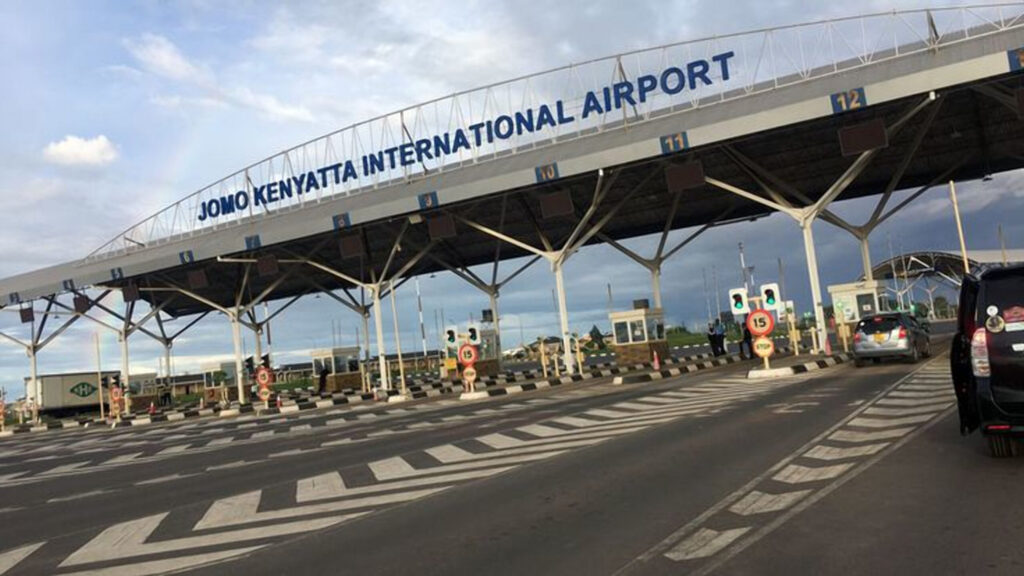
CS Chirchir assured Kenyans that the government has been working on the master plan since February last year and is committed to delivering the new airport infrastructure within three years. He reiterated that public speculation surrounding the collapse of the previous deal would not derail Kenya’s infrastructure ambitions. Instead, the new process is intended to restore public confidence while ensuring that national assets are developed in a transparent and accountable manner.
The broader vision extends beyond aviation infrastructure. The expansion plan envisions the development of an Airport City and a Special Economic Zone (SEZ) around JKIA. This integrated hub is expected to attract investment in logistics, trade, manufacturing, and business services, transforming the area into a strategic economic node. By linking aviation growth with industrial and commercial development, the government aims to create jobs, spur innovation, and strengthen Kenya’s position as East Africa’s gateway to global markets.
The opening of the tendering phase marks the beginning of what is likely to be one of Kenya’s most closely monitored infrastructure undertakings. The JKIA expansion is not merely a construction project—it is a strategic investment in national competitiveness, economic resilience, and regional leadership. As the government pushes forward with renewed determination, the success of this initiative will play a defining role in shaping Kenya’s aviation future and broader economic trajectory