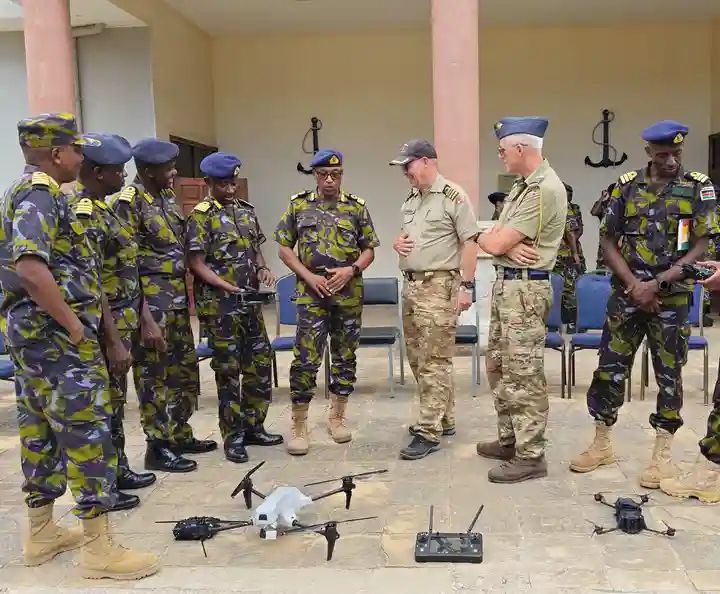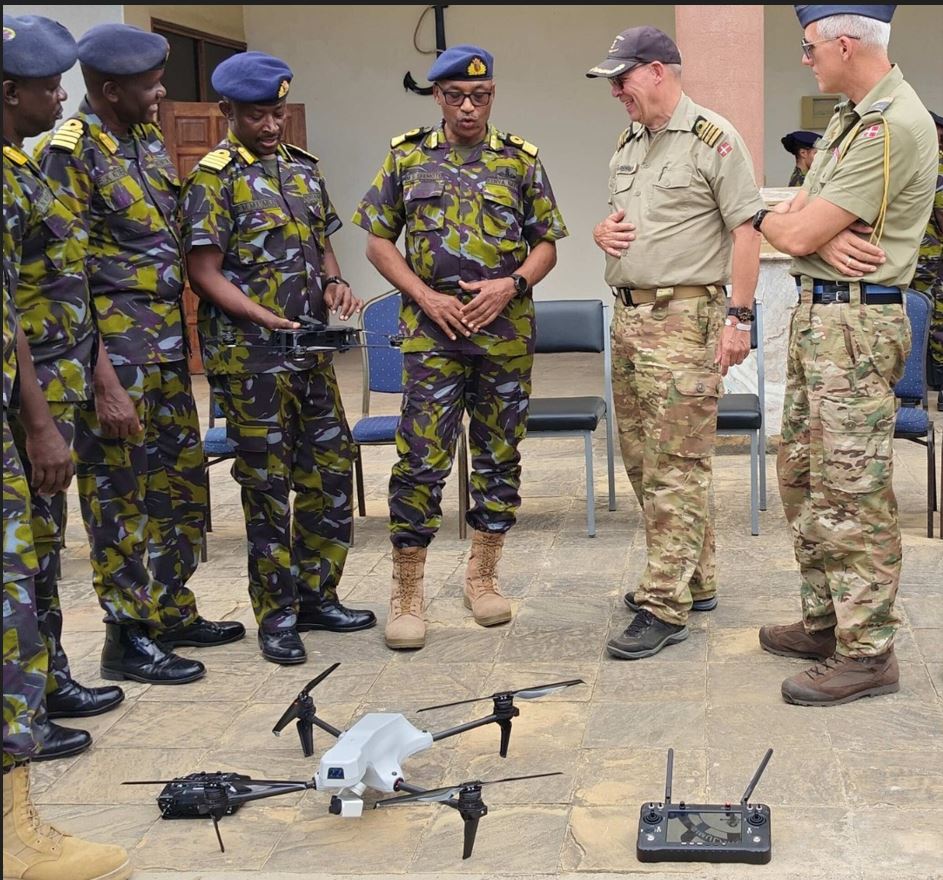
Denmark has handed over 12 Danish made drones to the Kenya Navy in a move set to significantly strengthen Kenya’s maritime security capabilities. The transfer follows intensive operational training at the Kenya Naval Training College in Mtongwe, where naval personnel were equipped with the technical expertise required to deploy, maintain, and integrate the unmanned systems into active operations. The development marks a substantive upgrade of Kenya’s coastal surveillance architecture and signals a deepening defense partnership between Nairobi and Copenhagen focused on technology transfer and long term capacity building.
Denmark’s donation of 12 Danish made drones to the Kenya Navy signals a decisive shift in Kenya’s maritime security posture. Coming after specialized operational training conducted at the Kenya Naval Training College in Mtongwe, the handover represents far more than a symbolic gesture of bilateral goodwill. It reflects a calculated investment in technology, skills transfer, and institutional capacity that directly strengthens Kenya’s ability to secure its coastline and maritime borders.
The unmanned aerial systems, produced by the Danish firm Upteko, bring intelligence, surveillance, and reconnaissance capabilities that significantly expand the Navy’s maritime domain awareness. For a country with an extensive coastline and a strategic position along major Indian Ocean shipping lanes, real time aerial surveillance enhances early warning systems and improves operational response. Rather than relying solely on manned patrol vessels, which are resource intensive and limited by visibility and range, the integration of drone technology introduces a layered security architecture capable of persistent monitoring across difficult terrain and open waters.
This capability is particularly critical in addressing long standing threats such as piracy, illegal fishing, narcotics trafficking, and human smuggling. Kenya’s maritime security challenges are intertwined with regional instability, especially along routes linked to Somalia where extremist infiltration and arms smuggling remain persistent risks. Drone supported surveillance allows the Navy to monitor vulnerable coastal and swamp areas, track suspicious maritime movement, and support counterterrorism operations without exposing personnel to unnecessary danger. The result is a shift from reactive patrols to intelligence driven maritime enforcement.
The economic implications are equally significant. Kenya’s blue economy ambitions, anchored by the Port of Mombasa and regional trade corridors, depend on secure sea lanes and protected marine resources. Disruptions caused by piracy or illicit maritime activity undermine investor confidence and threaten supply chains across East Africa. Enhanced aerial monitoring strengthens the protection of commercial shipping, fisheries, and offshore assets, reinforcing maritime security as a pillar of economic stability and national development.
Operationally, the structured training component ensures that the technology is embedded within Kenya’s defense ecosystem. Officers underwent hands on instruction in flight planning, sensor deployment, aerial data analysis, maintenance, and safety protocols. This emphasis on technical competence reflects a broader modernization agenda within the Kenya Defence Forces, where capability development is increasingly tied to knowledge transfer and institutional resilience. By investing in human capital alongside hardware acquisition, Kenya moves closer to sustainable defense capacity rather than dependency on external operators.
The partnership with Denmark also carries broader strategic weight. It reinforces Kenya’s role as a regional security anchor in the Horn of Africa while deepening bilateral defense cooperation rooted in long term stabilization objectives. Beyond immediate tactical gains, the collaboration opens avenues for industrial engagement, local maintenance capacity, and potential future technological partnerships. In an era where global powers compete for influence across Africa, this form of cooperative capacity building positions Kenya within a network of diversified security partnerships.
Effective integration of drone systems will, however, depend on clear policy frameworks. Data sharing protocols, inter agency coordination, oversight mechanisms, and sustainable procurement planning are essential to ensure that technological adoption translates into measurable security outcomes. Maritime threats are multi-dimensional, intersecting with customs enforcement, border control, fisheries management, and intelligence services. The true value of the drone fleet will be realized when surveillance data seamlessly informs joint operations across national security bodies and regional partners.
The Danish donation ultimately reflects a strategic recalibration in Kenya’s national security doctrine. Modern maritime defense increasingly relies on digital intelligence, rapid response capability, and technological agility. By embracing UAV systems and pairing them with structured training and institutional cooperation, Kenya demonstrates a proactive approach to securing its maritime domain.
At a time when regional maritime corridors face evolving threats and economic stakes continue to rise, this partnership underscores Kenya’s commitment to forward looking security governance. Strengthened surveillance, enhanced operational readiness, and deeper international collaboration position the country to safeguard its coastal waters while supporting national development and regional stability.