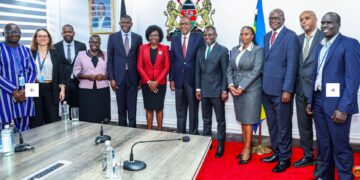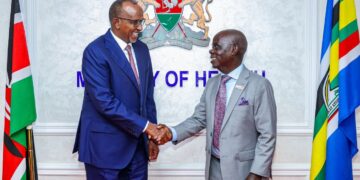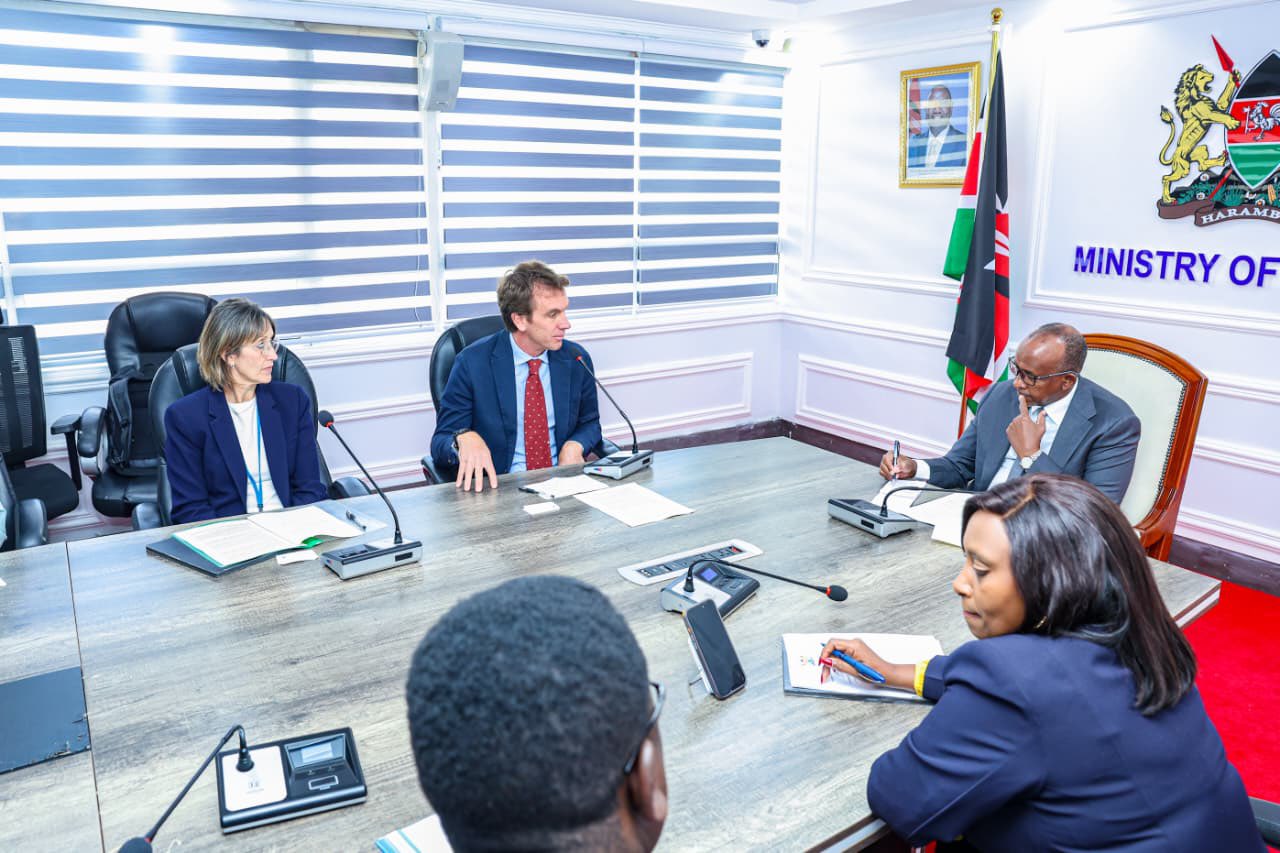
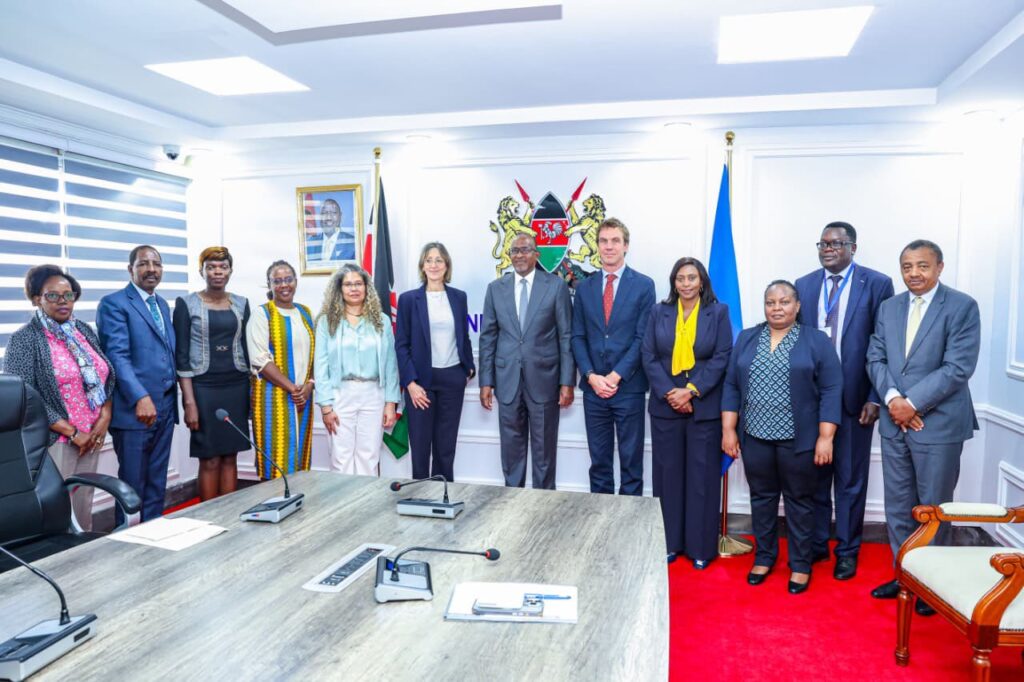
Kenya has intensified its push toward achieving Universal Health Coverage (UHC) following high-level bilateral talks between Health Cabinet Secretary Aden Duale and a United Kingdom delegation led by Dr. Ed Barnett, the UK Chargé d’Affaires to Kenya. The meeting, held in Nairobi on December 8, 2025, marked a major commitment by both countries to deepen cooperation in health system reforms, innovation, and long-term capacity building. The discussions also came shortly after Kenya concluded a major health partnership with the United States, signalling a strong global momentum behind Kenya’s healthcare transformation agenda.
During the talks, CS Duale outlined Kenya’s priority areas for collaboration, highlighting the need to strengthen technical capacity in local pharmaceutical manufacturing. He noted that the UK pledged targeted support in Good Manufacturing Practice (GMP) compliance, technology transfer, quality assurance and digital product-authentication systems. These areas, he said, are essential for boosting Kenya’s ambition to establish county-level manufacturing hubs and position the country’s innovations within regional and global value chains. Achieving World Health Organization (WHO) Maturity Level 3 remains a key milestone in these efforts.
The Cabinet Secretary also updated the delegation on reforms under the Social Health Authority (SHA), which is central to the rollout of UHC. Duale emphasized the value of tapping into the UK’s strong experience through the National Health Service (NHS), particularly in digital governance and health-financing systems. He said these reforms would help Kenya build an integrated, efficient and accountable health system capable of delivering equitable care for all citizens.
Strengthening preparedness for health emergencies formed a major part of the discussions. Duale noted that the UK committed to supporting Kenya in outbreak analytics, upgrading laboratory systems and enhancing readiness for high-threat pathogens. He said enhanced cross-border surveillance and rapid-response capability are vital for safeguarding the country’s health security, especially amid rising global health threats. “This partnership is about saving lives and building a resilient health system,” Duale affirmed.
Innovation and research also featured prominently in the talks. Both sides agreed to expand the UK–Kenya Health Global Innovation Network, with a focus on artificial-intelligence-enabled diagnostics, early screening technologies and commercialization of local innovations. Duale said nurturing a vibrant innovation ecosystem would accelerate the availability of modern medical technologies while creating opportunities for Kenyan researchers, startups and universities.
Dr. Barnett reaffirmed the UK’s commitment to deepening health cooperation with Kenya, noting the success of ongoing joint programmes in cancer care, molecular diagnostics and clinical research. He highlighted the Kenya–UK Health Alliance, which supports oncology partnerships, virtual tumour boards and fellowship programmes for Kenyan specialists. He said such initiatives continue to build advanced medical capacity while improving patient outcomes across the country.
CS Duale concluded that Kenya’s health agenda is anchored on innovation, integration and global partnerships. He referenced the newly signed Health and Data Sharing Cooperation Framework with the United States and Kenya’s preparations to host the World Health Summit Africa in April 2026. The meeting with the UK delegation, he said, reaffirmed Kenya’s commitment to building a modern, resilient and people-centred health system that works for every Kenyan.