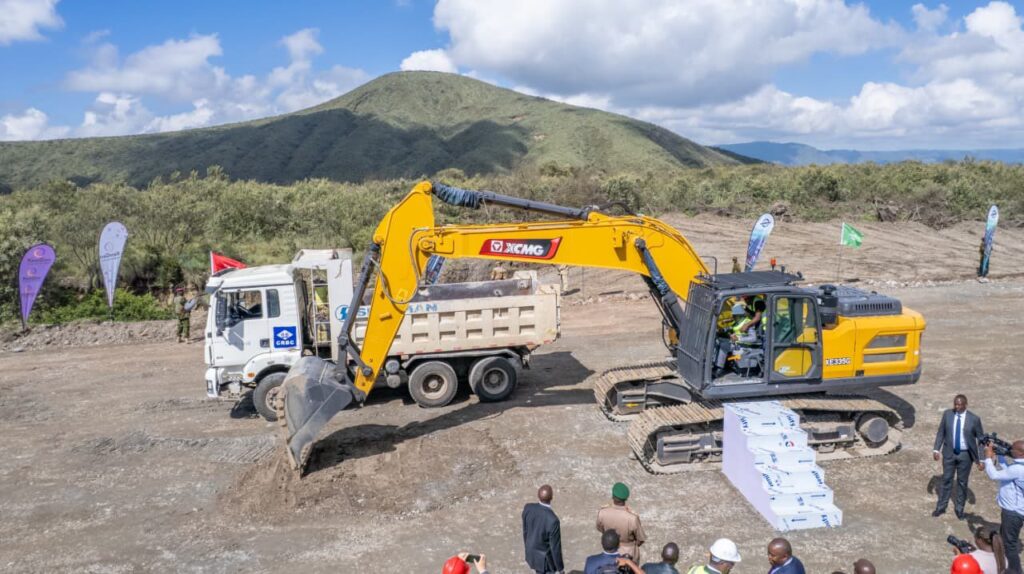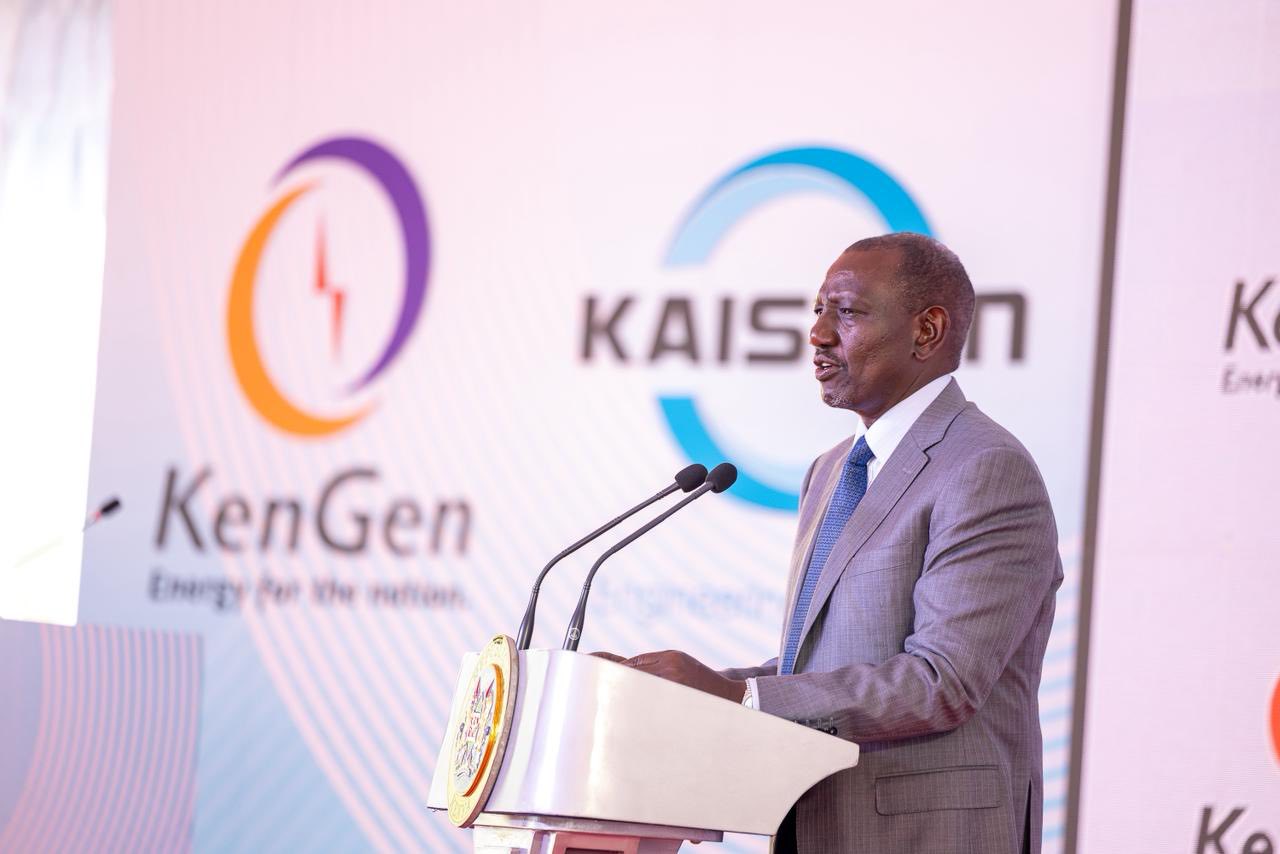
President William Ruto launched the construction of the KenGen–Kaishan Olkaria Green Fertiliser Plant in Nakuru County, marking a major milestone in Kenya’s journey toward agricultural self-sufficiency and industrial transformation. The KSh 100 billion project, a partnership between the Kenya Electricity Generating Company (KenGen) and China’s Kaishan Group, is expected to revolutionize fertiliser production and support the government’s agenda for green growth, food security, and job creation.
Speaking during the groundbreaking ceremony in Naivasha, President Ruto emphasized that the initiative is part of his administration’s commitment to empower farmers, lower the cost of production, and shield the country from volatile global fertiliser markets. “This life-changing initiative will create over 2,000 jobs, cut our import bill by more than KSh 60 billion each year, and reinforce Kenya’s place at the forefront of green growth and climate-smart innovation on the continent,” he stated.
The Olkaria Green Fertiliser Plant will produce over 480,000 tonnes of fertiliser annually, ensuring a steady and affordable local supply to Kenyan farmers. The project, valued at $800 million (approximately KSh 100 billion), leverages Kenya’s geothermal energy resources at Olkaria to manufacture green ammonia-based fertiliser — a cleaner and more sustainable alternative to conventional fertiliser production.
President Ruto described the project as a “defining moment for Kenya’s green industrial transformation”, noting that it symbolizes what can be achieved when energy, technology, and vision are united in purpose. He added that reducing dependency on imports is crucial to protecting farmers from fluctuating international prices and strengthening the nation’s agricultural resilience.
According to the Kenya National Bureau of Statistics (KNBS), between January and June 2025, Kenya imported 443,701 tonnes of fertiliser worth about KSh 25.63 billion — a slight drop from 445,857 tonnes worth KSh 27.71 billion during the same period in 2024. These figures underscore the growing demand for fertiliser in the country and the importance of local manufacturing in reducing import reliance.
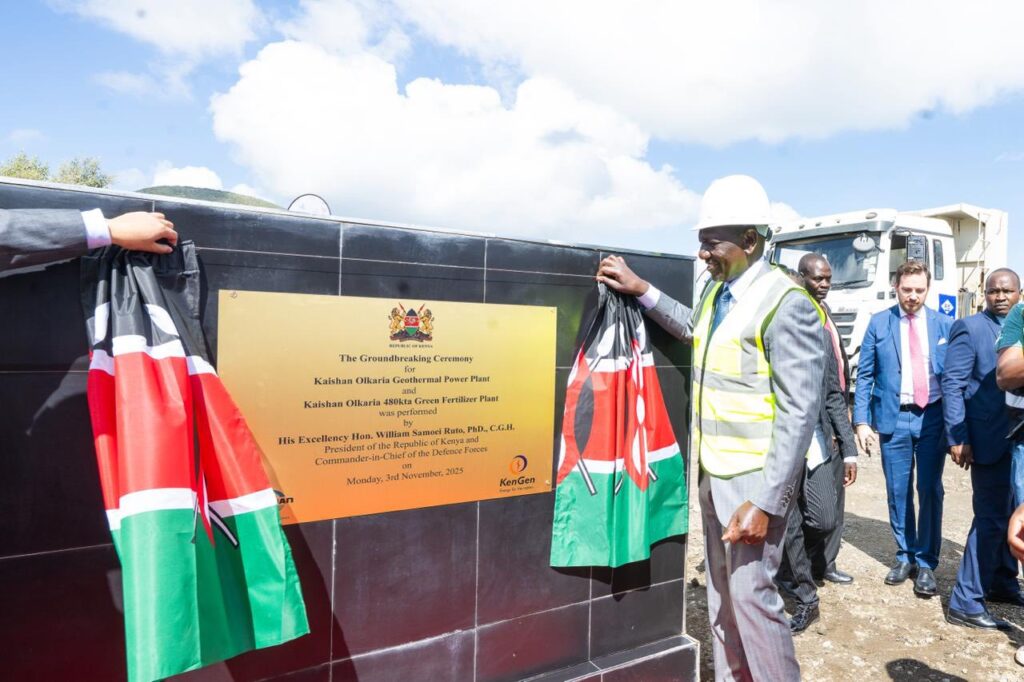
The President reiterated that empowering farmers remains central to his administration’s strategy for food security and economic growth. He highlighted that the government had doubled the budgetary allocation for subsidised fertiliser imports from four million bags in 2023 to eight million in 2024, with the goal of ensuring farmers have timely access to inputs. “By supporting our farmers, we are not only boosting food production but also creating jobs, stabilizing prices, and driving rural prosperity,” Ruto affirmed.
The Olkaria Green Fertiliser Plant represents a bold step toward sustainable industrialization and energy-driven manufacturing, aligning with Kenya’s Vision 2030 and climate action commitments. Once operational, it is expected to position Kenya as a regional leader in eco-friendly fertiliser production — transforming agriculture into a key driver of both economic and environmental progress.
In his closing remarks, President Ruto assured Kenyans that his administration remains steadfast in uplifting farmers, creating employment opportunities, and building a resilient, self-reliant economy. “This project shows that Kenya’s future lies in innovation, sustainability, and the hard work of our people,” he said. “We are laying the foundation for a nation that feeds itself, employs its youth, and leads Africa in green growth.”