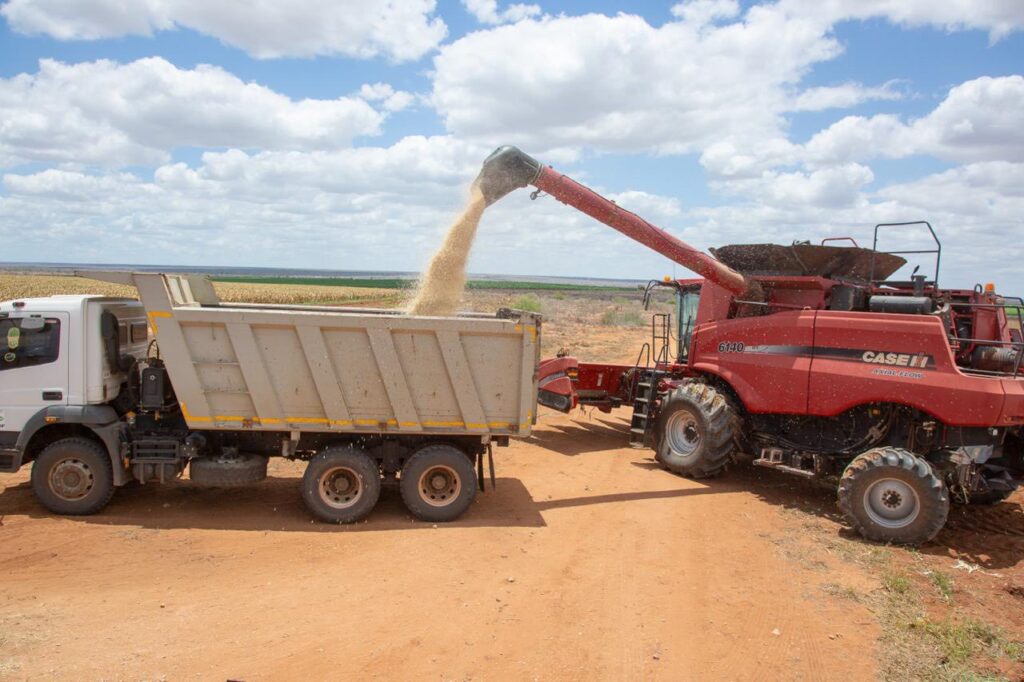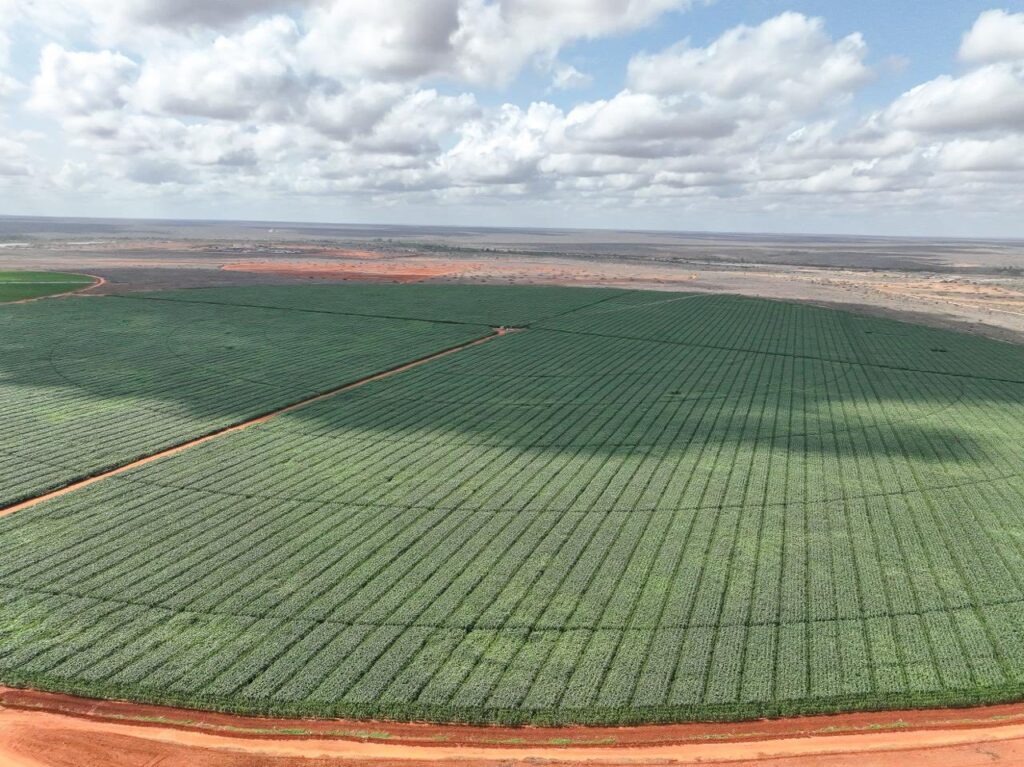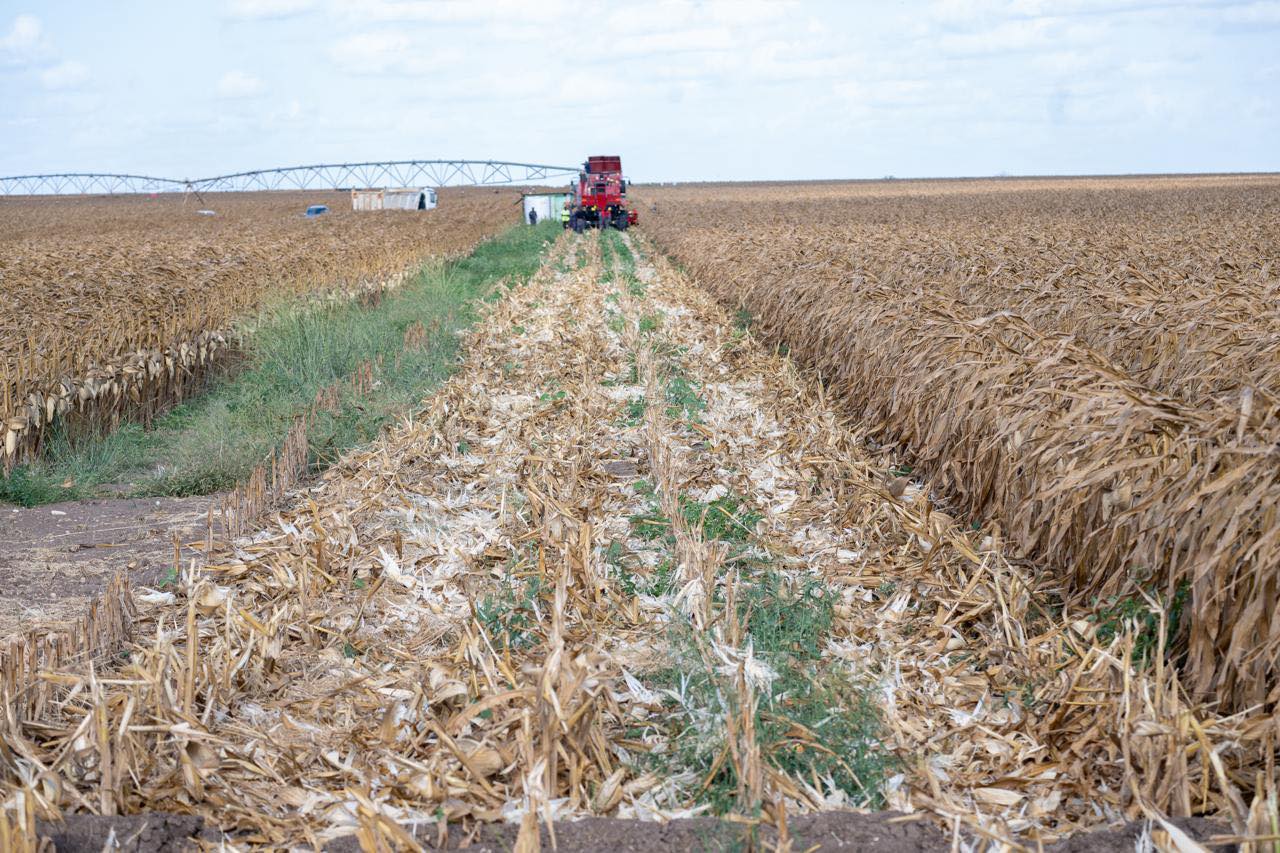
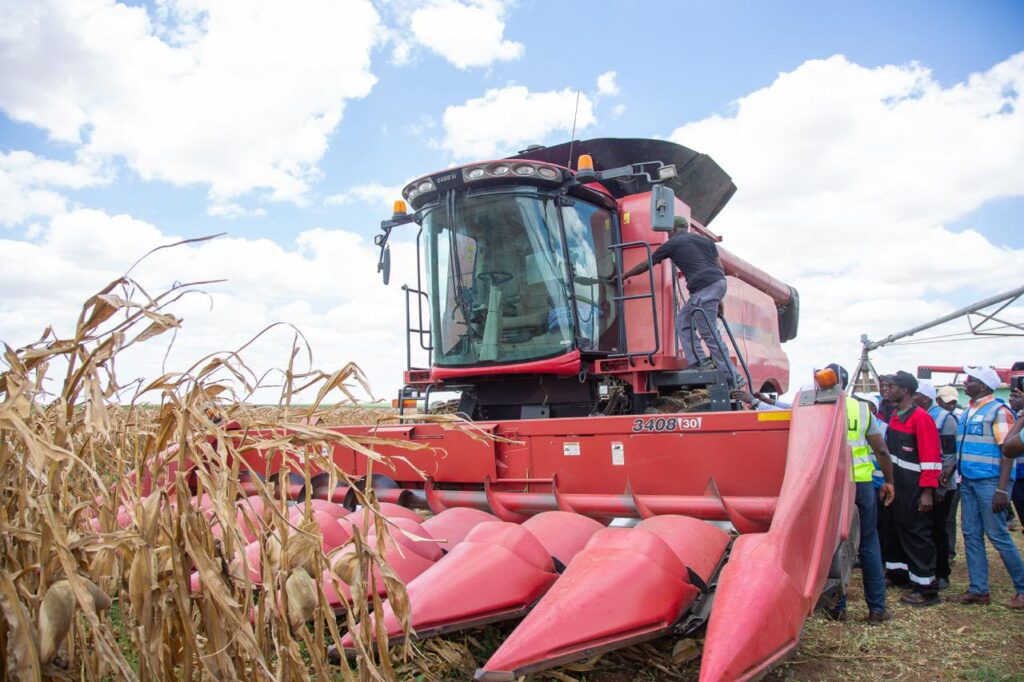
The harvesting of the first maize crop at the Galana Kulalu Irrigation Scheme officially began on Saturday, October 11, 2025, marking a major milestone for a project that had once been written off as a failure. The Galana Kulalu Food Security Project, situated across Kilifi and Tana River counties, is now emerging as a key pillar in Kenya’s march toward food self-sufficiency — a vision strongly supported by President William Ruto’s administration.
Implemented under a public-private partnership (PPP) model between the government and Selu Limited, the project has seen remarkable turnaround results. Of the initial 1,500 acres planted, yields have ranged between 28 and 30 bags of seed maize per acre — an impressive outcome that underscores the success of modern irrigation and efficient resource use. The revival reflects the government’s dedication to transforming Kenya’s agriculture through technology, partnerships, and the Bottom-Up Economic Transformation Agenda.
Water and Irrigation Cabinet Secretary Eric Mugaa, who attended the launch of the harvest, emphasized that the Galana Kulalu project is on track to become Kenya’s primary food hub. “This project will significantly contribute to reducing our Ksh.500 billion annual food import bill. The first crop we are harvesting today is evidence that Kenya can be food secure through proper planning and partnerships,” Mugaa stated. He further explained that 330 acres of the planted land will be harvested over the next five days, with plans already underway to expand irrigation coverage.
According to the CS, Selu Limited can currently cultivate 6,300 acres using the water supplied by two small dams already completed. However, the long-term goal is to construct a large dam capable of irrigating up to 200,000 acres, ensuring year-round crop production and securing Kenya’s food future. The initiative aligns closely with President Ruto’s vision of an agricultural-driven economy where innovation and investment replace dependency and import reliance.
Selu Limited CEO Nicholas Ambanya revealed that the company has so far created about 200 jobs at Galana Kulalu, with more employment opportunities expected as the cultivated area expands. The firm plans to grow from 1,500 acres to 3,200 acres by the end of 2025, and to 5,400 acres by June 2026. Over time, Selu Limited aims to progressively increase the cultivated area to 20,000 acres as more irrigation water becomes available, creating a ripple effect in local economic growth and rural livelihoods.
Irrigation Principal Secretary Ephantus Kimotho, who accompanied the CS, highlighted that the project demonstrates the potential of arid and semi-arid regions in achieving food security. He disclosed that the government is already in talks with other partners interested in developing an additional 180,000 acres for irrigation. “This project proves that with water and determination, Kenya’s drylands can feed the nation,” he said.
National Assembly Water, Irrigation and Blue Economy Committee Chairman Kangogo Bowen expressed satisfaction that Parliament’s allocated funds for Galana Kulalu’s irrigation infrastructure had been well utilized. He assured continued legislative support to sustain the project’s growth. Also present were National Irrigation Authority Chairman Gilbert Maluki and CEO Charles Muasya, who commended the milestone as a symbol of renewed confidence in Kenya’s irrigation future. The first harvest at Galana Kulalu marks not just a revival, but the dawn of a resilient, modern, and sustainable agricultural system capable of transforming Kenya into a food-secure nation.