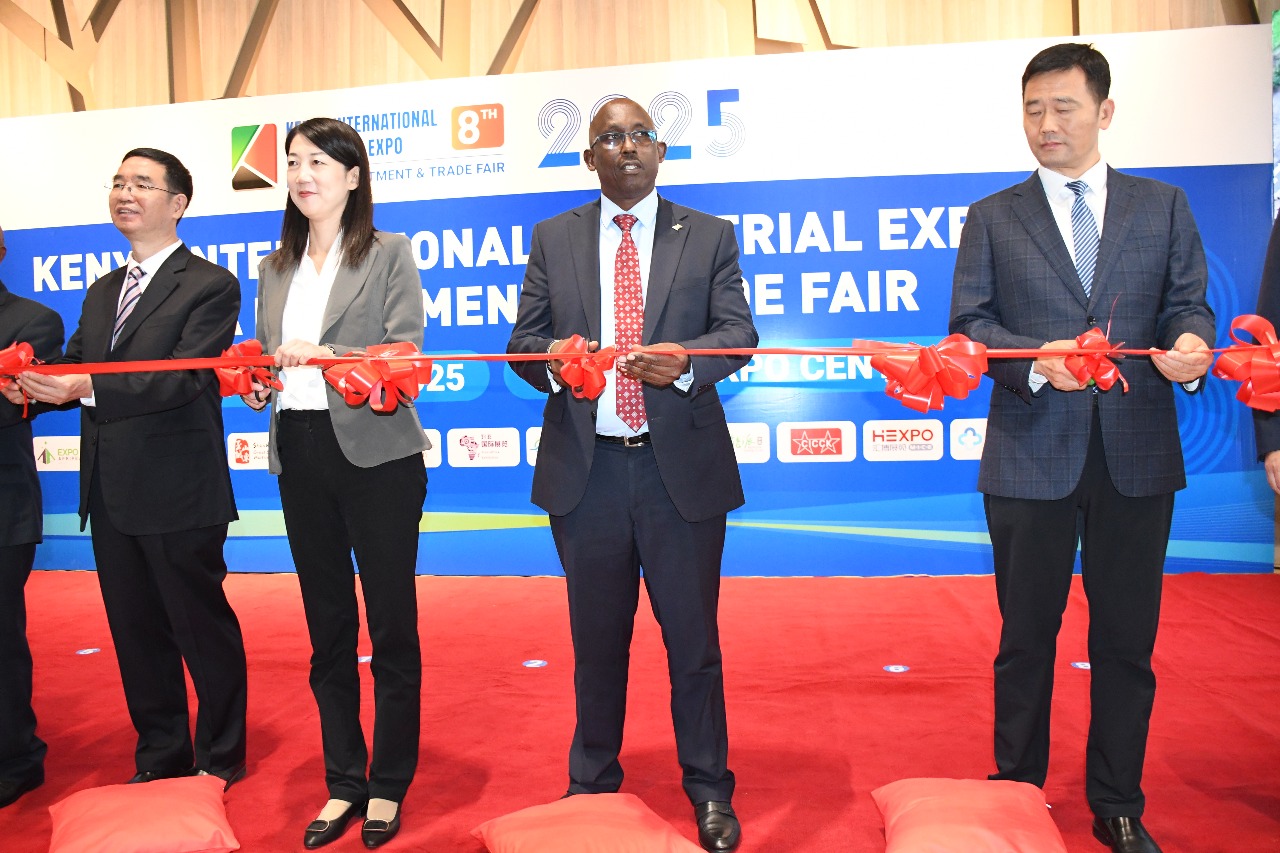
Kenya and China have signed a new Memorandum of Understanding to strengthen trade and industrial cooperation during the 8th Kenya International Industrial Expo (KIIE) in Nairobi. The agreement was signed between the Kenya National Chamber of Commerce and Industry (KNCCI) and the China Chamber of Commerce for Import and Export of Machinery and Electronic Products (CCCME).
The deal is expected to accelerate Kenya’s industrial growth, promote knowledge sharing, and create opportunities for joint ventures and technology transfer. It comes at a time when Kenya is seeking to expand its manufacturing sector, which currently contributes 7.6 percent to the national economy. The government’s target under Vision 2030 and the Bottom-Up Economic Transformation Agenda is to raise this figure to 15 percent.
KNCCI Chief Executive Officer Kenneth Mutai described the signing as a timely boost to Kenya’s industrialisation plan. He explained that every one percent increase in manufacturing output can generate more than 200,000 jobs across value chains, showing how important industrial growth is for the economy. Mutai added that the agreement with China will help empower small and medium-sized enterprises, which form the backbone of Kenya’s business sector.
For China, the MoU demonstrates continued commitment to supporting Africa’s development. CCCME Vice President Shi Yonghong said Chinese enterprises are ready to invest in Kenya and integrate with local industries. He pointed out that the agreement reflects a shared vision of building stable supply chains and helping Kenya modernise its industries.
The expo itself attracted more than 200 Chinese companies and over 6,000 delegates from around the world. Exhibitors showcased products and technologies in construction, green energy, automotive, ICT, textiles, and agriculture. The displays highlighted innovations that can directly support Kenya’s priorities such as affordable energy, modernised farming, and sustainable urban development.
Afripeak Expo Kenya Managing Director Gao Wei, the official organiser of the event, noted that the expo was more than a trade fair. He described it as a platform where innovation and opportunity meet. According to Gao, the signing of the MoU marked the start of a new phase where global solutions are connected to African opportunities, with Kenya at the centre.
The agreement goes beyond trade and manufacturing. It also encourages collaboration in agro-processing, tourism, cultural exchange, and digital trade platforms. These areas will not only help Kenya diversify its economy but also strengthen cultural ties and improve people-to-people exchanges between the two countries.
Kenya–China relations have been expanding steadily, with trade between the two nations surpassing 8 billion dollars in 2024. China remains Kenya’s largest source of imports, particularly machinery, electronics, and construction materials. The new MoU creates room for Kenya to gain more value locally by promoting local assembly, skills development, and stronger export capacity.
KNCCI President Erick Rutto welcomed the agreement as a clear signal of Kenya’s determination to grow its economy through industrialisation. He emphasised that the partnership will create jobs, improve the competitiveness of local businesses, and support innovation across sectors.
The three-day expo, running under the theme “Investing in Tomorrow, Trading for Prosperity,” showcased Kenya’s openness to global collaboration while underlining the country’s ambition to shape its own economic path. By signing the agreement with China, Kenya has positioned itself to attract more investment, transfer advanced technologies, and create a stronger industrial base.
This MoU represents more than a single business deal. It is a step toward building a modern, inclusive, and globally competitive economy, while also strengthening one of Kenya’s most important bilateral partnerships.
President William Ruto has placed Micro, Small and Medium Enterprises (MSMEs) at the center of Kenya’s economic transformation strategy, recognizing the sector as the backbone of job creation,...
Read moreDetails