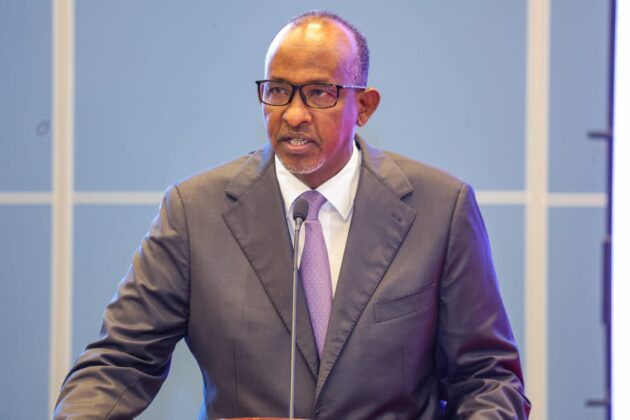
In a groundbreaking move to ease the burden of cancer treatment in Kenya, the Social Health Authority (SHA) will now fully fund a critical biological therapy for breast and gastric cancers under a new partnership between the Ministry of Health and Roche Pharmaceuticals. The collaboration has drastically cut treatment costs from KSh120,000 to KSh40,000 per session—an amount now entirely covered by SHA with no out-of-pocket costs for patients. Health Cabinet Secretary Aden Duale termed the development a major milestone in the government’s mission to expand equitable access to quality cancer care.
The subsidized biological therapy, now accessible in all SHA-accredited hospitals—including public, private, and faith-based facilities—specifically targets breast and gastric cancers, which make up between 15 to 20 percent of the country’s cancer burden. Speaking during the announcement, CS Duale emphasized that this public-private collaboration embodies a patient-centered approach and reflects the government’s resolve to make life-saving therapies universally available, regardless of one’s socio-economic status.
However, Duale warned that affordable treatment must go hand-in-hand with early detection. “More than 70 percent of cancer cases in Kenya are diagnosed at advanced stages due to limited diagnostic infrastructure, stigma, and misinformation,” he said. Late-stage detection severely reduces survival rates, making it imperative to strengthen screening, education, and referral systems—particularly in rural and underserved regions. He called on county governments to ring-fence budgetary allocations for these priorities.
The CS also encouraged pharmaceutical companies to emulate Roche by entering similar agreements with the government to help reduce drug costs and improve access to modern therapies. He stressed that achieving equity in healthcare demands a collaborative approach among national and county governments, the private sector, development partners, civil society, and the media. “We need more scalable and locally-adapted solutions that are rooted in evidence and driven by compassion,” Duale stated.
Cancer remains the third leading cause of death in Kenya, after infectious and cardiovascular diseases. According to the Kenya National Cancer Registry and the World Health Organization, the country records approximately 42,000 new cancer cases and 27,000 cancer-related deaths annually. Among women, breast and cervical cancers account for nearly half of all cases, while prostate and esophageal cancers dominate among men. These alarming statistics underscore the urgent need for early diagnosis and affordable treatment options.
Duale closed his remarks with a rallying call to all stakeholders: “Let this summit be remembered as the moment we shifted from plans to impact—from words to action. Let us unite and deliver a future where cancer is no longer a death sentence, but a challenge we confront with courage, equity, and resolve.” With the SHA now absorbing treatment costs and new efforts underway to improve detection, Kenya takes a critical step forward in its fight against one of its most lethal health challenges.