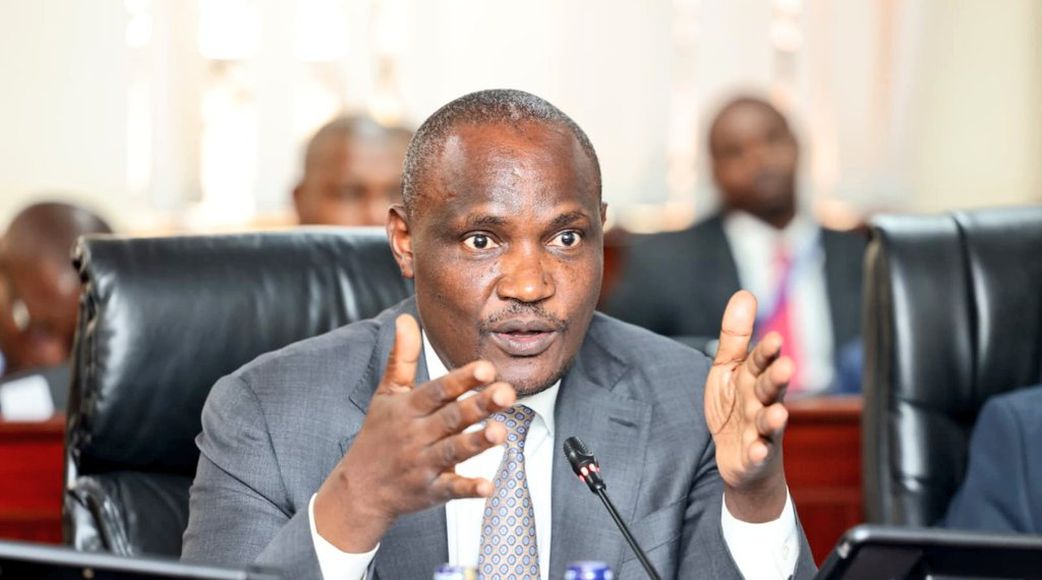
Kenya’s National Treasury has outlined new macroeconomic targets for the 2025/26 financial year, with a strong focus on controlling inflation and stimulating sustainable economic growth. In a formal notice addressed to the Central Bank of Kenya (CBK), Cabinet Secretary for National Treasury and Economic Planning, John Mbadi, laid out key economic policy directives designed to safeguard price stability and steer the nation toward resilient growth. These directives come at a time of mounting global economic uncertainties and domestic fiscal pressures.
At the core of the policy guidance is the government’s objective to achieve and maintain price stability—viewed as the bedrock of macroeconomic stability. The Central Bank has been mandated to manage inflation within a target range of 5%, with a flexible margin of ±2.5%. This range, according to the Treasury, is intended to mitigate the effects of inflationary shocks and provide a more stable economic environment for investment, production, and household consumption.
To achieve this, the CBK will be closely monitored and held accountable through consistent reporting to the Treasury. These reports will evaluate how effectively inflation is being controlled and whether corrective fiscal policy adjustments are required. The CBK is expected to take proactive steps to address deviations from the target, with the flexibility to adapt to unforeseen economic shocks that may arise domestically or globally.
Beyond inflation, the Treasury’s strategy for FY 2025/26 emphasizes inclusive and sustainable economic growth. Key sectors identified for targeted support include agriculture, MSMEs, healthcare, and the digital economy. Agriculture, in particular, will benefit from transformation programs aimed at boosting productivity and food security. MSMEs will be supported through funding and policy incentives to stimulate entrepreneurship and job creation.
The digital superhighway initiative remains a central pillar of Kenya’s long-term growth model, aimed at leveraging ICT for economic transformation. Meanwhile, investments in healthcare and human capital development will be maintained, with the goal of improving national wellbeing and building a competitive labor force. These combined efforts are intended to enhance Kenya’s productivity base and raise living standards.
Transparency and accountability will remain critical throughout the implementation process. The CBK will be required to submit regular updates to the National Assembly detailing inflation trends, policy interventions, and economic performance benchmarks. The Treasury emphasized that any significant policy shifts will be communicated to the public promptly to preserve trust and credibility in the government’s fiscal management.
Looking ahead, Treasury CS John Mbadi reaffirmed the government’s commitment to prudent fiscal discipline, responsive policymaking, and sustained development. He expressed optimism that the framework for 2025/26 would help Kenya navigate external headwinds while meeting domestic economic needs. With consistent monitoring, adaptive strategies, and sectoral investments, Kenya aims to consolidate its economic recovery and lay the foundation for long-term stability.