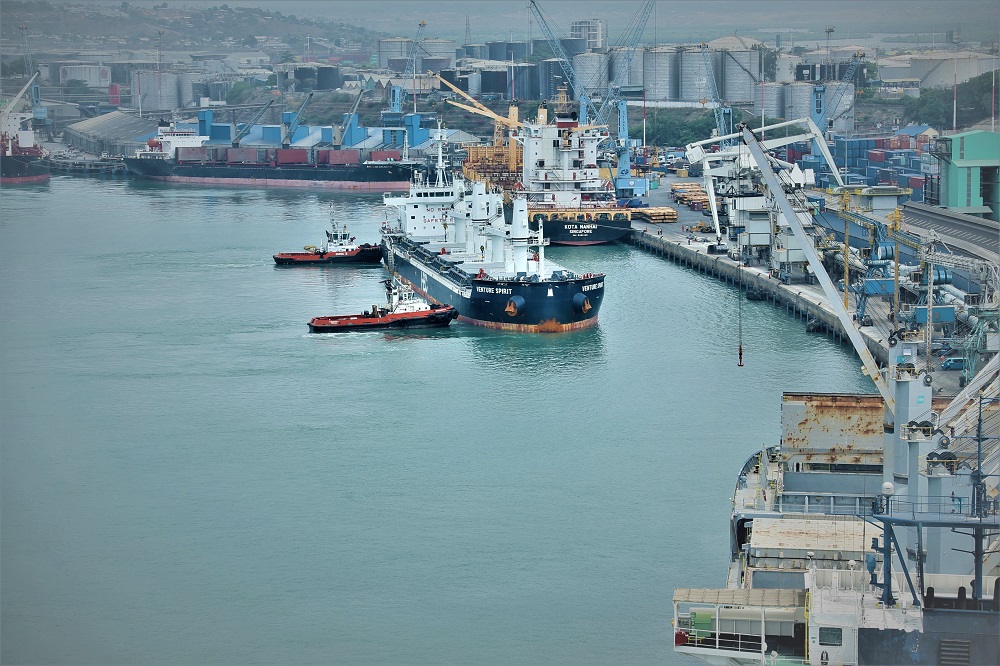
Kenya Ports Authority has officially completed the Sh2.6 billion Shimoni Fish Port in Kwale County, marking a major milestone for the country’s Blue Economy ambitions. The modern port, developed with Southern Engineering Company Ltd (SECO), aims to transform the coastal economy by boosting fish production, value addition, and exports.
The new port is expected to process up to 50,000 metric tonnes of fish annually, roughly equal to 1,000 lorry loads. This expanded capacity will energize the South Coast economy, providing local fishers and traders with modern facilities to reduce post-harvest losses and improve product quality for both local consumption and export. For Shimoni town, traditionally reliant on small-scale fishing, the port offers a path to economic diversification and greater stability.
Designed to meet international standards, the Shimoni Fish Port features a 75-meter by 30-meter jetty and a 135-meter causeway that can berth two fishing vessels at once. Complementary facilities include a fish processing plant, cold storage units, reefer stations, an ice-making plant, a power substation, a biodigester, and wastewater management systems. These facilities are set to strengthen Kenya’s move up the fisheries value chain, helping the country export higher-value processed products instead of mainly raw fish.
Beyond trade and production, the port is expected to create thousands of direct and indirect jobs across fishing, logistics, processing, and related sectors. The Capital Youths Caucus Association (CYCA) described the project as a game changer for youth employment. According to CYCA Secretary General Evans Momanyi, the port will also open new opportunities for entrepreneurship and skills development, especially among women and other vulnerable groups.
Kwale Governor Fatuma Achani also welcomed the port’s completion, highlighting its potential to revitalize the local economy and connect with Mombasa’s commercial seaport to expand exports.
Environmental groups have voiced concerns about potential impacts on coral reefs and seagrass beds due to dredging and increased vessel traffic. In response, KPA and local authorities have pledged to closely monitor and manage environmental effects to protect vital marine ecosystems.
The long-term success of the Shimoni Fish Port will depend on striking the right balance between economic growth and environmental sustainability.
The port is more than a physical structure; it is part of a broader strategy to unlock Kenya’s underutilized marine resources and position the country as a regional leader in the Blue Economy. By investing in modern infrastructure, Kenya seeks to attract investment, promote value addition, and integrate coastal communities into national economic growth.
The completion of the Sh2.6 billion Shimoni Fish Port stands as a testament to Kenya’s commitment to transforming its coastal economy and realizing the potential of its marine resources for future generations.

President William Ruto has placed Micro, Small and Medium Enterprises (MSMEs) at the center of Kenya’s economic transformation strategy, recognizing the sector as the backbone of job creation,...
Read moreDetails