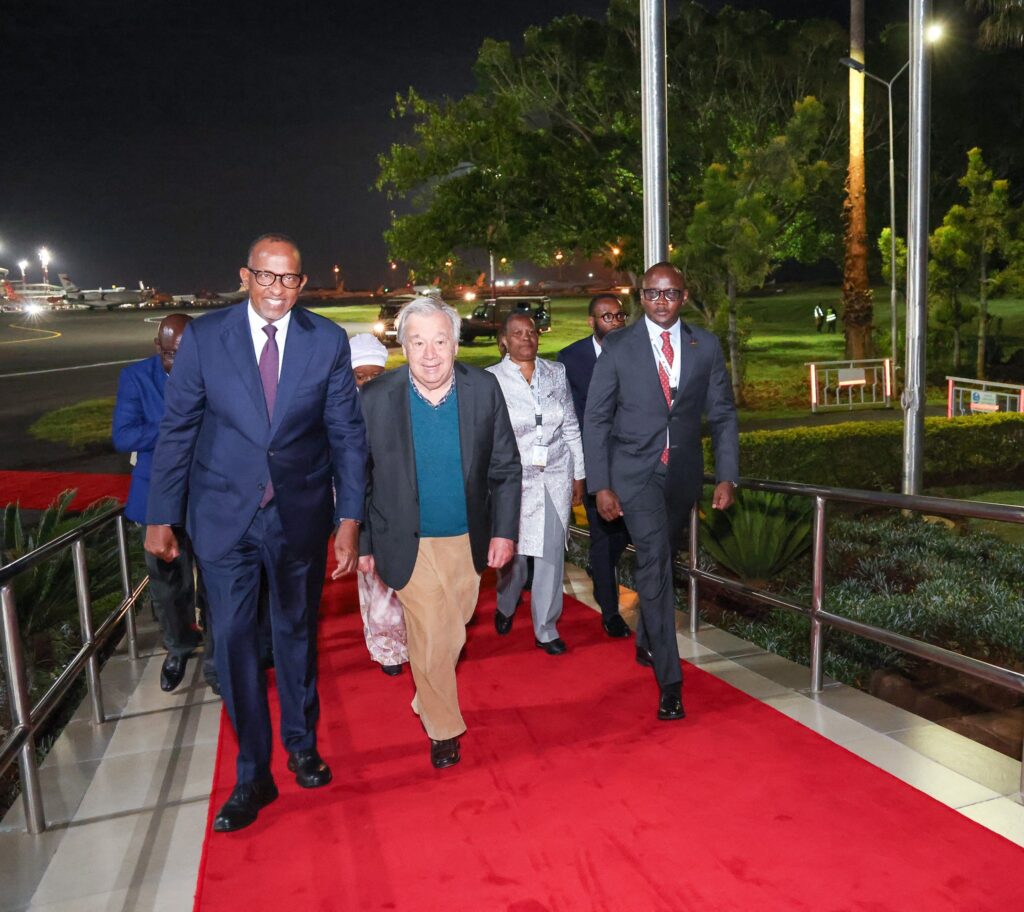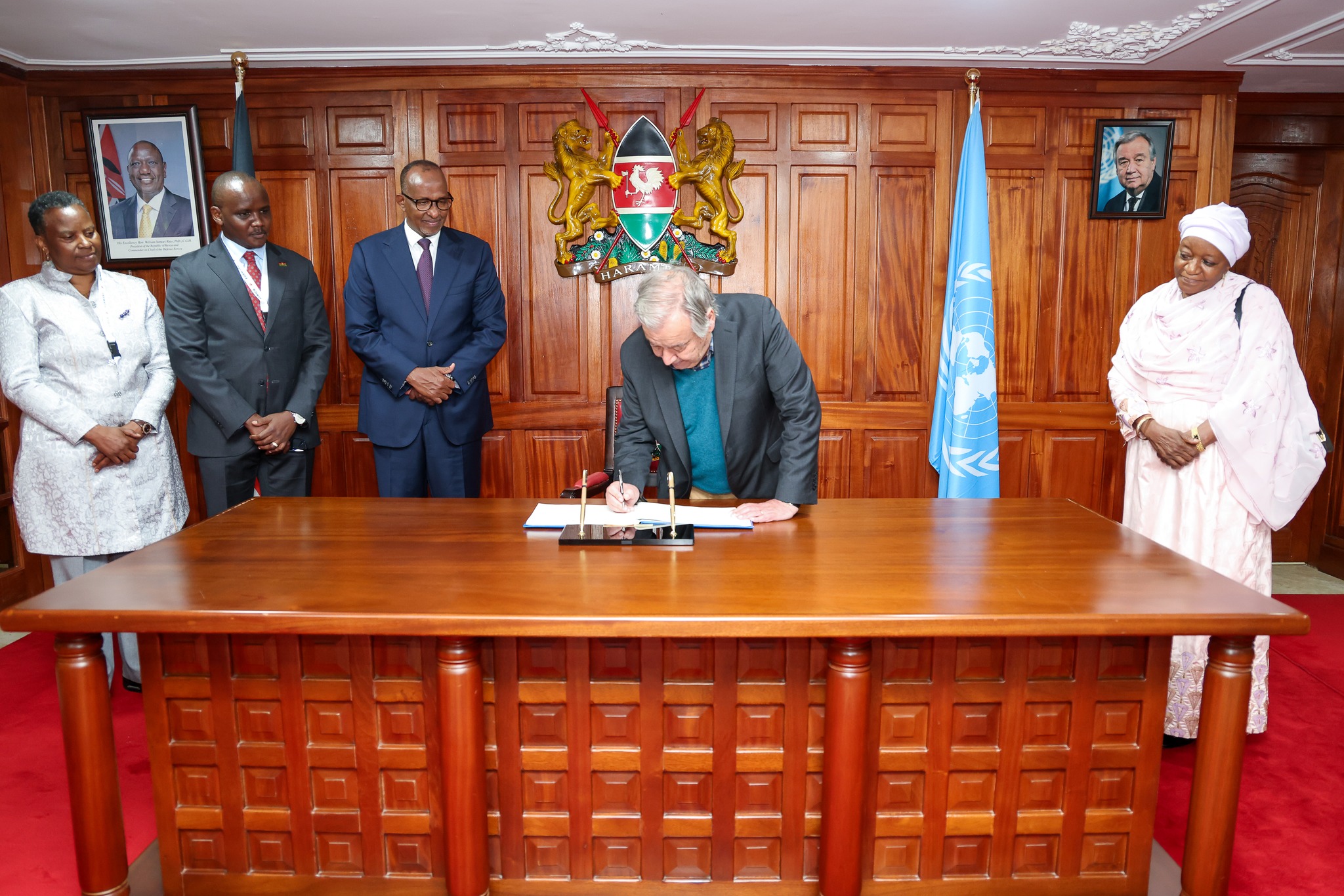
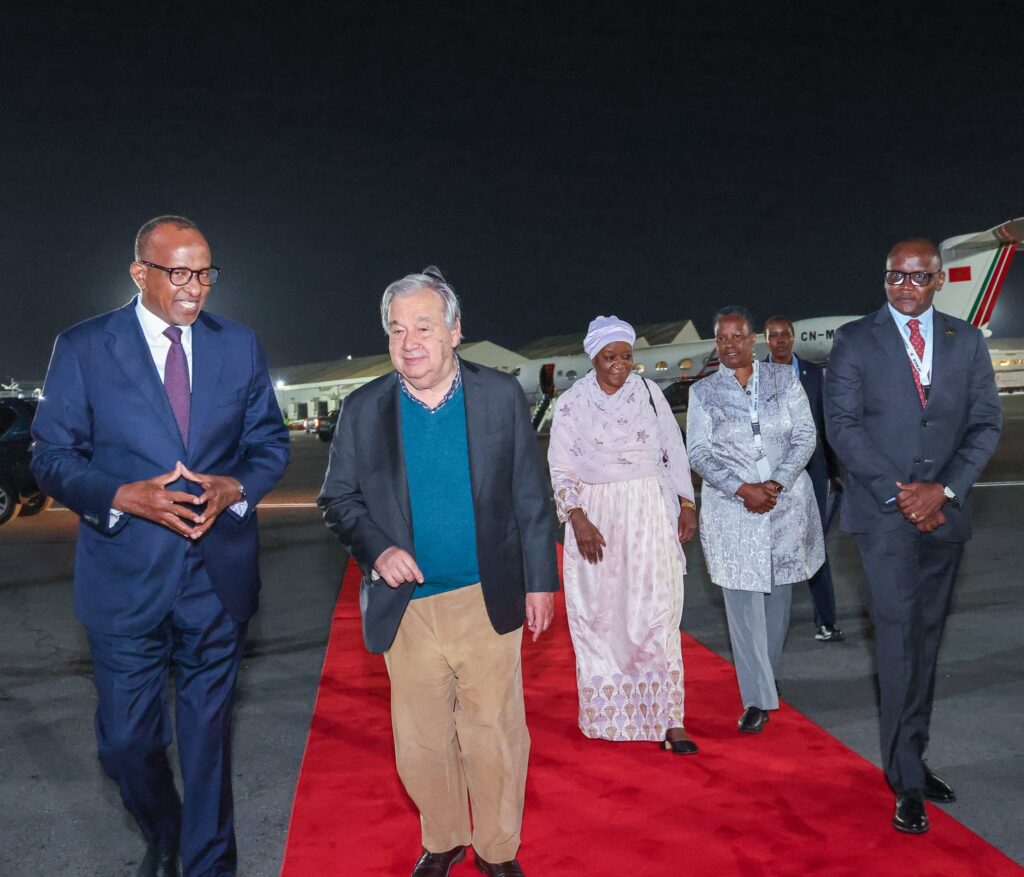
President William Ruto and United Nations Secretary-General António Guterres are set to commission the USD 340 million expansion of the United Nations Office at Nairobi, marking a major milestone in Kenya’s growing diplomatic and strategic importance on the global stage. The commissioning ceremony comes as Guterres arrived in Kenya on Monday morning ahead of the inaugural Africa Forward Summit 2026, which is expected to bring together leaders, policymakers and international institutions to discuss Africa’s development and global partnerships.
The expansion project includes the inauguration of modern office buildings and a major new conference facility designed to transform Nairobi into one of the United Nations’ most significant operational and diplomatic centers worldwide. The investment aims to replace aging infrastructure built in the 1970s with climate-resilient, fully accessible and technologically advanced facilities capable of supporting the organization’s growing responsibilities across Africa and beyond. The project also seeks to lower long-term operational costs while improving efficiency and accommodating increasing staff numbers.
The newly expanded complex will dramatically increase the capacity of the UN headquarters in Nairobi. The development includes US$66.2 million worth of modern permanent office blocks and upgraded conferencing facilities valued at US$265.7 million. The expansion will increase the number of meeting rooms from 14 to 30 while boosting delegate seating capacity from 2,000 to 9,000 people. A new 1,600-seat Assembly Hall will further elevate Nairobi’s global standing as a major center for international diplomacy and multilateral engagement.
With the completion of the project, Nairobi will officially strengthen its position as the third-largest United Nations hub globally after New York City and Geneva, ahead of Vienna in terms of strategic significance and operational growth. The expansion reflects a broader shift within the UN system toward bringing multilateral decision-making closer to regions most directly affected by global challenges such as climate change, humanitarian crises, insecurity and rapid urbanization.
As the only UN Secretariat headquarters located in the Global South, the United Nations Office at Nairobi has steadily expanded its influence and responsibilities over the years. Today, the Gigiri complex hosts more than 4,000 personnel and 88 UN offices, while nearly 6,000 UN staff operate across Kenya alongside approximately 10,000 dependents from Kenya and neighboring countries. Nairobi now serves as a critical coordination center for humanitarian operations, climate initiatives, sustainable development programs and peacebuilding efforts across more than 160 countries.
Kenya’s role in hosting the UN headquarters is deeply rooted in its longstanding commitment to multilateral diplomacy and international cooperation. The Gigiri complex sits on 140 acres of land donated by the Government of Kenya, making it the largest land contribution ever provided by a host country to the United Nations. This partnership has over the decades transformed Nairobi into one of the world’s most important diplomatic cities and strengthened Kenya’s reputation as a stable regional hub for international engagement.
UN Under-Secretary-General and Director-General of the United Nations Office at Nairobi, Zainab Hawa Bangura, described the expansion as a defining moment for the organization in Africa. She noted that the investment aligns the UN’s global presence with regions where many of the world’s most pressing challenges and solutions are increasingly concentrated. According to Bangura, Nairobi has evolved beyond being simply a host city to becoming a strategic center for delivering the United Nations’ global mission in the 21st century.
During his visit, Guterres is also expected to hold high-level discussions with Kenya’s leadership and participate in regional dialogues during the Africa Forward Summit. His visit underscores the United Nations’ continued commitment to advancing peace, sustainable development, climate action and international cooperation across Africa. For Kenya, the expansion of the UN offices further cements Nairobi’s status as Africa’s premier diplomatic capital and a key gateway for global decision-making, investment and multilateral collaboration.