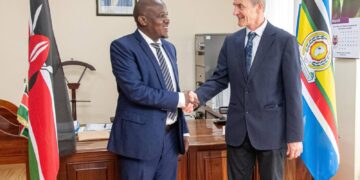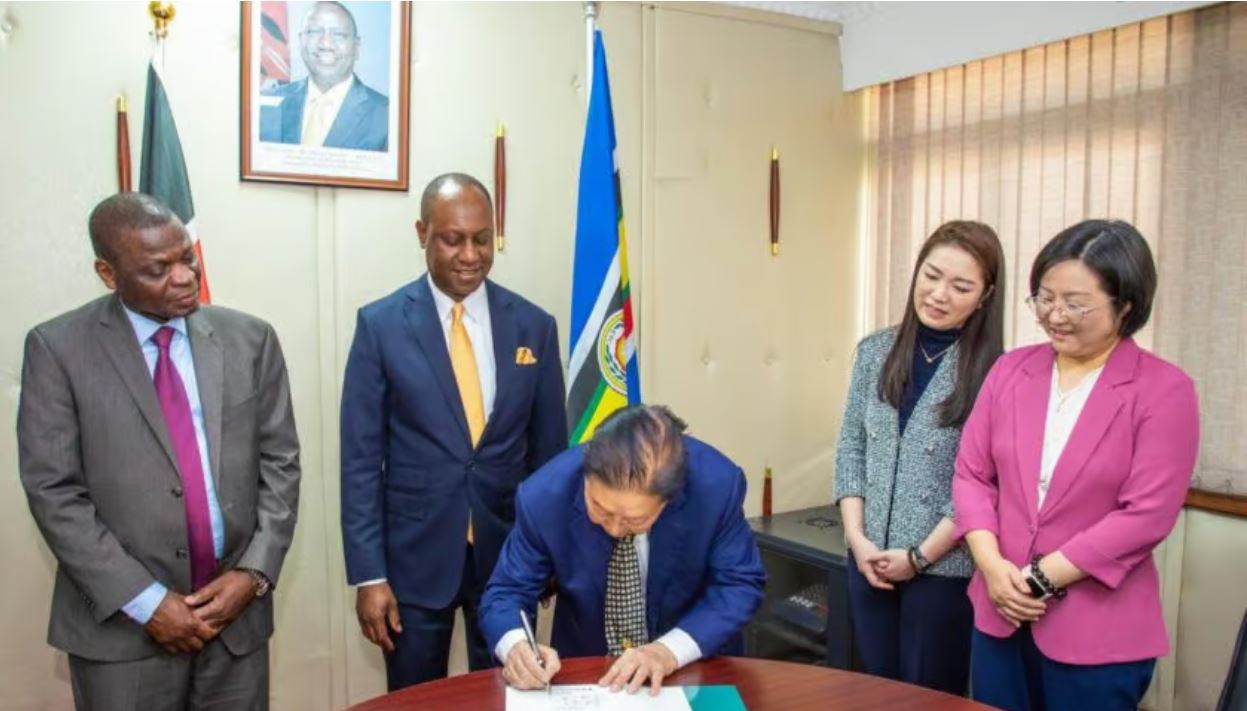
The State Department for Livestock Development has stepped up efforts to tackle Kenya’s worsening animal feed shortage by turning to Juncao grass technology, a fast-growing, climate-resilient solution now being positioned as a lifeline for farmers. During a high-level meeting in Nairobi on March 17, Chinese scientist Lin Zhanxi joined officials from the United Nations Department of Economic and Social Affairs to deepen cooperation around the technology, which is designed to produce high-quality fodder and support livestock even in harsh conditions. The move signals a growing push to bring practical, field-tested innovations directly to farmers as pressure mounts on feed supplies across the country.
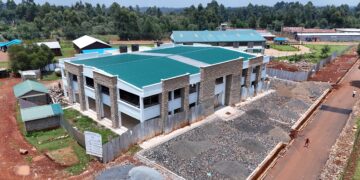
At the center of this push is a strategic partnership bringing together Kenyan authorities, Chinese scientists led by Lin Zhanxi, and the United Nations Department of Economic and Social Affairs. Their collaboration signals a deliberate shift toward science-driven agriculture, where innovation is deployed to directly confront production bottlenecks that have long undermined productivity. The establishment of a National Juncao Training and Innovation Centre in Naivasha, alongside county-level demonstration sites, marks the beginning of what could become one of the most ambitious feed security programs in Kenya’s history.
For decades, feed has been the single largest cost driver in livestock production, consuming up to 70 percent of total expenses while remaining vulnerable to import dependency and climate variability. Kenya’s reliance on imported protein inputs such as soybean meal has exposed farmers and feed manufacturers to global price shocks and currency pressures, creating an unstable supply chain that disproportionately affects smallholder farmers. Juncao disrupts this model by introducing a high-yield, locally adaptable fodder system capable of thriving across ecological zones, from high rainfall regions to arid counties.
Its agricultural significance lies in its ability to produce large volumes of nutrient-rich biomass within short cycles, ensuring consistent feed availability even during prolonged dry seasons. In a country where drought routinely wipes out pasture and destabilizes livestock systems, this characteristic alone could redefine resilience. With protein levels comparable to conventional fodder and the capacity for repeated harvesting, Juncao offers a reliable foundation for year-round livestock nutrition, directly boosting dairy yields, meat production, and small ruminant performance
The economic implications are equally profound. By reducing dependence on imported feed inputs, the technology has the potential to lower production costs, stabilize market prices for milk and meat, and enhance the competitiveness of Kenyan livestock products both domestically and regionally. This aligns closely with the economic transformation agenda of William Ruto, which prioritizes agricultural productivity, value chain efficiency, and export growth under Vision 2030. A more predictable and affordable feed system translates into higher margins for farmers, improved supply consistency for processors, and stronger linkages across the livestock value chain.
Beyond production gains, the Juncao initiative is poised to trigger a ripple effect across rural economies. The planned expansion of nurseries, seedling multiplication centers, and feed processing hubs will create new layers of economic activity, particularly for youth and small-scale entrepreneurs. Employment opportunities are expected to emerge across cultivation, harvesting, transport, and processing, while extension services and training programs will deepen technical capacity at the grassroots level. For pastoralist communities and smallholder farmers who have long operated at the margins of formal agricultural systems, this represents a pathway toward more stable and predictable incomes.
Environmentally, the technology reinforces Kenya’s transition toward climate-smart agriculture. Juncao’s low input requirements, adaptability to degraded lands, and potential role in soil restoration position it as more than just a feed crop. Its cultivation can contribute to reduced pressure on natural pastures, improved land use efficiency, and enhanced carbon sequestration. In drought-prone regions where overgrazing has accelerated land degradation, the introduction of a resilient, high-yield fodder alternative could ease ecological stress while sustaining livestock populations.
The initiative also reflects a broader shift toward integrated agricultural innovation, where public policy, scientific research, and international partnerships converge to address systemic challenges. Collaboration with research institutions, development financiers, and regional agricultural networks is expected to scale knowledge transfer and accelerate adoption across East Africa, potentially positioning Kenya as a regional hub for Juncao-based livestock systems.
Yet the success of this bold experiment will depend heavily on execution. Scaling a new agricultural technology across diverse farming systems requires sustained investment in farmer training, transparent distribution of planting materials, and robust monitoring frameworks. Tracking adoption rates, feed output, livestock productivity gains, and environmental outcomes will be critical in determining whether the promise of Juncao translates into measurable transformation on the ground.
What is clear is that Kenya is no longer treating feed scarcity as a peripheral issue. By elevating it to the center of agricultural policy and backing it with innovation and international cooperation, the government is attempting to unlock the full productive potential of a sector that supports over 10 million livelihoods. If successfully implemented, Juncao could move Kenya closer to feed self-sufficiency, stabilize its livestock economy, and anchor a new era of climate-resilient farming.
President William Ruto has embarked on a significant five-day development tour across Western Kenya, signaling a renewed government focus on infrastructure, housing, and economic transformation in the region....
Read moreDetails