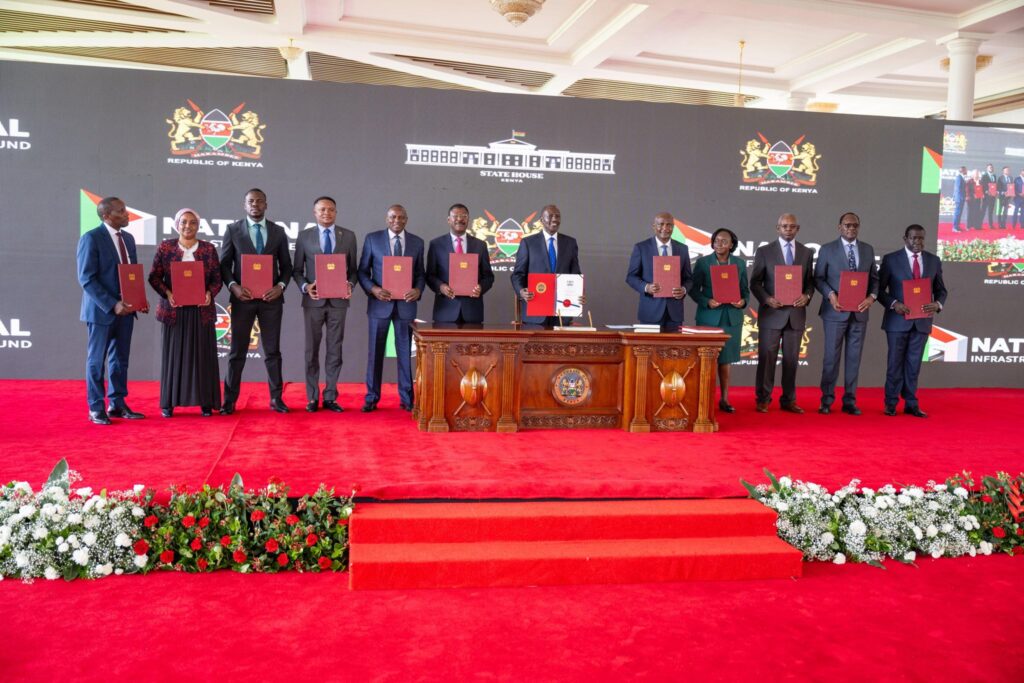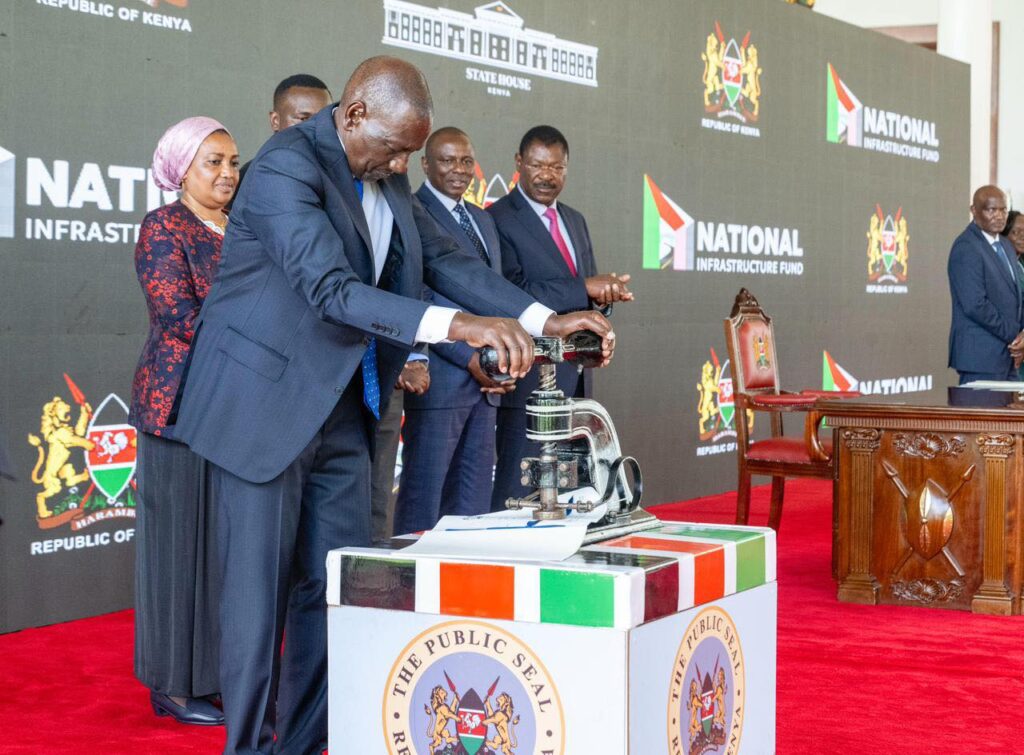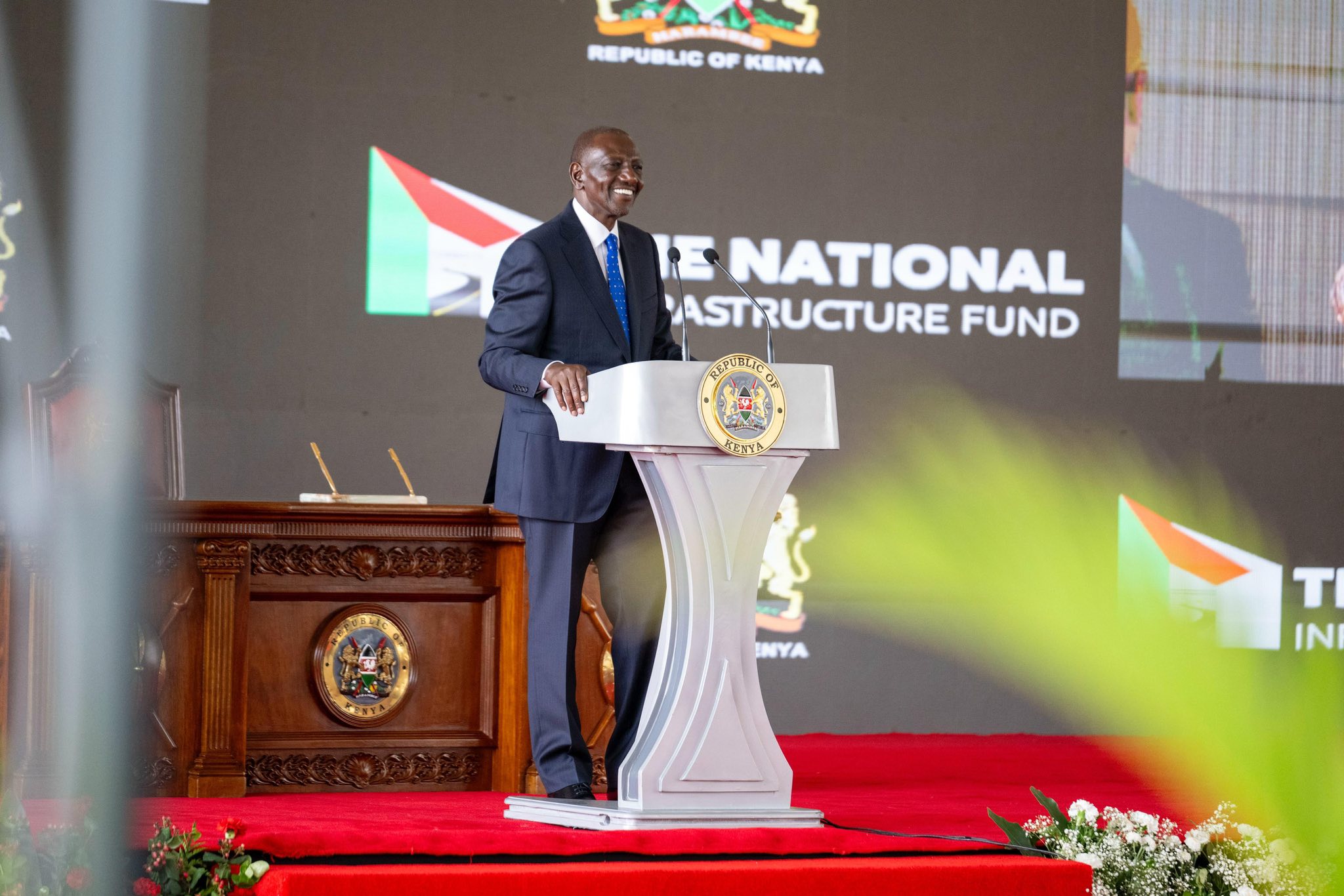
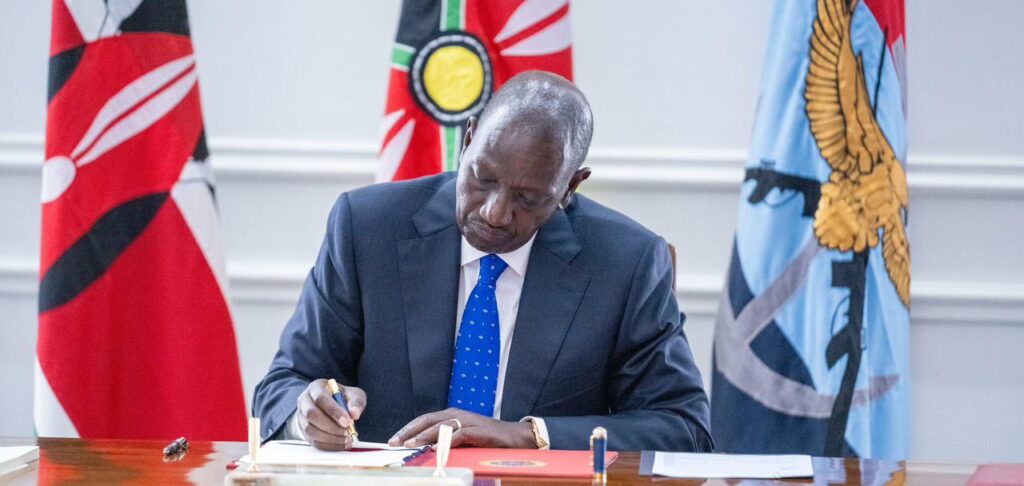
President William Ruto has signed into law the National Infrastructure Fund (NIF) Bill, 2026, marking a major milestone in the transformation of how Kenya finances and manages large-scale development projects. The new law establishes a long-term financing framework designed to mobilise nearly Sh5 trillion over the next decade to fund critical national infrastructure initiatives. The move signals a shift toward investment-led development aimed at accelerating the country’s economic growth and modernisation agenda.
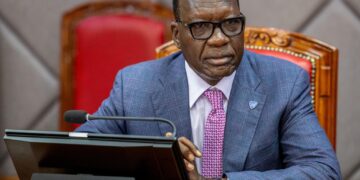
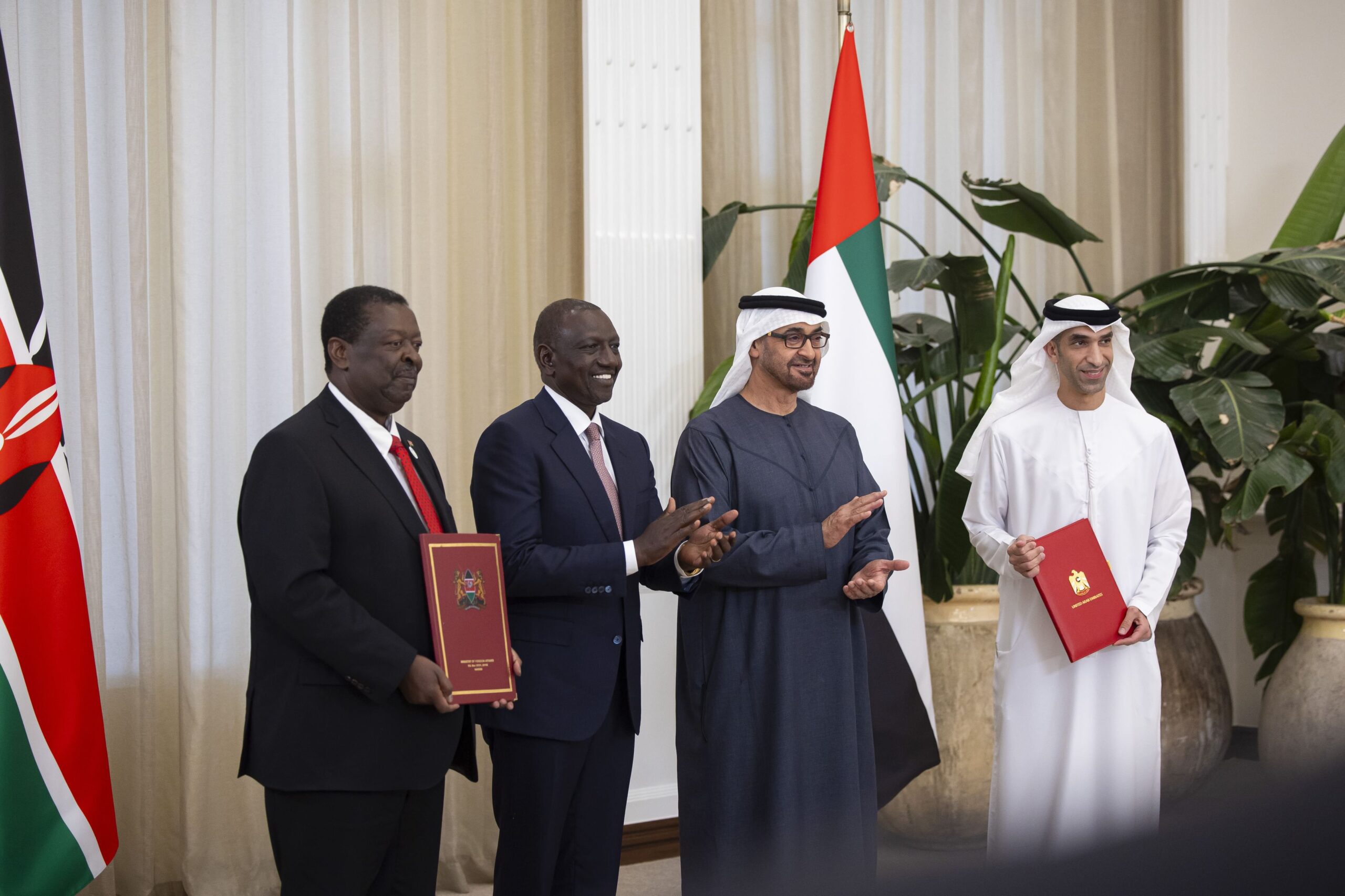
The signing ceremony took place at State House Nairobi and was attended by senior government officials and private sector leaders. Among those present were Moses Wetang’ula, Speaker of the National Assembly of Kenya, and Treasury Cabinet Secretary John Mbadi. The legislation had been approved by Parliament on March 6 following weeks of debate and amendments aimed at strengthening oversight, transparency, and governance of the proposed fund.
The National Infrastructure Fund is expected to mobilise resources to support major national projects including highways, railway networks, ports, agribusiness infrastructure, and energy systems. The fund represents a strategic effort to close Kenya’s infrastructure financing gap while supporting economic transformation through improved connectivity, industrial capacity, and access to energy.
Unlike previous financing models that relied heavily on government borrowing, the NIF introduces an investment-based approach that allows participation from both the public and private sectors. The fund will draw financing from multiple sources including government allocations, private investment, grants, loans, and proceeds from privatisation programmes. This diversified funding model is expected to reduce pressure on public debt while expanding opportunities for investors.
National Assembly Majority Leader Kimani Ichung’wah, who sponsored the legislation, described the NIF as one of the most important pieces of legislation passed in Kenya’s history. He noted that it is the second most significant economic policy framework since the 1965 Sessional Paper No. 10, which laid the foundation for Kenya’s early development strategy.
Ichung’wah said the legislation provides a clear roadmap for Kenya’s long-term economic ambitions and will help the country accelerate its journey toward becoming a first-world economy. Referring to President Ruto’s infrastructure vision, he remarked that the law crystallises the country’s “journey to Singapore” by establishing a structured mechanism to finance transformative national projects.
The bill initially faced resistance from some lawmakers who expressed concerns about potential executive influence over the fund’s management. In response, Parliament introduced amendments aimed at strengthening accountability and transparency. The changes enhanced parliamentary oversight while ensuring that the fund operates under a clear governance framework.
Under the new law, the NIF will be overseen by a Governing Council chaired by the Treasury Cabinet Secretary. The council will also include the Attorney-General, the Governor of the Central Bank of Kenya, and six independent members appointed by the President for three-year terms. While the council will provide strategic direction and safeguard the fund’s assets, it will not interfere in day-to-day operations to maintain institutional independence.
The board structure has also been revised to include four independent directors recruited through a competitive process. These directors must possess professional qualifications and at least ten years of experience in fields such as finance, engineering, or law. The fund will be administered by a Chief Executive Officer who will serve as the Administrator, ensuring a streamlined management structure.
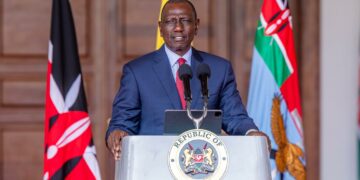
President Ruto said the National Infrastructure Fund will play a central role in closing Kenya’s infrastructure gap and accelerating economic transformation. Planned investments include the extension of the Standard Gauge Railway from Naivasha to Malaba and Kisumu, expansion of Jomo Kenyatta International Airport, and the development of thousands of kilometres of roads and clean energy infrastructure. The president emphasised that the fund will help structure national priorities into investable opportunities, attract global investors, and support Kenya’s ambition of becoming a modern, globally competitive economy.