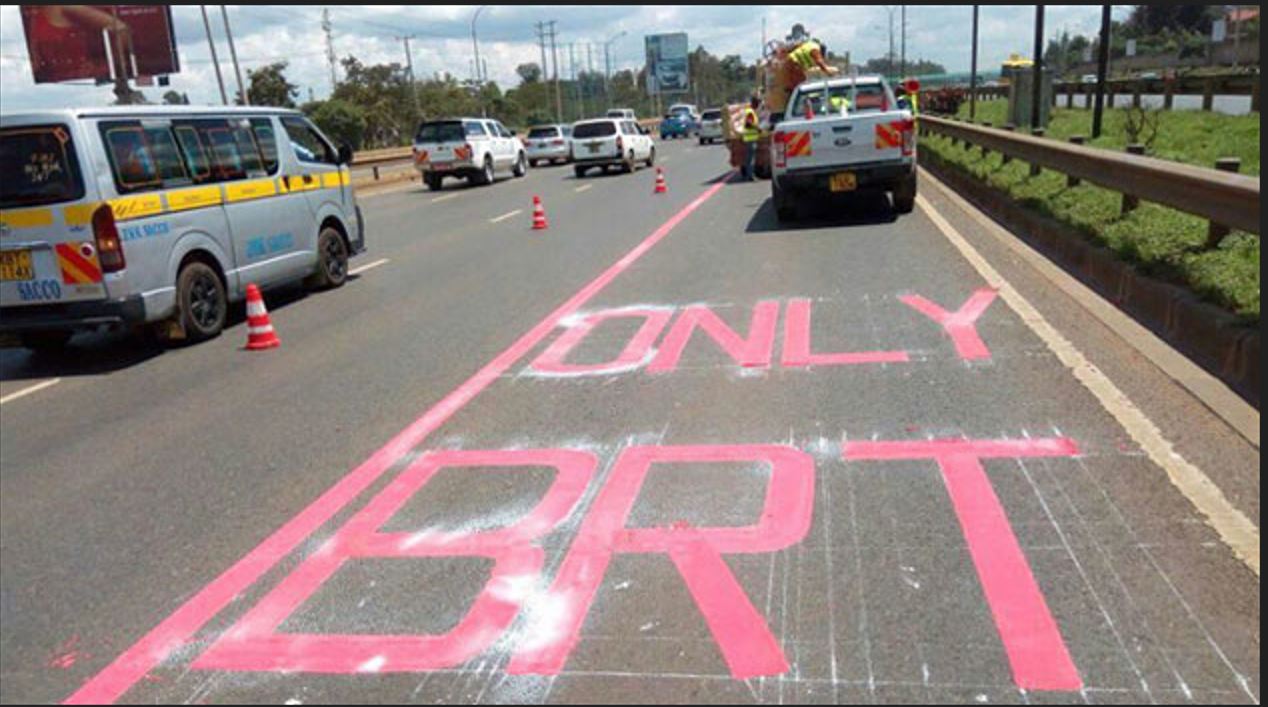
Kenya is moving to anchor one of Nairobi’s most strategic transport corridors in a high-level partnership with South Korea, setting the stage for the construction of a 10.5-kilometre Bus Rapid Transit Line 5 linking the Central Business District to Jomo Kenyatta International Airport (JKIA). Kenya’s decision to partner with South Korea in constructing a 10.5-kilometre Bus Rapid Transit Line 5 linking Nairobi’s CBD to JKIA marks a defining test of the country’s urban transport reform agenda. Backed by a Sh7.6 billion facility from the Export-Import Bank of Korea, the project shifts Nairobi’s long-delayed mass transit ambitions from planning tables to structured bilateral execution, placing international finance, digital traffic systems, and public-private coordination at the heart of the capital’s mobility future.
The corridor, embedded in the Nairobi Metropolitan Area Transport Master Plan, is designed to deploy 30 high-capacity buses capable of moving up to 4,200 passengers per hour in each direction during peak periods. Its primary objective is to unlock one of the city’s most congested arteries along Mombasa Road, shorten travel time to the airport, and provide a lower-cost alternative to private vehicle dependency and toll-based transit options. In economic terms, this is not simply a transport project. It is an intervention aimed at restoring productivity hours lost daily to gridlock and positioning Nairobi as a competitive regional gateway.
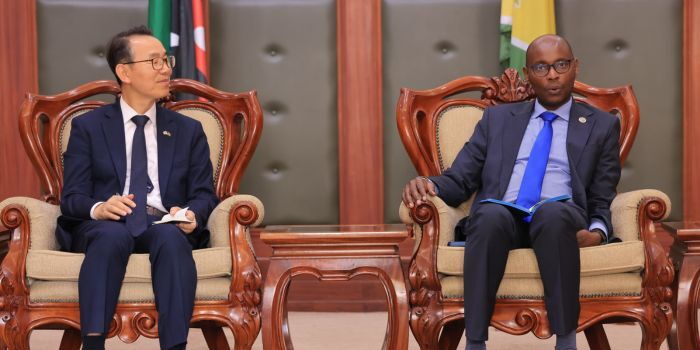
High-level engagements between Kenyan officials and the South Korean government have elevated the project beyond routine contractor negotiations. The collaboration reflects a deeper diplomatic alignment in infrastructure, technology, and trade. South Korean participation under the Economic Development Cooperation Fund framework ties financing to technical oversight and structured procurement, reducing upfront fiscal pressure on Kenya while increasing the need for regulatory discipline and transparent implementation.
The role of the Kenya Urban Roads Authority in inviting tenders and overseeing execution, alongside Nairobi County under Governor Johnson Sakaja and the National Treasury’s final approvals, illustrates the complex interplay between national and devolved governance structures. The success of Line 5 will depend not only on engineering precision but on institutional coordination across agencies that have historically operated in silos.
Operationally, the most transformative component may be the integration of a smart traffic management system. The establishment of an Integrated Transport System headquarters will coordinate signals across 25 junctions in the initial phase, expanding to 65 in subsequent stages. Automated traffic light control and real-time monitoring are expected to optimize traffic flow, reduce idle time, and improve fuel efficiency across major corridors. These efficiencies carry macroeconomic implications in a city where congestion inflates logistics costs and erodes commuter productivity.
From a revenue perspective, digitized fleet management and signal coordination enhance predictability in passenger volumes and fare collection. A data-driven approach strengthens the viability of structured public-private partnerships, ensuring that private operators can rely on measurable performance indicators and transparent revenue assurance systems. For international investors observing Kenya’s infrastructure pipeline, the project becomes a litmus test of whether Nairobi can deliver complex, technology-enabled projects within clear governance frameworks.
Strategically, the CBD-JKIA link reinforces Kenya’s standing within the East African Community. Jomo Kenyatta International Airport is the region’s primary aviation hub, serving trade, tourism, and diplomatic traffic. Reliable, efficient airport access strengthens Nairobi’s role as a commercial and logistical anchor for East Africa. By improving connectivity to the airport, the BRT line contributes to regional integration objectives while enhancing Kenya’s attractiveness as a headquarters destination for multinational firms.
The partnership with South Korea also builds on broader economic cooperation spanning innovation, agriculture, health, and trade. Collaboration on Konza Technopolis has positioned Kenya as a digital innovation hub, while joint agricultural initiatives with the Kenya Agricultural and Livestock Research Organization have introduced high-yield rice varieties to enhance food security. Health cooperation, including the presence of the International Vaccine Institute at Konza, has strengthened scientific capacity. Trade volumes between the two countries have expanded, with exports such as coffee and minerals flowing to Korean markets and commercial deals reportedly reaching Sh120 billion. Embedding a modern transport spine into this bilateral framework consolidates economic ties beyond symbolic diplomacy.
Yet the project’s long-term impact will depend on disciplined execution. Drainage upgrades, bridge construction, land acquisition processes, and integration with existing matatu networks must be managed within clear timelines and regulatory compliance standards. Transparent procurement, defined risk-sharing mechanisms, and lifecycle maintenance planning will determine whether Line 5 becomes a sustainable mobility backbone or another stalled urban promise.
Kenya’s collaboration with South Korea on the CBD-JKIA BRT corridor signals a broader shift toward partnership-driven infrastructure development. It reflects a willingness to leverage bilateral finance, private sector expertise, and technology transfer to modernize public transport under a devolved governance system. If delivered with institutional rigor, the project could redefine Nairobi’s mobility landscape, boost investor confidence, and anchor inclusive urban economic growth. The airport corridor now stands as a high-stakes measure of Kenya’s capacity to translate international partnerships into tangible, long-term economic transformation.