The national government has released KSh7 billion for the reconstruction of Nithi Bridge, setting in motion a long-awaited intervention on one of eastern Kenya’s most dangerous road sections. The funding clears the way for construction to begin within weeks on a new 880-metre bridge designed to eliminate a notorious blackspot along the Meru–Embu highway that links Meru and Tharaka Nithi counties to the broader national road network.
Deputy President Kithure Kindiki has indicated that completion timelines will be accelerated to curb further loss of life along the steep and winding descent that has claimed dozens of motorists over the years. The urgency attached to the project reflects a growing recognition within government that infrastructure spending must deliver measurable safety outcomes, not just physical assets.
For decades, the Nithi stretch has exposed the high human cost of outdated design, sharp gradients and heavy commercial traffic operating on infrastructure that has not kept pace with economic growth. The new bridge, expected to be among the longest in the region, will connect the Marima and Mitheru sections through a modern engineering design that prioritizes gradient correction, structural stability and enhanced traffic flow.
Beyond its immediate safety impact, the reconstruction signals a strategic shift in how Kenya approaches regional transport corridors. The Meru–Embu axis is a critical artery for agricultural produce, miraa exports, small-scale manufacturing and passenger movement into central and northern Kenya. Frequent accidents have not only cost lives but also disrupted supply chains, inflated transport costs and undermined investor confidence in the corridor.
Efficient utilization of the KSh7 billion allocation will now be central to the project’s credibility. Transparent procurement processes, milestone-based contractor payments and rigorous engineering oversight will determine whether the bridge becomes a benchmark for fiscal discipline or another cautionary tale in infrastructure delivery. Adoption of modern construction technologies, slope stabilization systems and durable materials will be essential to guarantee long-term resilience and reduce recurrent maintenance burdens on the public purse.
The reconstruction also aligns with a broader upgrade of the Makutano-Embu-Chuka-Meru-Maua highway into a dual carriageway, positioning the corridor as a high-capacity trade route rather than a high-risk bottleneck. Together, these interventions strengthen county-level development ambitions in Meru and Tharaka Nithi, where improved road access underpins agricultural commercialization, agro-processing expansion and access to health and education services.
At the regional level, the project supports Kenya’s commitments under the East African Community integration framework, which emphasizes seamless movement of goods, services and people across borders. Reliable internal trunk roads are foundational to competitiveness within the Northern Corridor and the wider East African logistics ecosystem. Strengthening domestic infrastructure therefore has direct implications for cross-border trade efficiency and regional mobility.
Governance and compliance will be decisive. Environmental safeguards, community engagement, land use coordination and continuous regulatory oversight must accompany physical construction. Structured project monitoring and real-time reporting to oversight institutions can help shield the project from delays, cost overruns and quality compromises that have historically plagued large-scale public works.
The KSh7 billion allocation to rebuild Nithi Bridge represents more than a capital injection into concrete and steel. It is a policy statement that public safety, economic productivity and regional connectivity are inseparable. If delivered on schedule and to modern standards, the bridge could transform a symbol of tragedy into a model of resilient infrastructure planning. If mismanaged, it will reinforce public frustration with ambitious announcements that fail to translate into durable impact.
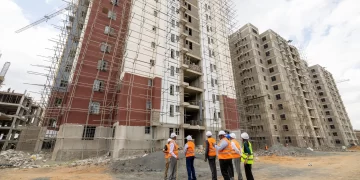
Kenya’s Affordable Housing Programme (AHP), accessible through the Boma Yangu platform, stands as a flagship government initiative to deliver decent, safe, and affordable homes to low- and middle-income...
Read moreDetails