Kenya’s economy is projected to grow between 4.9 and 5.2 per cent in 2026, reflecting the cumulative impact of fiscal, monetary and structural reforms implemented by the government to stabilise the economy after a difficult global and domestic period. The outlook, shared by the Kenya Private Sector Alliance (KEPSA), points to a strengthening macroeconomic foundation under ongoing reform efforts.
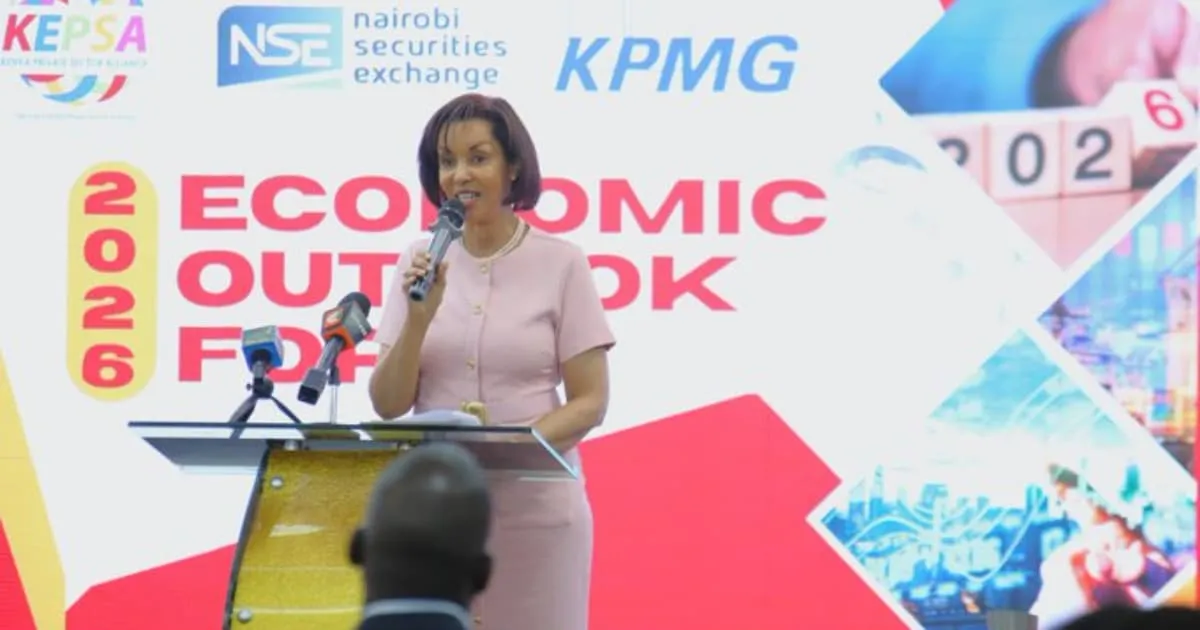
The positive forecast was highlighted during the 2026 Economic Outlook Forum, hosted by KEPSA in partnership with the Nairobi Securities Exchange (NSE) and KPMG. Participants noted that the government’s focus on restoring macroeconomic stability has begun to bear fruit following slower growth in 2024, with clearer policy direction and improved coordination between fiscal and monetary authorities.
Key indicators show measurable progress. Inflation has moderated to a manageable 3–5 per cent range, easing pressure on households and businesses, while the Kenyan shilling has recorded relative stability. These developments have improved planning certainty for investors and reduced volatility risks that previously constrained economic activity.
Government reforms have also been reinforced by a recent positive sovereign rating action by Moody’s, which upgraded Kenya’s rating and revised the outlook to stable. The upgrade cited stronger external liquidity, improved debt management and reduced near-term default risk—an endorsement of corrective fiscal measures and enhanced revenue mobilisation.
While acknowledging ongoing global uncertainties, KEPSA leaders noted that the private sector is responding positively to a more predictable operating environment. The government’s commitment to policy consistency, infrastructure investment and market reforms has supported business confidence, even as firms navigate shifting trade dynamics and technological change.
At the same time, authorities remain alert to existing vulnerabilities. Exposure to global food and fuel price shocks, fiscal pressures and rising compliance costs continue to pose risks. However, officials say targeted interventions, improved expenditure discipline and stronger public–private collaboration are helping to cushion the economy against external disruptions.
Looking ahead, the forum concluded that while Kenya has not yet returned to pre-pandemic growth levels of six per cent, the current trajectory reflects a stabilising economy on a recovery path. Sustained reform implementation, innovation and prudent fiscal management will be critical in consolidating gains and accelerating inclusive growth in the medium term.