Kenya’s passport has staged a notable recovery on the global mobility scale, rising five places to rank 68th in the 2026 Henley Passport Index. While the numerical gain may appear modest, the underlying significance is substantial. The improved ranking reflects deliberate government planning, intensified diplomatic engagement, and a more coordinated foreign policy approach that is beginning to restore travel freedom for Kenyan citizens after years of volatility.
The rebound follows a difficult period in which Kenya’s passport slipped to 73rd position in late 2025 amid tightening visa regimes in several regions. According to the latest index, Kenyan passport holders now enjoy access to 69 destinations without the need for a visa in advance. This signals a stabilization phase after a prolonged decline that had eroded both mobility and international competitiveness.
The Henley Passport Index, compiled using International Air Transport Association data, tracks visa-free and visa-on-arrival access across 227 destinations. Updated monthly, it captures real-time shifts in diplomatic relations and immigration policies. Kenya’s upward movement therefore reflects not only internal reforms but also improved external positioning in an increasingly restrictive global mobility environment.
Operationally, the improved ranking reduces friction for Kenyan travelers, particularly entrepreneurs, professionals, and government officials who depend on predictable cross-border access. Faster entry processes translate into lower transaction costs for business travel, regional deal-making, and participation in international forums. For small and medium enterprises aligned with President William Ruto’s Bottom-Up Economic Transformation Agenda, reduced mobility barriers can directly support export growth, diaspora linkages, and access to new markets.
Economically, enhanced passport strength reinforces Kenya’s ambitions under Vision 2030 to position itself as a regional commercial and logistics hub. Easier movement supports trade negotiations, services exports, and tourism promotion, all of which rely on consistent people-to-people and business-to-business interaction. The rebound also strengthens the credibility of the Magical Kenya brand by signaling openness, reliability, and growing international trust.
Strategically, the recovery highlights the impact of proactive diplomacy. Kenya’s sustained participation in regional and global forums, targeted bilateral engagements, and alignment with continental integration efforts have improved its standing relative to peers. Ranking among the top ten African passports underscores Kenya’s influence on the continent, even as competition for mobility advantages intensifies globally.
The government’s decision to maintain one of the world’s most open entry regimes further reinforces Kenya’s diplomatic posture. By allowing visitors from nearly all countries to enter without advance visas, Kenya has positioned itself as an accessible gateway to Africa. While reciprocity remains uneven, particularly with European destinations, the policy strengthens Kenya’s negotiating position in future visa discussions and reinforces its role as a convening state for trade, tourism, and multilateral engagement.
Critical to sustaining progress will be robust policy coordination across immigration, foreign affairs, trade, and security agencies. Investments in passport security, biometric integrity, and digital processing systems are essential to maintaining international confidence. The global shift toward digital identity systems presents an opportunity for Kenya to modernize its travel documents while safeguarding border security and preventing misuse.
Equally important is ensuring equitable access to improved mobility. Passport reforms must translate into efficient service delivery, reduced processing delays, and affordability for citizens across income levels. Mobility gains that benefit only a narrow segment of society would undermine the citizen-centered ethos of the Bottom-Up agenda.
Kenya’s improved passport ranking ultimately reflects more than a statistical adjustment. It signals a country recalibrating its global engagement through structured diplomacy, policy discipline, and institutional reform. As global mobility becomes increasingly unequal, Kenya’s progress demonstrates a clear commitment to empowering its citizens, strengthening its international presence, and advancing inclusive national development through deliberate and sustained state action.
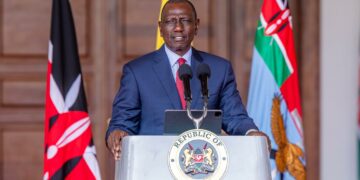
President William Ruto has placed Micro, Small and Medium Enterprises (MSMEs) at the center of Kenya’s economic transformation strategy, recognizing the sector as the backbone of job creation,...
Read moreDetails