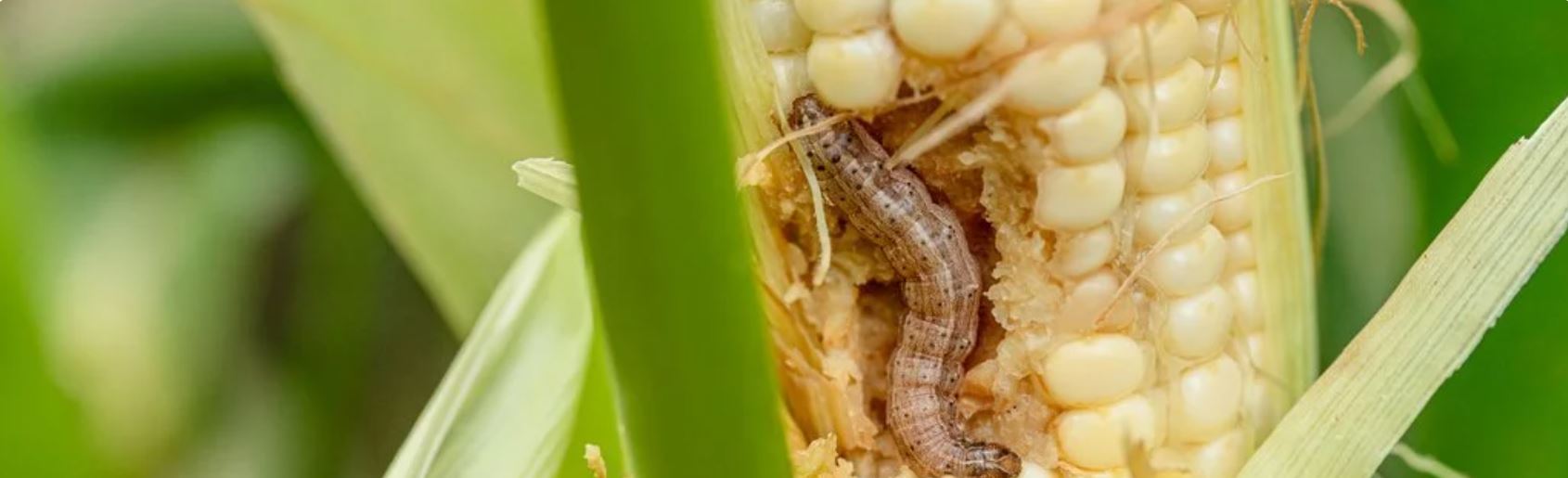
Kenya has launched a new AI-powered pest management system designed to curb Fall Armyworm infestations and protect national food production, marking a major milestone in the country’s push toward climate-smart, technology-driven agriculture. The initiative, developed jointly by the Kenya Agricultural and Livestock Research Organisation and South Korea under a five-year cooperation programme, brings advanced digital tools, eco-friendly pest control, and farmer-focused innovation to the center of Kenya’s agricultural strategy.
The project is part of the broader Korea Africa Food and Agriculture Cooperation Initiative, which supports sustainable pest management technologies across 25 African nations. In Kenya, the system is tailored to safeguard maize production, strengthen early warning systems, and reduce farmers’ dependence on expensive and harmful chemical pesticides.
At the heart of the initiative is an AI engine that monitors, predicts, and maps Fall Armyworm movements using climate data, field observations, and real-time signals from trained farmers and extension officers. The system will forecast pest population surges, provide location-specific alerts, and help farmers decide when to apply biological controls. Developers expect the platform to eventually offer a simple mobile interface that households and farmer groups can use for timely pest management decisions.
The joint strategy combines digital innovation with ecological solutions, including biological controls such as parasitoid wasps and beneficial fungi that naturally suppress Fall Armyworm populations. Researchers have also incorporated resistant maize varieties, habitat management techniques, and farmer training into the system to ensure that interventions remain practical, affordable, and environmentally sound.
Implementation will begin across major maize-growing regions, supported by extensive training for smallholder farmers, extension officers, and local community groups. Demonstration plots, farm visits, and farmer-field schools will provide hands-on experience with biological controls, integrated pest management practices, and the new digital tools. Early adopters, such as farmer groups in Machakos County, have already seen how better information and sustainable methods can raise yields and cut production losses.
Expected impacts include higher maize output, reduced pesticide expenditures, and more resilient household food supplies. By enabling early action rather than costly emergency responses, the system is also projected to strengthen community safety nets, support rural livelihoods, and improve local incomes. For government planners, the data-sharing platform will provide clearer national visibility of pest movements, helping shape responsive policies and targeted interventions.
Officials describe the project as a major step toward securing Kenya’s agricultural future in an era of climate uncertainty. With climate variability intensifying pest pressures, the partnership positions Kenya to protect its staple crops through innovation, efficiency, and modernised agricultural practices. It also reinforces a national commitment to sustainable growth by empowering smallholder farmers with the knowledge, tools, and technology needed to thrive in a changing environment.
As Kenya deploys the system nationwide, the collaboration with South Korea is expected to deepen, supporting further research, technology transfer, and capacity-building. For farmers in regions such as Machakos, the rollout signals a new era where technology strengthens resilience, enhances food security, and builds a more sustainable and inclusive agricultural economy.

Kenya’s Affordable Housing Programme (AHP), accessible through the Boma Yangu platform, stands as a flagship government initiative to deliver decent, safe, and affordable homes to low- and middle-income...
Read moreDetails