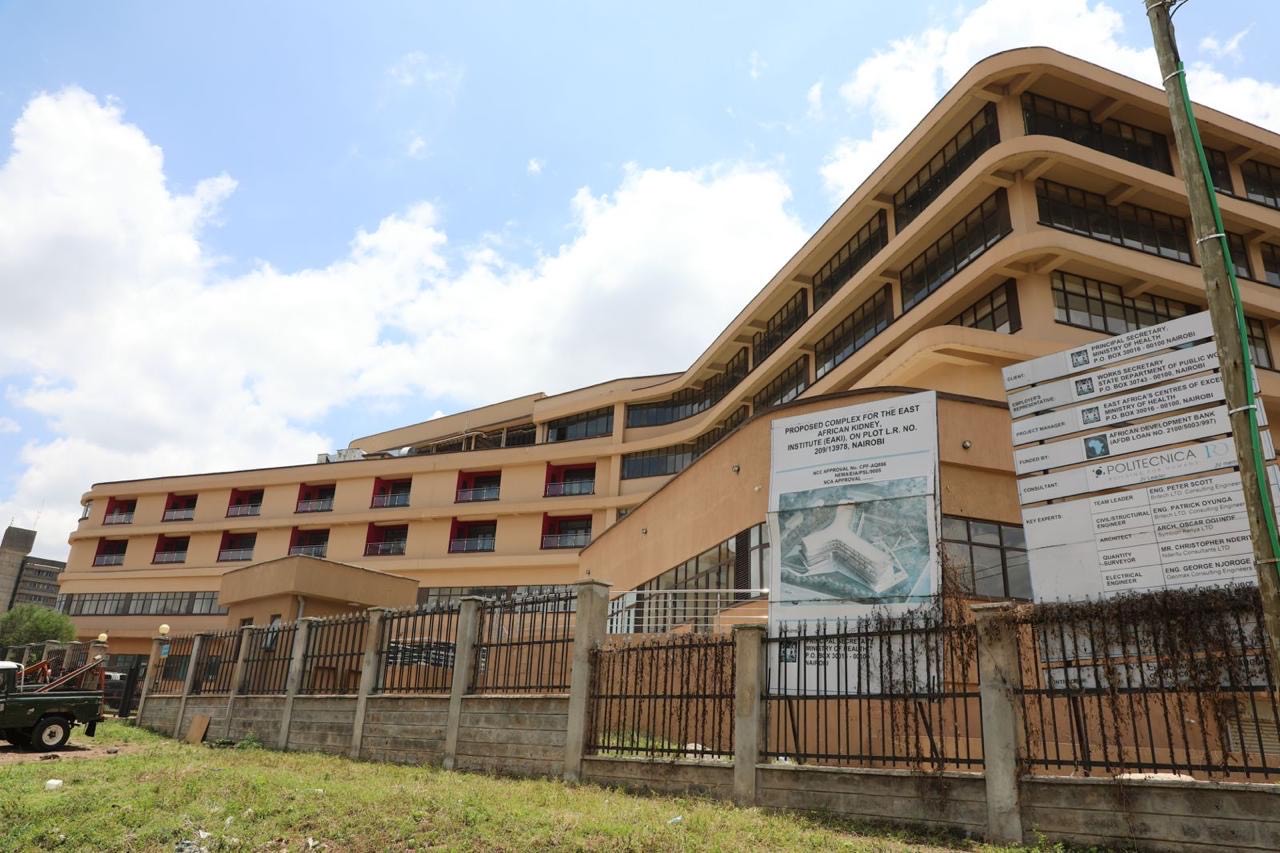
Kenya is nearing completion of the East African Kidney Institute in Nairobi, a state-of-the-art facility that is expected to transform specialized healthcare and reduce the need for Kenyans to seek kidney treatment abroad. The four-storey centre, located next to Kenyatta National Hospital, is set to become a major milestone in the country’s efforts to provide affordable and accessible healthcare for all citizens.
The East African Kidney Institute, also referred to as the East Africa Centre of Excellence in Nephrology and Urology, is 99 percent complete and is expected to be ready by the end of November this year. The Level 6-B facility will focus on kidney transplant surgery, dialysis, medical training, and research. It is part of a wider East African Community initiative that seeks to establish regional centres of excellence for the treatment of non-communicable diseases that continue to rise across the region.
Project Manager Dr. Hossan Ajuk, from the Ministry of Health’s Division of Infrastructure Project and Grants, said the new facility will serve patients from Kenya and other East African countries. The hospital will have 160 beds, including 10 intensive care unit beds and nine high dependency unit beds, four modern theatres, a paediatric wing, and 28 dialysis machines. The institute is expected to perform at least 100 kidney transplants annually once operations begin.
Dr. Ajuk noted that the government decided to establish the facility to reduce the high cost and inconvenience of seeking treatment overseas. He confirmed that 444 health workers have already been trained to staff the facility, ensuring readiness once construction is completed. The institution will also accept patients using the Social Health Authority Insurance cover, which will make specialized treatment accessible to more Kenyans.
According to the Ministry of Health, the facility will serve an estimated four million Kenyans who suffer from various kidney-related conditions. At least 10,000 of these patients require regular dialysis, a demand that has strained the country’s existing medical infrastructure. By offering advanced kidney transplant and dialysis services locally, the new institute is expected to reduce treatment costs and increase access to life-saving care for thousands of citizens each year.
The facility also positions Kenya as a regional leader in specialized healthcare. Other East African countries are developing their own centres of excellence, with Tanzania focusing on cardiac care, Uganda establishing a cancer centre, Rwanda setting up vaccine and medical science institutes, and Burundi developing a nutrition centre. South Sudan is constructing a regional centre for climate change mitigation. Together, these initiatives aim to strengthen the region’s medical capacity and reduce dependence on treatment abroad.
Principal Secretary for Medical Services, Dr. Ouma Oluga, has commended the steady progress of the project and reaffirmed the government’s commitment to fast-track its completion. He said President William Ruto is keen to ensure the facility begins operations as soon as possible, noting that it will ease pressure on Kenyatta National Hospital and strengthen the country’s journey toward universal health coverage.
The first phase of the kidney program at Kenyatta National Hospital has already achieved significant milestones. It currently serves 20 patients a day and has completed 250 successful transplants. The hospital also now has a modern laboratory that conducts tissue analysis locally, eliminating the need to send samples abroad, which previously delayed treatment.
Dr. Ajuk said the Ministry of Health also plans to build regional kidney treatment centres across the country. The locations will be guided by disease data to ensure equitable access for all regions. This expansion is part of the government’s wider effort to decentralize specialized medical services and bring advanced care closer to communities.
Regional Commissioner Gilbert Kitiyo, who led an inspection tour of the ongoing works, praised the Ministry of Health team and contractors for maintaining high construction standards and urged them to complete the project within the scheduled timeline. He also encouraged project managers to hire local workers where possible, saying it allows communities to feel part of the government’s development agenda.
Experts say the East African Kidney Institute will boost Kenya’s medical tourism prospects by attracting patients from across the continent seeking affordable, world-class kidney treatment. With its modern facilities, skilled workforce, and integration of training and research, the centre will serve both as a treatment hub and a knowledge base for medical professionals in nephrology and urology.
The project reflects Kenya’s growing investment in health infrastructure and the government’s commitment to ensuring that all citizens have access to quality medical care. Once operational, the East African Kidney Institute will not only save lives but also reduce the billions of shillings spent each year on medical travel abroad. For thousands of patients who have struggled with the cost and pain of kidney disease, this new facility represents hope, dignity, and a future where top-tier treatment is available close to home.
Kenya’s Affordable Housing Programme (AHP), accessible through the Boma Yangu platform, stands as a flagship government initiative to deliver decent, safe, and affordable homes to low- and middle-income...
Read moreDetails