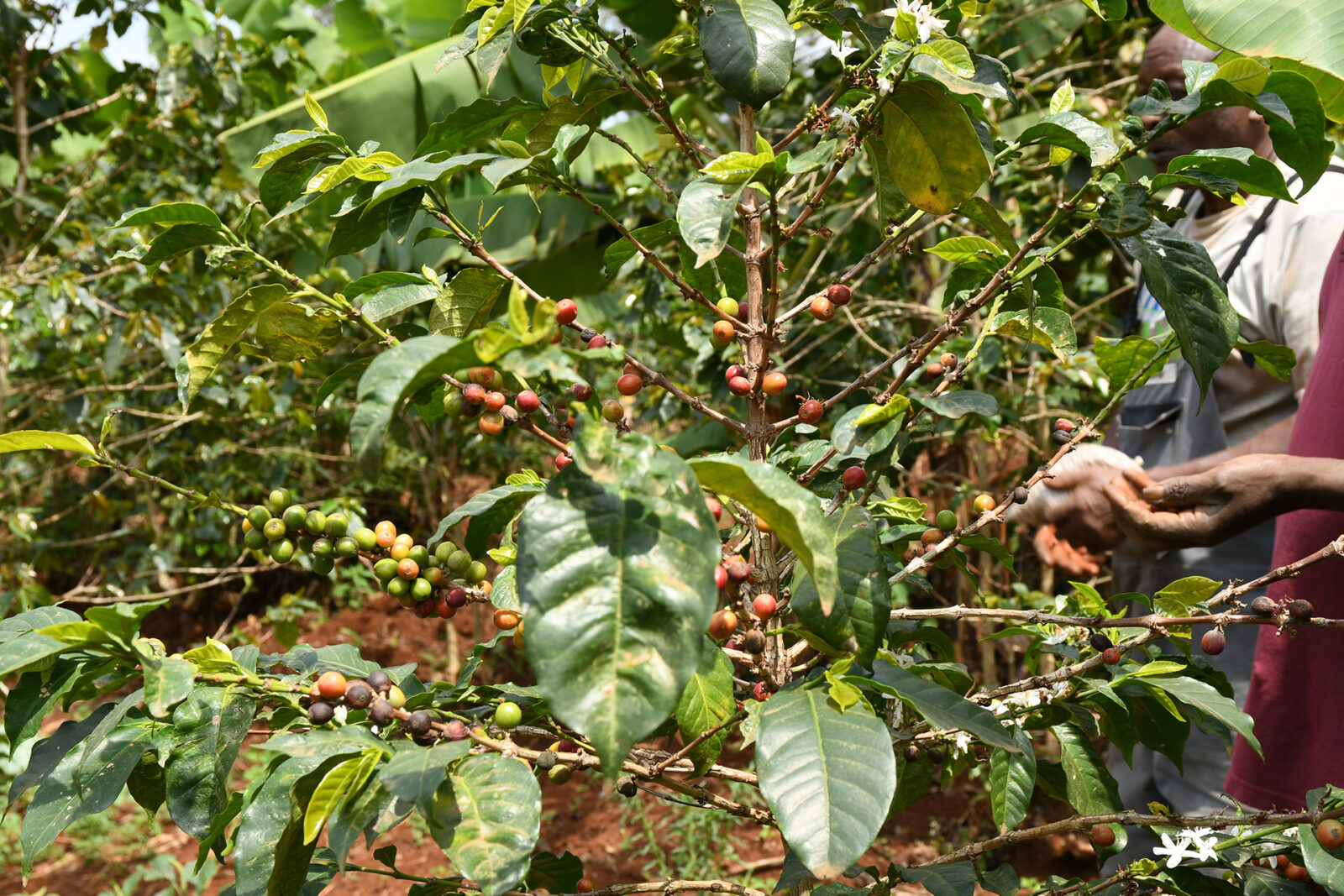
The government has unveiled a comprehensive set of reforms aimed at reviving Kenya’s coffee sector and doubling production within three years. The plan, driven by the Ministry of Co-operatives and MSME Development, seeks to restore the country’s position as one of Africa’s top coffee producers while improving farmer earnings and strengthening the agricultural economy.
Cabinet Secretary Wycliffe Oparanya said the government was determined to reverse decades of decline caused by market inefficiencies, weak cooperative governance and poor farm productivity. Speaking during the International Coffee Day celebrations through Principal Secretary Patrick Kilemi, Oparanya noted that production, which once peaked at 150,000 metric tons in the 1980s and 1990s, had dropped to between 60,000 and 70,000 metric tons in 2025.
He said the recovery would depend on raising yields per bush and expanding acreage. “The average coffee bush produces less than two kilograms, but with proper agronomic practices some farmers achieve up to 50 kilograms per bush. If we can raise yields to 20 kilograms per bush and expand acreage, output could rise tenfold, allowing Kenya to surpass Uganda and even challenge Ethiopia as Africa’s top producer,” Oparanya said.
A key part of the reform programme is the Direct Settlement System at the Nairobi Coffee Exchange, which directly links producers with buyers. The system is designed to ensure transparency and has already helped farmers receive at least 80 percent of their coffee’s value. It has also enabled cooperative societies to recover loans, reducing indebtedness and restoring trust in the market.
Oparanya highlighted the success of the Coffee Cherry Advance Revolving Fund, which has disbursed more than Sh9.7 billion to farmers over the past three years. The fund provides affordable loans to smallholder farmers for seedlings, inputs and farm expansion. According to the Cabinet Secretary, repayments are nearly complete, demonstrating that farmers are reliable partners when given fair opportunities and structured financial support.
He said the Coffee Bill 2024 and the Co-operative Bill 2024 would transform the sector by modernizing governance and entrenching accountability within cooperatives. “The legislation will ensure transparency, strengthen oversight bodies and empower millions of Kenyans who depend on cooperatives for their livelihoods,” he said.
The reforms go beyond production and governance. New Kenya Planters Co-operative Union Chairperson Henry Kinyua, who also serves as an Advisor on Crops and Value Chains in the President’s Economic Transformation Secretariat, said the measures have restored optimism in the industry. He emphasized that the focus must now shift toward value addition and direct consumer sales abroad.
“We must move beyond exporting raw coffee beans and instead develop branded products that will capture higher returns for farmers,” Kinyua said. He added that Kenya must also cultivate a vibrant local coffee culture to cushion the sector from global price shocks. “Kenya consumes less than five percent of its coffee compared to Ethiopia’s over 50 percent. Encouraging local consumption will help stabilize the industry and promote appreciation of our own premium coffee,” he said.
Oparanya echoed the sentiment, saying it was unsustainable for Kenya to be known globally for high-quality coffee while local consumption remains low. “We must make coffee part of our daily lives, especially among young people. Coffee shops, universities and workplaces should become centers of consumption. Platforms like TikTok and Instagram are already helping to make coffee a lifestyle product for the youth,” he said.
The government is also taking steps to expand market access by licensing a select number of companies to roast, package and export coffee directly. The Agriculture and Food Authority announced the move in August, allowing approved firms to bypass intermediaries and trade directly with international buyers. The initiative is expected to boost efficiency, open new markets and encourage private investment across the value chain.
While the reforms have been widely welcomed, some challenges remain. Farmers continue to express concern over external pressures such as climate change, global price fluctuations and competition from other producing countries. However, optimism remains high that the structural changes underway will restore confidence and drive long-term sustainability in the sector.
The renewed focus on agronomy, financing and transparency is already improving farmer morale in key coffee-growing regions. Cooperative societies are reporting better payment timelines and higher prices, while more farmers are investing in improved seedlings and soil management practices.
The government’s plan to double production by 2027 represents more than an agricultural target. It reflects a broader effort to strengthen rural economies, promote fair trade and build a self-reliant coffee industry capable of competing globally. If successful, the reforms will not only uplift smallholder farmers but also reinforce Kenya’s reputation as one of the world’s most respected coffee producers. With strategic policy direction, disciplined governance and active farmer participation, Kenya’s coffee revival could become one of the country’s most significant economic success stories in recent years.

President William Ruto has placed Micro, Small and Medium Enterprises (MSMEs) at the center of Kenya’s economic transformation strategy, recognizing the sector as the backbone of job creation,...
Read moreDetails