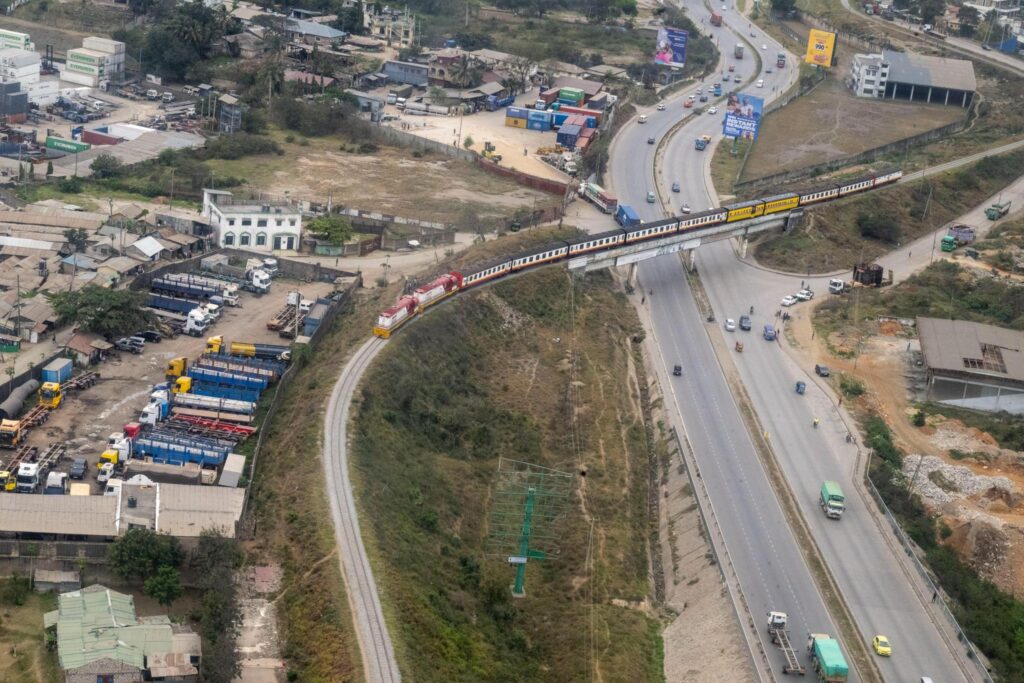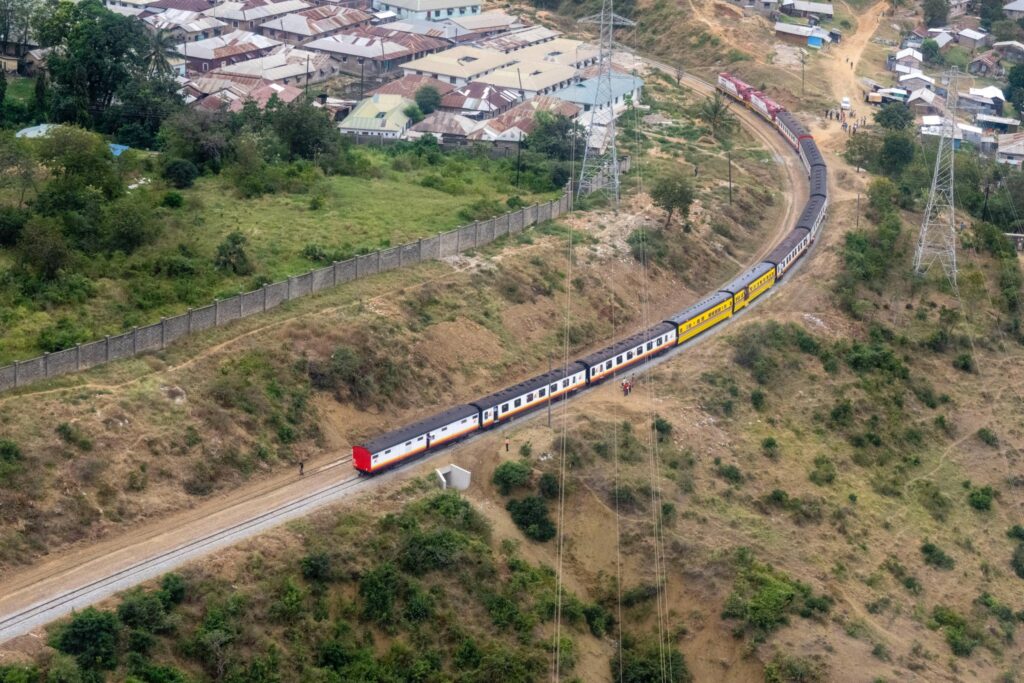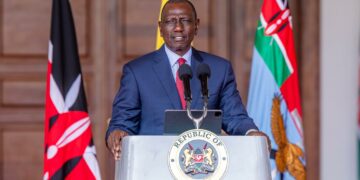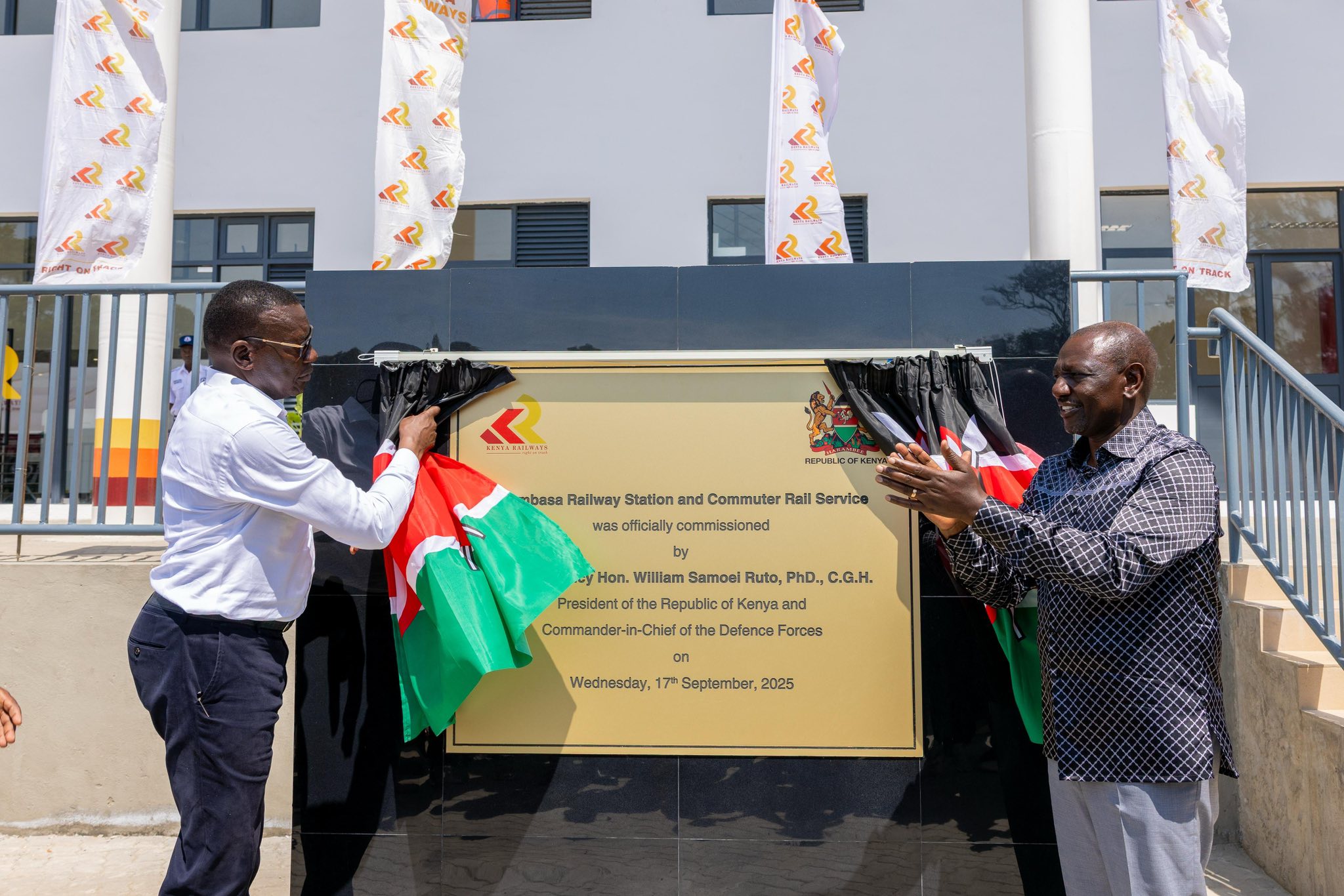
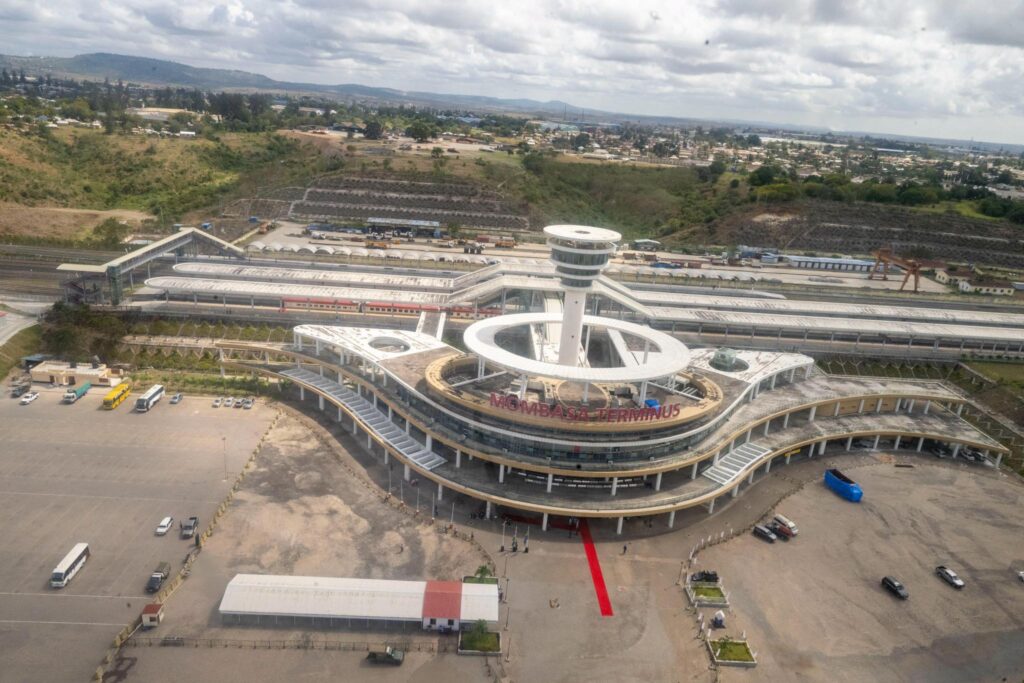
Kenya’s President William Ruto on Wednesday – Sept 17. commissioned the Mombasa commuter railway service, a landmark project aimed at easing mobility in the coastal city and strengthening connectivity to the Standard Gauge Railway (SGR). The new service links downtown Mombasa to the Miritini SGR terminus, cutting travel time for passengers while facilitating smooth transfer of goods. This milestone reflects the government’s deliberate investment in transport infrastructure to spur economic growth and regional integration.
The commissioning event, attended by senior government officials, industry executives, and local leaders, highlighted the administration’s commitment to opening up the country through improved road and rail networks. President Ruto emphasized that enhanced transport systems are central to his development agenda, ensuring that every region benefits from infrastructure that drives economic transformation. According to him, transport investments are not just about mobility but about unlocking opportunities and spiraling development across Kenya.
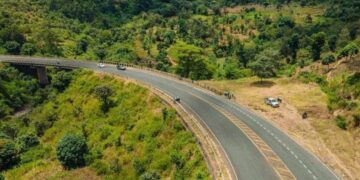
The Mombasa commuter rail project, undertaken by the China Road and Bridge Corporation (CRBC), rehabilitated 13.9 km of the historic meter-gauge railway and added 2.9 km of new track, covering a total of 16.8 km. Originally built by colonial authorities over a century ago, the railway has now been modernized to meet the demands of a growing urban population and the vibrant coastal economy. The revamped line will provide faster, safer, and more predictable journeys between Mombasa’s central business district and the SGR terminus at Miritini.
Beyond easing urban transport, the rail service is economically significant because of its linkage to the Port of Mombasa, Kenya’s largest seaport and a vital hub for East and Central Africa. The port serves as the main entry and exit point for regional trade, and efficient commuter and cargo connections are critical in boosting its competitiveness. By reducing road congestion and offering affordable, reliable alternatives, the rail line strengthens Mombasa’s role as the country’s commercial heartbeat and gateway to regional markets.
The President noted that the commuter service will cut road gridlocks, lower transportation costs, and reduce accidents on the busy Mombasa roads. Commuters will pay just 50 shillings per trip, making it accessible to ordinary citizens while also improving last-mile connectivity to the popular Madaraka Express service between Nairobi and Mombasa. This affordability ensures inclusivity, giving local residents a modern travel option that matches the government’s broader agenda of lowering the cost of living.
In addition to boosting mobility, the project also created jobs and transferred valuable skills to Kenyans. According to CRBC General Manager Wang Lijun, over 800 local jobs were created during construction, with more than 90 percent of the workforce comprising Kenyans whose expertise was enhanced in railway rehabilitation and modern construction techniques. This aligns with the objectives of the Belt and Road Initiative, which emphasizes skills development, job creation, and long-term economic partnerships.
Ultimately, the Mombasa commuter railway service is more than a transport project—it is a key pillar of Kenya’s economic growth agenda. Under President Ruto’s stewardship, the government has underscored that road and rail networks are central to opening up the country, facilitating trade, and uniting regions. By leveraging infrastructure as a driver of inclusive development, Kenya is positioning itself not just as a regional transport hub, but also as a nation ready to compete and thrive in the global economy.