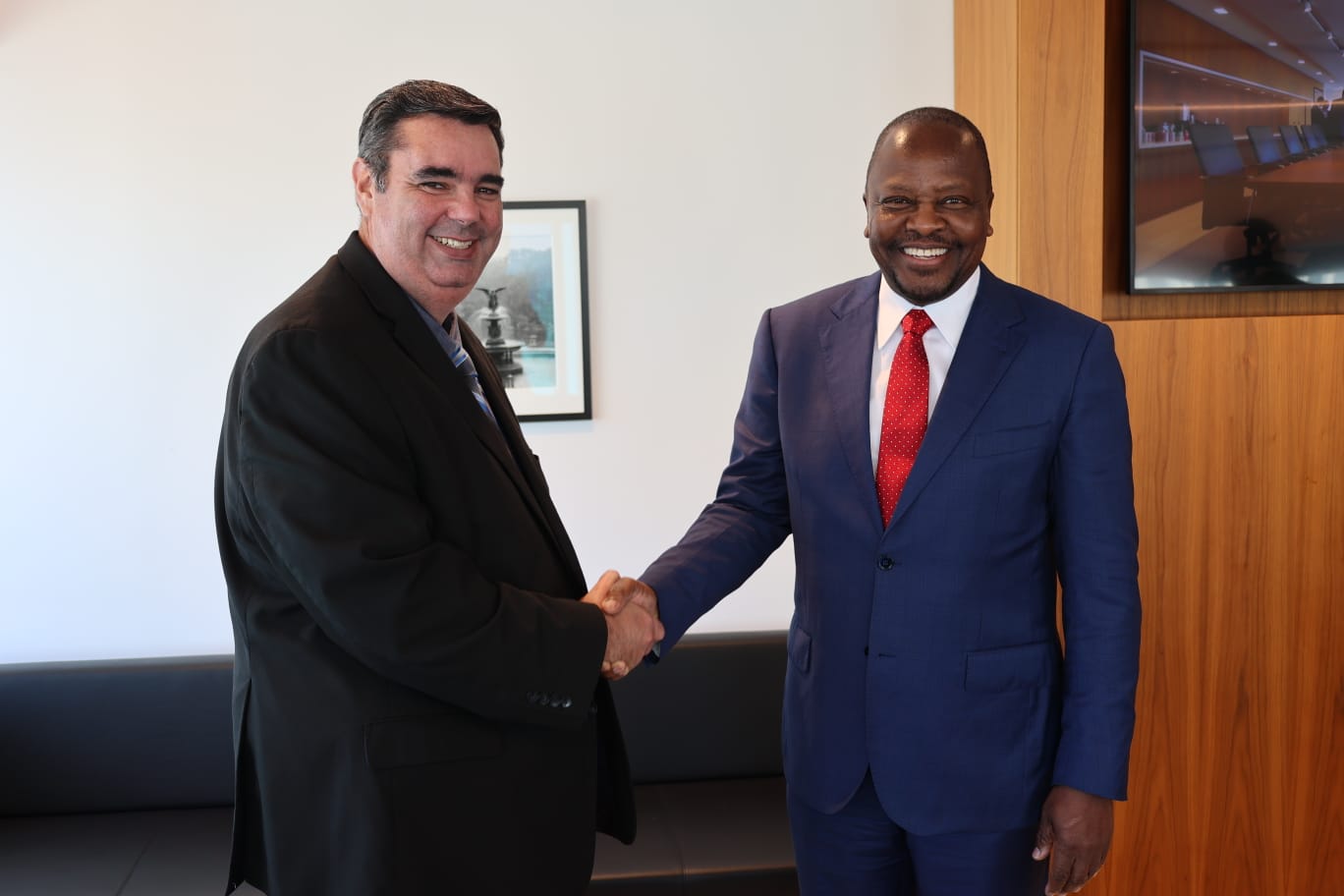
Agriculture and Livestock Development Cabinet Secretary Mutahi Kagwe has returned from a high-level trade mission in the United States with agreements expected to inject millions of dollars into Kenya’s agricultural sector. The deals, centered on market access, farmer financing, and academic collaboration, are projected to expand Kenya’s agricultural exports, strengthen food security, and deepen trade ties with the U.S.
The highlight of the mission was an engagement with Gavin Van Der Burgh, CEO of the United States Africa Trade Desk (USATD). The talks secured a commitment for Kenyan produce to enter more U.S. retail markets, giving the country’s agricultural products greater visibility and stronger demand. To support this expansion, USATD pledged financing that will help Kenyan exporters meet the large-scale volumes required for U.S. supply chains. This financial backing will stabilize export operations, reduce risk, and empower exporters to scale their businesses.
Kagwe emphasized that investment in farming and agro-processing remains central to Kenya’s transformation agenda. He urged U.S. investors to channel resources into large-scale production of staples such as wheat, yellow maize, and rice. With such investment, Kenya could shift from being a net importer of these crops to a net exporter, a transformation that would secure food supplies and elevate the country into a regional breadbasket.
In New York, Kagwe met Tara Nathan, Executive Vice President of Mastercard, to discuss ways to expand financial inclusion for farmers. The two parties agreed to explore the creation of a centralized Agriculture Information and Resource Centre (AIRC) that would consolidate farmer data, boost transparency, and enable access to affordable financial solutions such as credit and insurance. Farmers who are registered as businesses would gain easier access to loans and digital financial tools, addressing a long-standing barrier to growth for smallholder producers.
The mission also opened a research and academic partnership with South Carolina State University 1890 Research and Extension. This collaboration will link Kenyan agricultural colleges with American expertise, focusing on crop research, training, and knowledge exchange. By improving research capacity, Kenya will be able to develop more resilient crop varieties while building a skilled agricultural workforce ready to meet future challenges.
Beyond agriculture alone, Kagwe’s visit also expanded commercial ties. The Kenya National Chamber of Commerce and Industry (KNCCI) signed a Memorandum of Understanding with the South Carolina African American Chamber of Commerce (SCAACC), which represents over 15,000 businesses. This agreement paves the way for greater trade and investment linkages, fostering collaboration between Kenyan and U.S. enterprises. For Kenyan businesses, the framework creates long-term access to American markets, networks, and capital.
The Cabinet Secretary was accompanied by leaders from Kenya’s agricultural private sector, including officials from the Tea Board of Kenya, the Kenya Tea Development Agency, KETEPA, MACNUT, Tropical Nuts, and Kipchimchim Group. Their presence highlighted Kenya’s readiness to tap into the opportunities presented by the U.S. partnerships. For exporters of tea, nuts, and other high-value crops, the agreements represent a significant opening in one of the world’s most lucrative markets.
The economic impact of these partnerships could be profound. Increased agricultural exports will generate foreign exchange earnings, create rural jobs, and raise incomes for smallholder farmers. Financing support will allow exporters to expand and diversify, while U.S. investments in agro-processing could modernize production systems and add value to Kenyan produce. Academic partnerships will sustain the momentum by ensuring that Kenya builds local expertise and innovation capacity for the future.
At a broader level, the deals strengthen Kenya’s diplomatic and trade relationship with the United States. The combination of financial cooperation, market access, research collaboration, and private sector engagement creates a holistic framework for long-term growth. For Kenya, this positions agriculture not just as a domestic growth driver but also as a pillar of international trade.
Kagwe’s U.S. tour marks a turning point for Kenya’s agricultural strategy. By aligning financing, research, and investment with expanded market access, the country is laying the groundwork for sustained growth in exports, improved food security, and deeper economic ties with one of the world’s largest consumer markets. For farmers and agribusiness leaders, the message is clear: Kenya is not just securing opportunities abroad, it is building the capacity to seize them.
President William Ruto has placed Micro, Small and Medium Enterprises (MSMEs) at the center of Kenya’s economic transformation strategy, recognizing the sector as the backbone of job creation,...
Read moreDetails