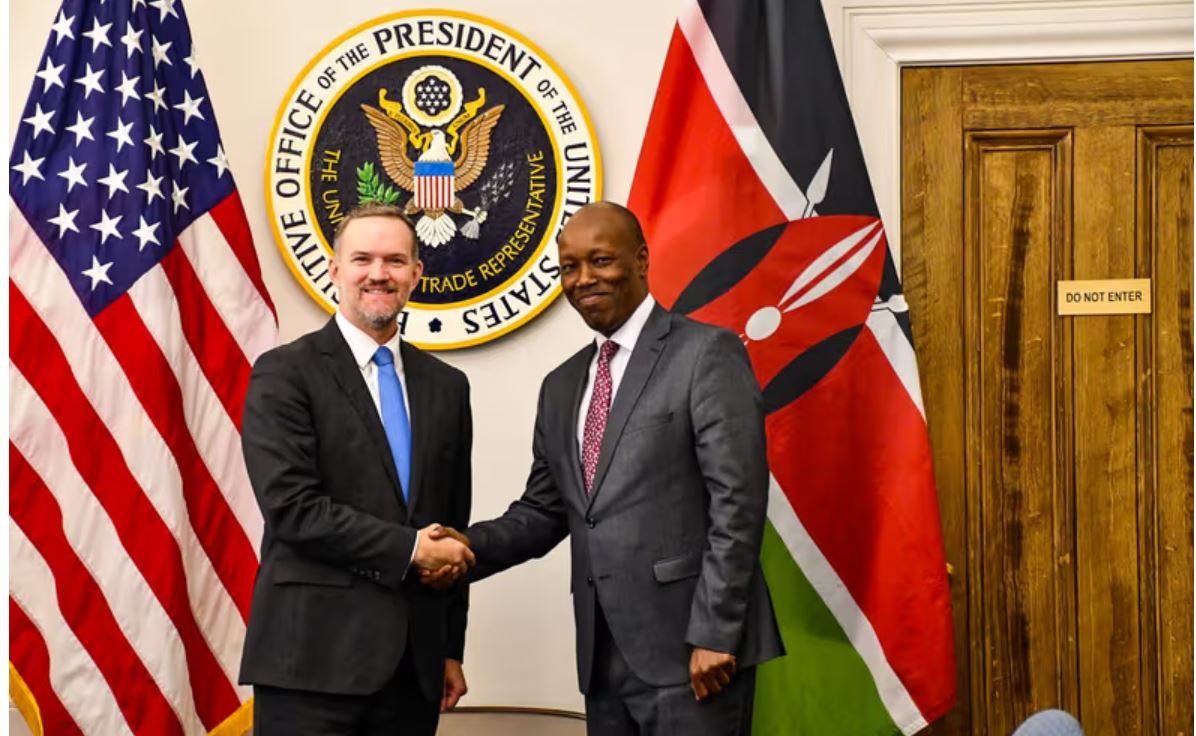
Kenya and the United States are moving toward a major new trade agreement after a round of high-level talks in Washington. The discussions come at a critical moment, as the African Growth and Opportunity Act (AGOA), which has given Kenya duty free access to the American market for more than 20 years, is set to expire soon. Both governments agreed that a fresh reciprocal pact would secure long term benefits for trade and investment between the two countries.
Cabinet Secretary for Investments, Trade and Industry Lee Kinyanjui led the Kenyan delegation and met with U.S. Trade Representative Ambassador Jamieson Greer. Kinyanjui stressed that Kenya is ready to begin formal negotiations and that a clear framework would protect Kenya’s exports while opening the door for new investments. He explained that several American firms had already expressed interest in expanding in Kenya, and that stronger ties with the United States would unlock opportunities across sectors such as agro processing, textiles, technology and manufacturing.
Ambassador Greer welcomed Kenya’s position and described the country as a strong partner for the United States. He said the aim was to build a fair deal that would help American companies expand their markets while giving Kenyan exporters predictable access to the United States.
Kenya exported goods worth more than 737 million dollars to the United States in 2024, mostly apparel, coffee and tea. Overall trade between the two countries stood at about 1.5 billion dollars. Under AGOA, Kenyan goods have entered the U.S. duty free, supporting thousands of jobs and driving industrial growth. With AGOA close to expiry, Nairobi is keen to ensure that this progress is not reversed. Officials argue that a reciprocal trade agreement would not only protect these industries but also set the stage for new areas of cooperation.
Kenya is also using the talks to market itself as a stable and attractive investment destination. During meetings with U.S. companies and the U.S. Chamber of Commerce, Kinyanjui pointed out that Kenya offers political stability, a skilled workforce, strong investor protections, and infrastructure that supports international trade. He told investors that Kenya should be seen not just as a market but also as a gateway to Africa’s larger regional market.
American firms that attended the discussions included Citi Bank, Siemens Healthcare, Cigna, and American Tower Corporation. Their interest ranged from healthcare and finance to renewable energy and digital trade. Kenya emphasized its plans to attract investment into green powered data centers, renewable energy projects, and digital infrastructure, areas that match global growth trends. This approach is expected to create jobs at home while positioning Kenya as a leader in Africa’s digital and sustainable economy.
The proposed deal also aligns with President William Ruto’s broader economic diplomacy agenda. His government is keen to diversify Kenya’s export markets and reduce reliance on a few products or partners. A predictable trade framework with the United States would provide security for exporters while strengthening confidence among foreign investors.
Analysts believe that if concluded, the deal would set an important precedent for other African countries as they prepare for the post AGOA era. Rather than relying on short term extensions of preferential programs, Kenya is showing that African economies can move into more balanced and sustainable arrangements. This would help shield exporters from sudden policy shifts and give businesses a stronger base for long term planning.
Both sides agreed to start technical consultations in the coming months to lay the groundwork for a full agreement. For Kenya, the outcome of these talks could shape the future of its export industries, attract more U.S. investment, and confirm its role as a strategic partner for Washington in Africa.
As global trade becomes more uncertain, Kenya’s proactive approach stands out. By seeking a reciprocal deal, the country is not only protecting existing gains under AGOA but also positioning itself for future growth. A successful agreement would strengthen jobs, attract investment, and make Kenya a stronger hub for trade and innovation in Africa.
President William Ruto has placed Micro, Small and Medium Enterprises (MSMEs) at the center of Kenya’s economic transformation strategy, recognizing the sector as the backbone of job creation,...
Read moreDetails