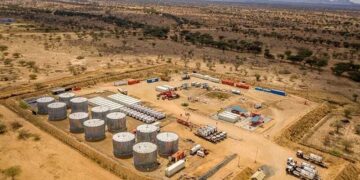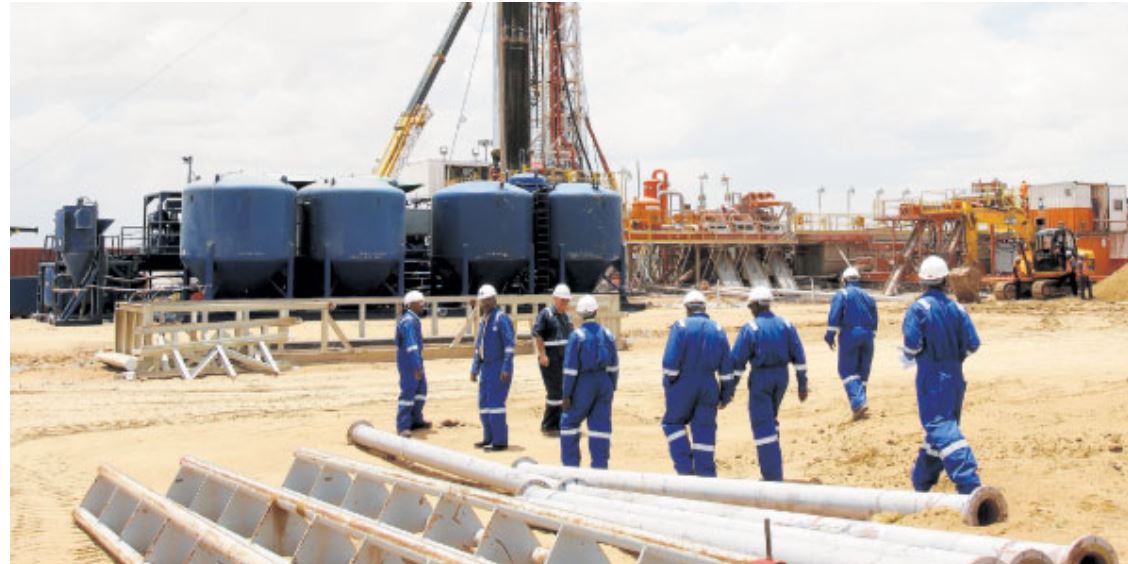
Kenya has taken a decisive step toward launching its first oil exports with the appointment of a 35-member committee to fast track commercial development in Turkana’s Lokichar Basin. The committee, formally announced in the Kenya Gazette on August 22, 2025, is tasked with overseeing negotiations, policies, and technical frameworks that will guide the country’s journey to full oil production and exports projected for 2026.
The “First Oil Technical, Commercial and Legal Working Committee” will be at the center of this historic process. Its mandate is wide-ranging, covering the negotiation of technical and commercial agreements between the government and contractors, development of enabling regulations, and guidance on long-term land access for oil projects in Block T6 and Block T7. It will also submit quarterly reports to the Cabinet Secretary for Energy and Petroleum, providing transparency and accountability as Kenya moves closer to exporting crude oil for the first time.
Energy Cabinet Secretary Opiyo Wandayi underscored that the committee’s formation is aligned with the country’s Vision 2030 objectives. The government is not only focused on getting a Field Development Plan approved by Cabinet and Parliament but also on ensuring that oil exports maximize economic benefits for the nation. With the secretariat supporting the committee’s work, the government has created an institutional framework designed to secure favorable terms and protect national interests in a sector that could redefine Kenya’s economic trajectory.
The establishment of this committee comes at a time when the government has already committed KES 1.67 billion in the 2025/26 budget to support oil development. This allocation demonstrates Kenya’s determination to revive stalled projects and accelerate preparations for full commercial production. Combined with the committee’s oversight, this funding ensures that critical groundwork is laid for the development of export infrastructure, ranging from storage facilities and pipelines to transport systems linking Turkana to global markets.
The anticipated benefits of the Turkana oil boom extend well beyond revenue from exports. Oil production is expected to create thousands of direct and indirect jobs in Turkana and across the country. The emphasis on local content and procurement will strengthen community participation while generating opportunities for businesses in construction, logistics, and service industries. As the sector grows, it is poised to boost the livelihoods of host communities that have long awaited tangible returns from the oil discovered more than a decade ago.
From a national perspective, crude oil exports are expected to provide a new and significant revenue stream for the government. These revenues can be channeled into infrastructure development, healthcare, education, and agriculture, ensuring a broad multiplier effect across the economy. With proper management, oil income can help reduce Kenya’s fiscal deficits while also strengthening foreign exchange reserves, stabilizing the currency, and improving the balance of trade.
Equally important is the potential boost to investor confidence. A clear regulatory and institutional framework, guided by the committee, signals to international investors that Kenya is serious about creating a stable and predictable environment for oil and gas operations. This assurance will not only attract capital for the energy sector but also spill over to other industries such as mining, manufacturing, and agriculture, all of which stand to benefit from improved infrastructure and stronger financial inflows.
Energy independence is another strategic gain. By producing and exporting its own oil, Kenya will reduce reliance on imports, increase energy security, and position itself as a regional energy hub. The infrastructure developed for oil will also create synergies with other energy projects, such as geothermal and renewables, expanding Kenya’s role in East Africa’s energy transition.
The long-term benefits extend to institutional capacity building. Through the committee’s work, Kenya will develop stronger expertise in oil governance, commercial negotiations, and land management. These lessons can be applied to other extractive industries, ensuring that resource development across sectors is managed with efficiency and transparency.
Looking ahead, the government’s target of beginning exports in 2026 appears achievable, given the renewed policy momentum and financial commitment. The combination of political will, a dedicated working group, and budgetary support creates a strong foundation for realizing first oil. If managed prudently, Turkana’s oil could serve as a launchpad for Kenya’s next phase of industrial and economic growth, enabling the country to diversify its economy while uplifting communities that host this resource.
President William Ruto has placed Micro, Small and Medium Enterprises (MSMEs) at the center of Kenya’s economic transformation strategy, recognizing the sector as the backbone of job creation,...
Read moreDetails