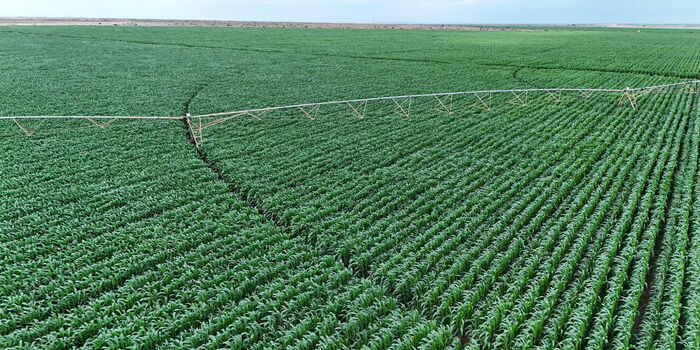
Kenya has secured a Sh12.5 billion private sector investment to revive the Galana-Kulalu Food Security Project, a large-scale irrigation scheme spanning Kilifi and Tana River counties. The deal, signed under a Public-Private Partnership with Selu Limited, marks a turning point for a project once stalled by funding constraints and scepticism. The agreement is expected to transform 20,000 acres into high-yield maize farms, producing 1.4 million bags annually and significantly advancing Kenya’s quest for food self-sufficiency.
Selu Limited, founded by former Twiga Foods CEO Peter Njonjo, will lead the project’s initial phase with a focus on commercial maize farming. At current market prices, the projected maize output could generate Sh5.6 billion annually. According to National Treasury Principal Secretary Dr Chris Kiptoo, this model shows how Kenya can achieve major development goals without overburdening the national budget. By leveraging private capital for commercially viable ventures, the government can channel public funds to other essential sectors such as health, education, and infrastructure.
The broader Galana-Kulalu block covers 1.5 million acres, much of which remains underutilised despite its potential for large-scale irrigation. If fully developed, it could substantially reduce the country’s reliance on imported cereals, save foreign exchange, and boost rural incomes. The initiative is also set to support agro-processing industries by ensuring a steady supply of raw materials, creating thousands of jobs and stimulating economic activity in surrounding communities.
Water security lies at the heart of this revival. The National Irrigation Authority has completed a 600,000 cubic metre reservoir funded by Sh519 million from the National Treasury, enabling irrigation for 10,000 acres. Selu’s investment will also fund water storage systems, irrigation infrastructure, and on-farm roads to facilitate efficient movement of produce. A multi-agency approach is being deployed, including the construction of a bridge by the Kenya Rural Roads Authority to ease transport bottlenecks.
Sustainability is being prioritised. Selu has contracted a Korean firm to install a 2.5-megawatt solar-powered water pumping system to replace the current diesel-powered infrastructure. This shift is expected to cut operational costs and reduce environmental impact. Additionally, the Rural Electrification and Renewable Energy Corporation is building a power plant scheduled to be operational by June 2026, further lowering production costs and enabling consistent output.
The government is also expanding partnerships beyond maize. A Memorandum of Understanding with Abu Dhabi-based agribusiness Al Dahra will see 180,000 acres developed for diversified farming, including fodder and meat value chains. Al Dahra’s global experience, covering over 400,000 acres in countries such as Egypt, Morocco, and the United States, is expected to introduce advanced farming technologies and modern management systems to the Kenyan project.
Central to the long-term vision is the planned Sh35 billion Galana Dam, which will have the capacity to store 306 million cubic metres of water. Once completed, it will provide gravity-fed irrigation to 200,000 acres through an extensive canal network, significantly expanding the irrigated area and attracting more investors. The phased expansion plan envisions 10,000 acres in the first phase using existing water flows, increasing to 32,000 acres after the dam’s completion, and ultimately unlocking up to 500,000 acres in future stages.
The Galana-Kulalu initiative represents more than just an agricultural project. It is a strategic investment in national resilience, economic growth, and rural transformation. It has the potential to stabilise maize prices, reduce vulnerability to climate-related disruptions, and strengthen Kenya’s position as a regional leader in agricultural innovation. If executed effectively, it will stand as a model for how African nations can combine government leadership, private sector capital, and modern technology to tackle food insecurity at scale.
The project also aligns closely with Kenya’s Bottom-Up Economic Transformation Agenda by directly creating employment, improving household incomes, and driving industrial growth. With careful implementation, the Sh12.5 billion injection could mark the beginning of a new era in Kenyan agriculture, proving that strategic partnerships can turn dormant assets into engines of national progress.
President William Ruto has placed Micro, Small and Medium Enterprises (MSMEs) at the center of Kenya’s economic transformation strategy, recognizing the sector as the backbone of job creation,...
Read moreDetails