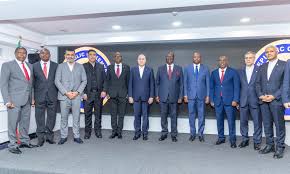
Nairobi has this week played host to the 7th Session of the Kenya–Iran Joint Commission for Cooperation, a high-level meeting that set an ambitious target of raising annual bilateral trade to $1 billion from the current $300 million. The talks, opened by Prime Cabinet Secretary and Foreign Affairs Cabinet Secretary Dr. Musalia Mudavadi, brought together more than 100 representatives from government and the private sector, with both sides pledging to translate diplomatic dialogue into concrete economic results.
The meeting adopted a structured agenda built around three strategic clusters: Food Systems, Green Technologies, and Skills and Mobility. These themes cut across trade, agriculture, renewable energy, manufacturing, education, vocational training, and customs cooperation. The aim is to align policy with actionable projects that deliver tangible benefits to both countries.
One of the most significant developments was the agreement to resolve the suspension of Kenyan tea exports to Iran within 60 days. Iran is a critical market for Kenya’s tea, importing 13 million kilograms valued at KSh 4.26 billion in 2024. The suspension followed a scandal involving a Kenyan firm that exported low-grade tea as premium product, damaging trust and prompting Iran to halt imports. The firm has been deregistered and is set to face prosecution. Both governments have now committed to strict new quality controls to safeguard the integrity of Kenyan tea.
The reopening of the Iranian market could benefit more than 40,000 Kenyan farmers and restore a vital export channel. Agriculture Cabinet Secretary Mutahi Kagwe stressed that tea remains one of Kenya’s largest foreign exchange earners and must be protected from malpractice. The Joint Technical Committee formed during the talks will oversee implementation of quality standards, restore market confidence, and ensure compliance.
The Nairobi session also hosted the Kenya–Iran Business Forum, connecting entrepreneurs and investors from both nations. Iranian businesses were encouraged to view Kenya as a gateway to the East African market, while Kenyan enterprises were invited to explore Iran’s agricultural, industrial, and technological sectors.
Iran’s Minister of Agricultural Jihad, Dr. Gholamreza Nouri Ghezeljeh, highlighted Kenya’s strategic position in Africa and expressed readiness to remove trade barriers. He noted that enhanced cooperation in agriculture, manufacturing, ICT, creative industries, renewable energy, and pharmaceuticals could drive trade volumes to several billion dollars in the coming years.
Proposals on the table include creating a joint follow-up committee, holding trade exhibitions, strengthening banking cooperation, and facilitating private sector participation. Iran has also offered technical expertise in greenhouse cultivation, water-efficient farming, and high-value crop production, which could advance Kenya’s agricultural transformation agenda.
PCS Mudavadi emphasised the need for measurable progress, realistic timelines, and quarterly reviews to ensure commitments are met. This results-oriented approach reflects Kenya’s broader diplomatic strategy of turning partnerships into direct benefits for citizens, particularly through job creation, skills development, and infrastructure improvements.
For Mombasa, the agreements could unlock investment in port logistics, the blue economy, and tourism. The city’s role as a regional trade hub is set to be reinforced by improved connectivity and increased commercial activity from both Kenyan and Iranian firms.
With the potential to expand trade to $1 billion annually, this partnership goes beyond restoring past trade flows. It positions Kenya to diversify its export base, attract technology-driven investment, and strengthen its role in regional supply chains. By combining Iran’s industrial expertise with Kenya’s strategic location and market access, both countries stand to gain in ways that can be measured in economic growth, employment, and improved livelihoods.
The true measure of success will be how quickly agreements translate into visible benefits at household and industry levels. If momentum is maintained, the Kenya–Iran economic partnership could set a new benchmark for mutually beneficial diplomacy in East Africa.
President William Ruto has placed Micro, Small and Medium Enterprises (MSMEs) at the center of Kenya’s economic transformation strategy, recognizing the sector as the backbone of job creation,...
Read moreDetails