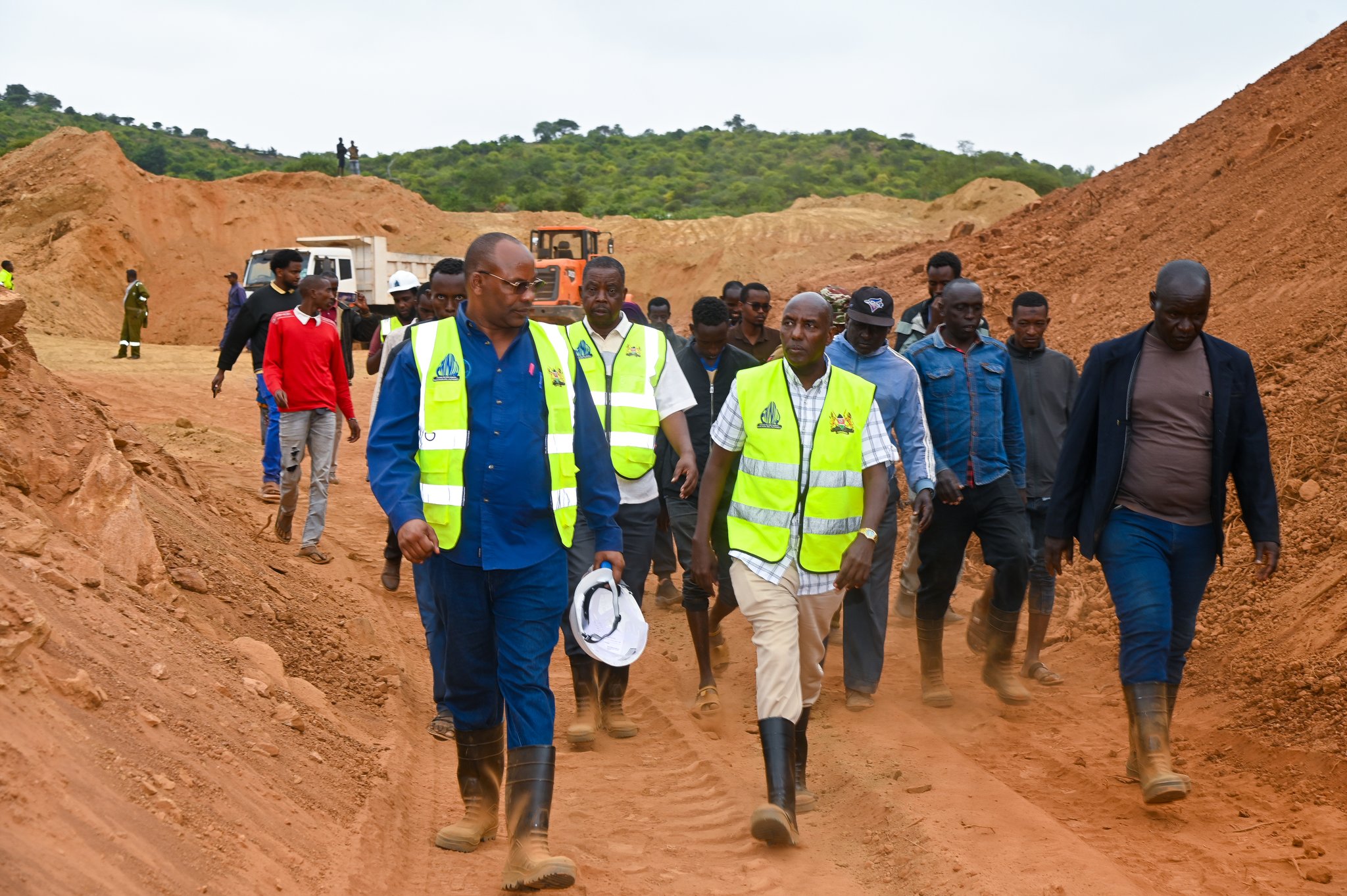
The government has launched the construction of the KES 100 million Somare Dam in Moyale Constituency, a major infrastructure initiative expected to benefit over 5,000 residents in the arid border region. Implemented by the State Department for Arid and Semi-Arid Lands (ASALs) and Regional Development in partnership with the Ewaso Ng’iro North Development Authority (ENNDA), the project is part of the national Bottom-Up Economic Transformation Agenda (BETA).
The dam will hold 160 million litres of water once complete, offering reliable and sustainable water access for domestic use, livestock, and small-scale irrigation. For the people of Moyale who have long been affected by erratic rainfall and prolonged droughts; this project is a lifeline. It will directly reduce water scarcity, improve food security, promote peace in a fragile region, and stimulate local economic growth.
Principal Secretary Kello Harsama, who toured the site, emphasized that the project is more than just a water reservoir. He described it as a symbol of transformation and a turning point for Moyale and the broader northern Kenya region. The dam is expected to ease the burden on women and children who walk long distances in search of water, while also enhancing livestock health and enabling year-round agriculture. These changes will build resilience, reduce poverty, and restore dignity to underserved communities.
The dam’s infrastructure includes a 10-meter high earth embankment, modern intake and spillway systems, water treatment facilities, and an extensive distribution network. This network is equipped with solar-powered and grid-supported submersible pumps, elevated storage tanks, livestock watering points, water kiosks, and community taps. The entire site is also being secured with perimeter fencing to ensure operational sustainability and safety for residents.
What makes the Somare Dam especially strategic is its alignment with the government’s broader commitment to achieving water security in arid and semi-arid regions. The project directly supports Kenya’s climate adaptation agenda and promotes equitable access to essential services in areas that have historically been left behind. It is a proactive response to the recurring droughts and climate shocks that have plagued Moyale and surrounding areas, often triggering resource-based conflicts and economic instability.
The dam’s impact is also expected to ripple beyond immediate water supply. By creating conditions for smallholder irrigation, it opens new pathways for food production, income generation, and agribusiness expansion. In an area where pastoralism is dominant, access to water can mean healthier herds, reduced migration, and improved livelihoods. For local youth, such transformation could mean jobs in construction, maintenance, or agricultural ventures. For women, it means time saved and redirected toward education, enterprise, or household care.
The project reflects the government’s ambition to unlock the economic potential of border counties and integrate them more fully into national development frameworks. Through BETA, President William Ruto’s administration is focusing on grassroots-led growth, particularly in regions that have seen little return from decades of public investment. The Somare Dam is among a growing list of high-impact infrastructure developments being fast-tracked in ASAL counties.
Harsama reiterated the importance of inclusive development, noting that bringing water closer to the people is not just about service delivery but it is about restoring equity and creating a foundation for lasting peace. Water scarcity has historically been a trigger for tension in Moyale, especially among pastoral communities competing over limited resources. A stable and equitable supply can reduce such friction and foster cohesion.
During the inspection visit, the PS was accompanied by top engineers and government officials, including ENNDA Managing Director Eng. Ali Ibrahim, Engineer Josiah Mulwa, and Resident Engineer Diba Qalicha. Their presence affirmed the national significance of the project and the high level of oversight being applied to its implementation.
With construction already progressing steadily, the Somare Dam stands as a landmark investment for Marsabit County. It is a clear demonstration of the government’s shift toward people-centered development in marginalized regions. Once operational, the dam will not only ensure water security but will also anchor broader aspirations for growth, stability, and prosperity in northern Kenya.
Kenya’s Affordable Housing Programme (AHP), accessible through the Boma Yangu platform, stands as a flagship government initiative to deliver decent, safe, and affordable homes to low- and middle-income...
Read moreDetails