In less than three years since President William Ruto assumed office, Kenya has witnessed a wave of mega infrastructural developments aimed at enhancing regional connectivity, economic growth, and trade integration. A prime example of this commitment is the ongoing construction of the Multinational Bagamoyo–Tanga–Horohoro/Lungalunga–Malindi Road Project. Anchored within the East African Community (EAC) integration agenda, the project symbolizes Kenya’s strategic positioning in the regional transport and trade network.
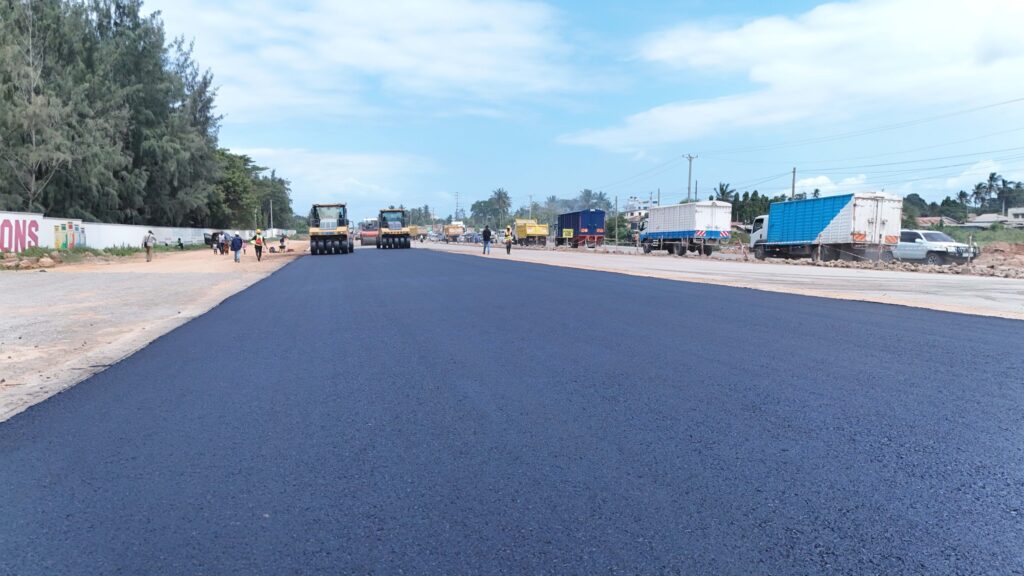
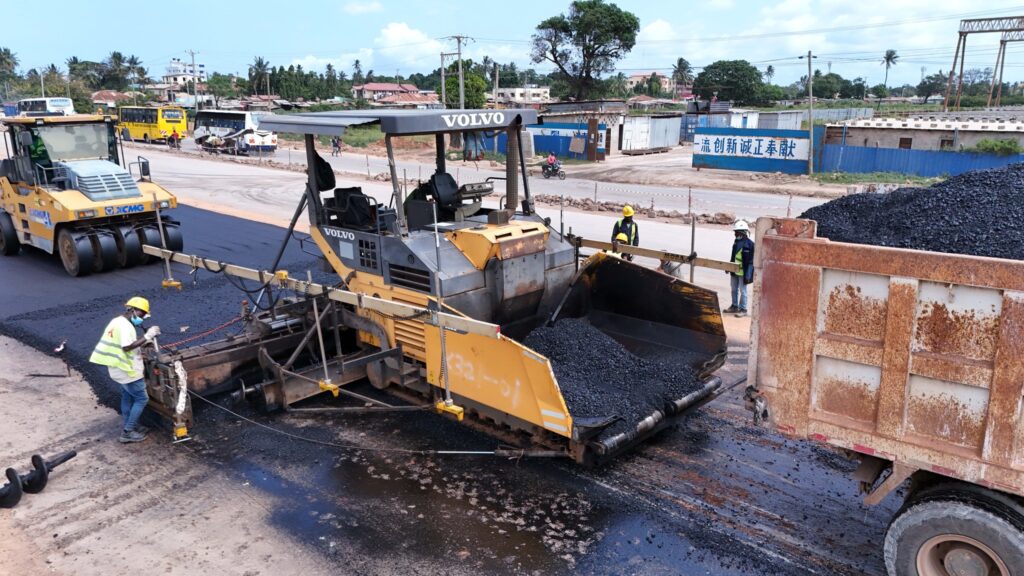
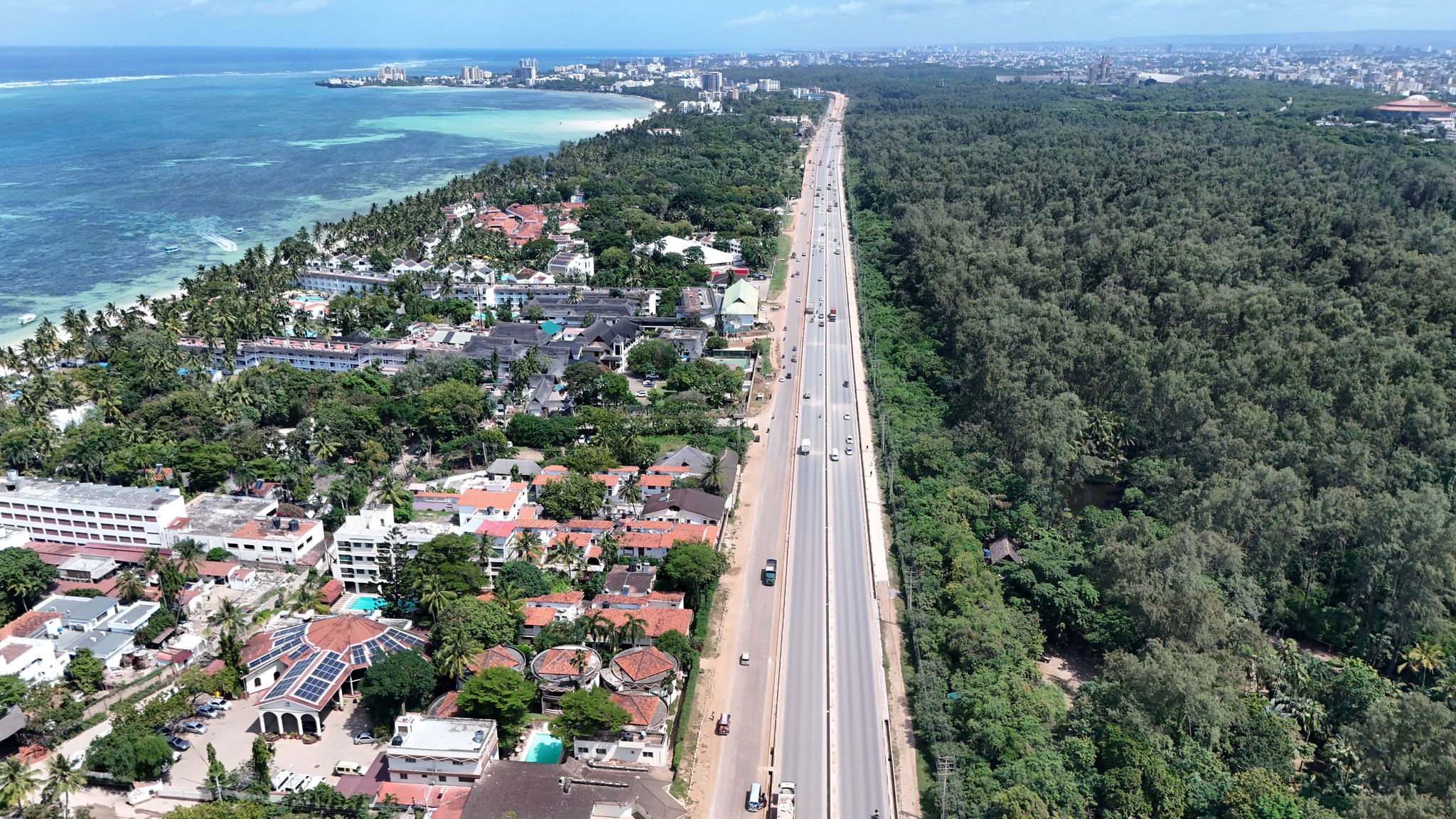
Phase 1 of the project is currently under implementation and divided into two critical lots managed by the Kenya National Highways Authority (KeNHA). Lot 1 covers the 13.5km Mombasa–Mtwapa section, stretching from Nyali Bridge to Mtwapa Bridge. Commenced in November 2022, this section is designed to ease congestion, improve mobility, and support future economic zones. The scope includes six overpasses, 24km of service roads, 12.3km of trunk drainage, six footbridges, a new water line aligned to the Mombasa master plan, and a traders market at Kongowea.
As of mid-2025, progress on Lot 1 stands at 43%. Major milestones achieved include 2.5km of dual carriageway, construction of one box culvert, 4.3km of trunk drainage, and six kilometers of U-drains. Four major overpasses—at Links Road Junction, Bamburi Junction, Bamburi Underpass, and Shanzu/Serena Junction—are at various stages of completion. These developments are reshaping key junctions like Kengeleni and Bamburi to ensure smoother traffic flow and safer pedestrian access.
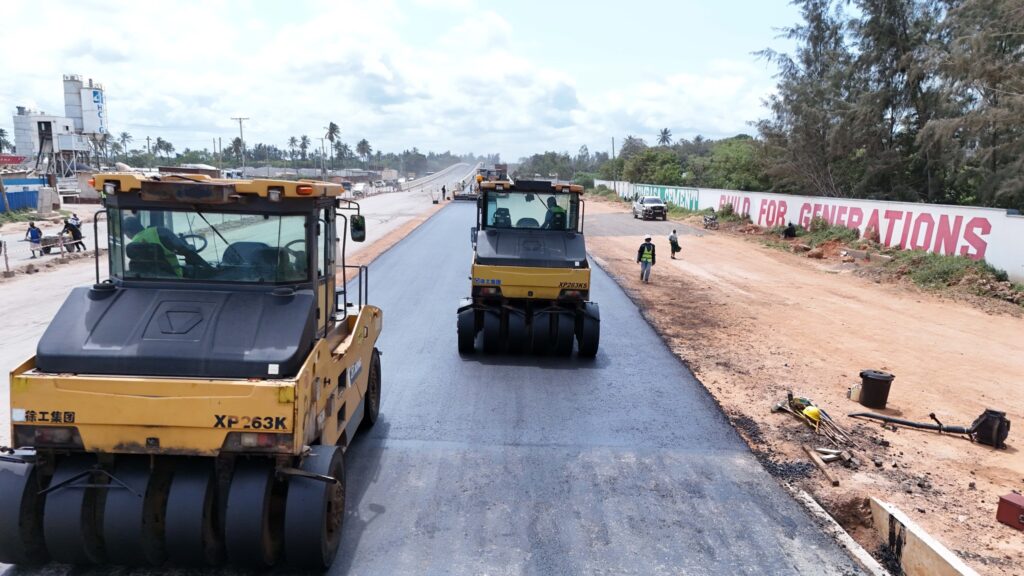
Challenges such as land acquisition and waterline relocation have slightly slowed progress. However, the government has responded by initiating compensation for affected persons and prioritizing the upgrade of the Baricho waterline with a larger-capacity system to meet future demand. These actions underscore President Ruto’s administration’s resolve to overcome implementation bottlenecks while upholding the rights of affected communities.
Beyond construction, the socio-economic impacts are already being felt. The project has created hundreds of jobs, stimulated local business activities, and generated demand in the transport and supply sectors. Environmental conservation is also part of the project’s agenda, with 400 trees earmarked for beautification and an additional 50 hectares of forest to be restored at Rabai-Kaloleni, reinforcing the administration’s climate resilience goals.
Ultimately, the Multinational Road Project under President Ruto’s leadership is more than a physical infrastructure—it’s a regional lifeline. By linking Kenya’s coast with Tanzania, enhancing trade corridors, and opening up new investment frontiers, the initiative is laying the foundation for long-term prosperity. Kilifi, Mtwapa, and surrounding towns are emerging as key players in the EAC’s regional logistics and commerce ecosystem, cementing Ruto’s legacy as a driver of transformative infrastructure.