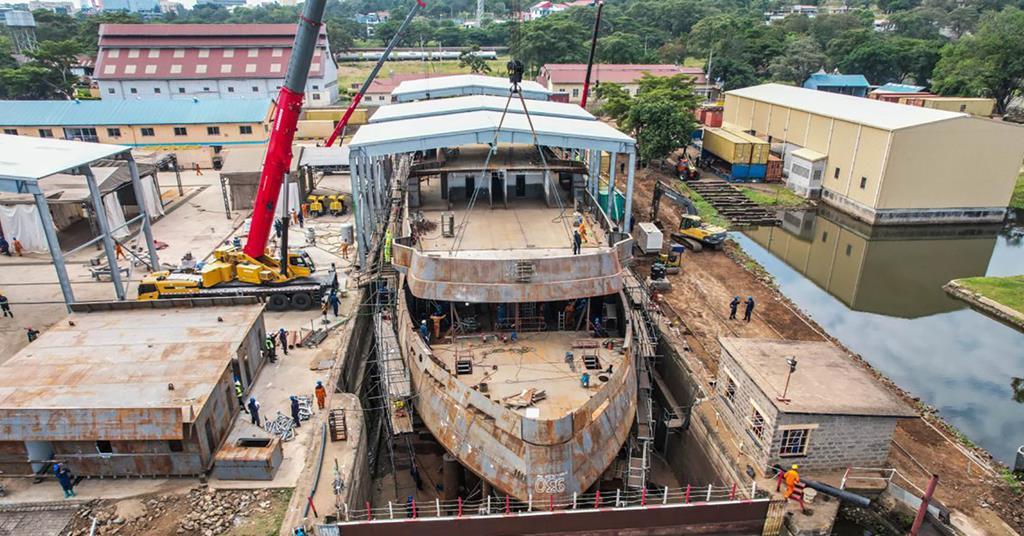
In Kisumu, a ceremony steeped in maritime tradition signaled the start of a transformative project for Kenya and the East African region. Defence Cabinet Secretary Soipan Tuya led the keel-laying for a new 29-metre ferry at the Kenya Shipyards Limited (KSL) facility, officially launching construction of a vessel set to revolutionize transport across Lake Victoria.
The ferry, which will be operated by the Kenya Ports Authority (KPA), is designed to serve the island-rich Homa Bay County and surrounding regions. But as government officials made clear, its impact is expected to reach far beyond ferrying passengers and cargo. Tuya described the vessel as “more than a means of transport,” calling it a symbol of Kenya’s ambition to build industrial strength, expand regional trade, and drive maritime excellence.
At the heart of this initiative is the government’s Bottom-Up Economic Transformation Agenda (BETA). The construction project aligns closely with BETA’s mission to create high-value jobs, boost local manufacturing, and unlock new economic value chains. In doing so, it positions Kenya not just as a user of foreign-built vessels, but as a shipbuilding nation capable of delivering modern, Bureau Veritas-classified ships for its own waters and potentially the wider region.
KSL, established in 2020, has already delivered key projects like the Sh.2.4 billion MV Uhuru II, enhancing freight links to Uganda and Tanzania. With the addition of this ferry, the company’s portfolio now broadens from bulk transport to versatile passenger and vehicle services; reflecting an evolution toward a diversified maritime industry that supports both commerce and community needs.
For communities in Homa Bay County, where thousands have lacked reliable public transport since independence, the ferry offers life-changing promise. Governor Gladys Wanga called it a “lifeline” for isolated islands such as Mfangano, home to over 40,000 people. Better connectivity will help residents access education, healthcare, and larger markets while lowering costs and travel times.
On a regional level, the ferry is expected to deepen trade ties among EAC partner states. KPA Managing Director William Ruto noted the authority’s investment in modern landing sites to act as cargo hubs, which will allow goods to move seamlessly between road, rail, and lake transport. With Lake Victoria connecting Kenya, Uganda, and Tanzania, improved maritime links directly support the EAC Common Market Protocol’s vision of greater economic integration and mobility.
Environmental benefits also stand out. Mining and Blue Economy Cabinet Secretary Hassan Joho highlighted that each ferry can remove hundreds of trucks from roads, cutting emissions and easing road congestion. This aligns with Kenya’s broader blue economy strategy, which emphasizes sustainable use of aquatic resources to grow the economy without harming the environment.
The project’s strategic value extends to national security and industrial resilience. Built locally by KSL, the ferry strengthens Kenya’s self-reliance by reducing dependence on foreign-built vessels. It also showcases a productive blend of civilian economic development and defence-driven industrial capability which reflects a modern approach where infrastructure, security, and economic growth reinforce each other.
Regional implications are equally important. As trade and passenger flows increase, Kenya cements its position as a transport and industrial hub within East Africa. The move sends a clear signal to investors and neighboring countries: Kenya has both the expertise and facilities to build quality vessels domestically. This could open doors for future export opportunities or shared projects with Uganda, Tanzania, and even further afield.
In practical terms, the ferry’s construction is a model of local-industrial growth. It will create skilled jobs for engineers, welders, and technicians; stimulate related sectors like steel supply and logistics; and drive demand for advanced maritime services. By meeting international classification standards, the vessel also raises the bar for quality and safety in regional water transport and enhancing confidence among traders, insurers, and passengers alike.
CS Tuya’s call for continued support from government, private sector, academia, and development partners underlines the recognition that shipbuilding is not a single project but part of a larger national journey. As she put it, “To the communities of Lake Victoria, this ferry is yours to connect, empower, and carry your aspirations across the great expanse of progress.”
Looking ahead, the 29-metre ferry project stands as both a practical solution to transport challenges and a strategic statement of Kenya’s intent to lead in shipbuilding, regional trade, and industrial transformation. It promises safer, greener, and more efficient movement of people and goods; new economic opportunities from the grassroots to the national level; and deeper ties with East African neighbors.
In time, as the vessel sails across Lake Victoria, it will embody Kenya’s vision for a self-reliant, industrially capable, and regionally integrated future that is anchored in the spirit of innovation, local enterprise, and shared prosperity.
President William Ruto has placed Micro, Small and Medium Enterprises (MSMEs) at the center of Kenya’s economic transformation strategy, recognizing the sector as the backbone of job creation,...
Read moreDetails