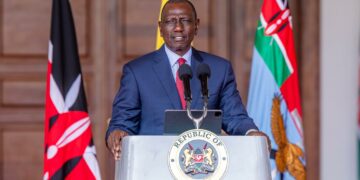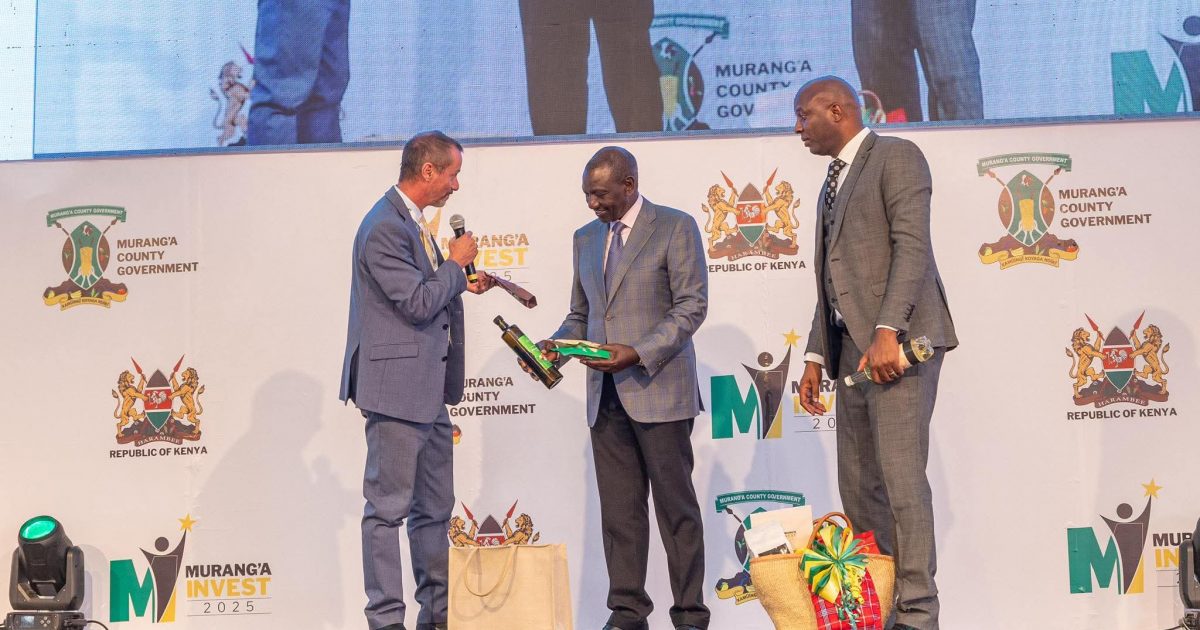
The Government of Kenya has announced plans to construct a pharmaceutical manufacturing facility in Murang’a County, a project expected to save the country up to Sh150 billion annually by significantly cutting pharmaceutical imports. President William Ruto unveiled the plan during the Murang’a County Investment Conference, outlining it as a major milestone in the country’s push for industrialisation, healthcare resilience, and economic transformation.
The plant will be established on 500 acres of land along the Thika-Kenol highway, part of the 1,300 acres ceded by Del Monte Kenya for county industrial development. Once operational, the facility will reduce Kenya’s reliance on external suppliers, who currently account for 62 percent of all pharmaceuticals consumed in the country, according to the Kenya Medical Supplies Authority (KEMSA).
Beyond import substitution, the initiative is designed to anchor Kenya’s long-term ambition of building a self-reliant and competitive pharmaceutical industry that caters to both domestic and export markets. President Ruto emphasized that the Murang’a Special Economic Zone will serve as the country’s pharmaceutical manufacturing hub, marking a significant step in devolving industrial growth and enhancing grassroots economic potential.
In the short term, the facility is expected to generate thousands of jobs in manufacturing, logistics, packaging, and support services. More importantly, it will create opportunities for Kenya’s growing pool of pharmacists, biomedical engineers, chemical technologists, and related professionals. As construction progresses, the site will also attract secondary industries tied to formulation, storage, research, and quality control which establishes a fully integrated value chain within the healthcare sector.
Longer term, the hub is envisioned to become a regional center for pharmaceutical excellence. With strategic bilateral engagements already underway with the United States and China, Kenya is seeking to eliminate tariff barriers and expand access to new markets. By producing high-quality pharmaceuticals at scale, Kenya will be positioned to export to neighboring countries and tap into broader global demand.
The Ministry of Health will provide technical guidance to ensure the plant’s compliance with international pharmaceutical manufacturing standards. This will ensure Kenyan-made drugs meet quality benchmarks, enhancing trust both locally and abroad. President Ruto noted that the facility will be a key pillar in ensuring no Kenyan is forced to sell property or assets to access medical care; a goal he linked to the broader national rollout of the Social Health Authority (SHA).
Despite the bold healthcare vision, President Ruto expressed concern over the low registration levels under SHA in Murang’a, with only 27 percent of the population enrolled. He pledged that public awareness campaigns will be scaled up, reinforcing the government’s goal of universal health coverage alongside its push for localized medicine production.
The pharmaceutical facility is a flagship project within a wider transformation agenda for Murang’a. The county has already allocated land for a Special Economic Zone covering 800 acres and an Export Processing Zone of 500 acres. The area will also host the Murang’a County Aggregation and Industrial Park, the Gikono Landfill Project, Murang’a County Creameries Cooperative Union, and several SME parks; all aimed at unlocking new value chains in agriculture, manufacturing, and services.
Governor Irungu Kang’ata reiterated the county’s commitment to leveraging this land for industrial growth. He noted that vetted investors, both local and international will receive 30-year lease agreements for development. The county aims to attract high-impact investments that generate jobs, create new revenue streams, and support public development without raising local taxes.
The broader national context includes the recently signed EU-Kenya Economic Partnership Agreement, which grants duty-free and quota-free access to European markets. President Ruto encouraged Kenyan farmers and businesses to take advantage of this opportunity, especially in value-added agro-processing and pharmaceutical exports.
The initiative also aligns with ongoing infrastructure development. The President highlighted that roads, energy supply, and connectivity are being improved to attract more investment to counties. Meanwhile, the first phase of affordable housing in Murang’a will launch in August, reducing land fragmentation and preserving agricultural land, especially vital for a county that leads the country in avocado, tea, and coffee production.
In sum, the establishment of the pharmaceutical manufacturing facility in Murang’a represents a strategic blend of industrial policy, public health advancement, and devolved economic development. It is a step toward ensuring health sovereignty, reducing import dependency, strengthening job creation, and positioning Kenya as a pharmaceutical leader in Africa.
Kenya’s Affordable Housing Programme (AHP), accessible through the Boma Yangu platform, stands as a flagship government initiative to deliver decent, safe, and affordable homes to low- and middle-income...
Read moreDetails